
Politics
Trump’s 108-Minute State of the Union Ignites Political Tensions

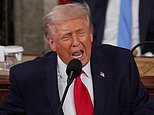
President Donald Trump delivered a combative and lengthy State of the Union address on February 24, 2026, lasting a record 108 minutes. His speech, characterized by aggressive rhetoric and direct challenges to the Democratic opposition, was designed to rally support from his base ahead of the upcoming midterm elections.
Trump’s address featured a pivotal moment when he confronted Democrats with a pointed question about their commitment to protecting American citizens. “If you agree with this statement then stand up and show your support: The first duty of the American government is to protect American citizens…not illegal aliens,” he said. This provoked a strong reaction from Republican lawmakers, who stood and applauded, while many Democrats remained seated, prompting Trump to admonish them for their lack of support.
The atmosphere in the chamber was charged as Ilhan Omar, a Democratic congresswoman from Minnesota, responded vocally, visibly upset by the president’s remarks. Other Democratic members exhibited various reactions, from silence to avoidance of eye contact with Trump.
As he continued, Trump escalated his comments, labeling Democrats as “crazy” and “sick.” He emphasized the importance of honoring victims of crime related to illegal immigration, highlighting the emotional testimonies of victims’ families present in the gallery.
Despite the tension, there were moments of bipartisan recognition during the address. Democrats stood in applause when Trump announced the awarding of the Medal of Freedom to Team USA’s Olympic hockey goalie, illustrating that even amidst conflict, there are shared values that can unite.
One of the more dramatic segments of the speech included a tribute to Army Chief Warrant Officer Eric Slover, who received the Congressional Medal of Honor for his role in a military operation against the regime of Nicolás Maduro in Venezuela. Trump’s vivid recounting of Slover’s heroism served to underscore his administration’s focus on military achievements.
The president also touched upon a recent Supreme Court ruling that struck down his global tariffs, a key component of his economic strategy. Although he referred to the ruling as “unfortunate,” he refrained from attacking the justices directly, maintaining a tense but controlled demeanor.
Trump’s speech was strategically crafted to reach an estimated 40 million viewers, capitalizing on the significant television audience. This timing coincides with a critical phase for his administration, as his approval ratings hover near a historic low, with many Americans expressing dissatisfaction over rising living costs.
Polls indicate that 65 percent of Americans disapprove of Trump’s handling of inflation, while 58 percent disapprove of his immigration policies. These figures illustrate the challenges facing the president as he seeks to reestablish his narrative on these crucial issues.
In response to criticisms regarding the economy, Trump cited various statistics, claiming achievements such as the lowest inflation in five years and an increase in inward investment totaling $18 trillion. He argued that the current economic struggles were rooted in policies supported by Democrats, insisting that his administration’s efforts would soon yield positive results.
While Trump aimed to invigorate his base with promises of economic recovery, the reality for many Americans remains stark. Challenges such as high grocery prices and stagnant wages continue to affect household budgets across the country, raising skepticism about the administration’s optimistic portrayal of the economy.
The political climate was further complicated by a series of disruptive incidents during the address. Al Green, a Democratic congressman from Texas, was ejected for displaying a sign condemning racially charged remarks attributed to Trump, highlighting the high tensions and divisions within the chamber. Additionally, more than 40 Democrats opted to boycott the event, attending alternative gatherings instead, which resulted in three separate responses to Trump’s speech from Democratic leaders.
As the address concluded, the stark divisions between the two parties were evident. Trump’s attempts to reclaim the narrative on immigration and the economy serve not only to bolster his standing among supporters but also to prepare for the upcoming midterm elections.
With the political landscape growing increasingly contentious, the aftermath of Trump’s State of the Union will likely influence campaign strategies as both parties gear up for November. The president’s aggressive approach may resonate with his base, but it also risks intensifying the divisions that have characterized contemporary American politics.












Belfast Gears Up for Vibrant St Patrick’s Day Parade on March 17

Cuba Faces Nationwide Blackout Amid Deepening Energy Crisis

Wirral Council to Restructure Leadership, Cutting Two Top Roles

Rethinking Resistance Training: Key Insights from US Experts

EU Membership on the Horizon: What It Means for Citizens

Ukrainian Drone Swarms Strike Moscow Region for Second Day

Henley Launches Innovative Initiative to Boost Local Economy

Court Ruling Allows Pandemic Tax Refund Claims Until 2026

Sean Penn’s Absence at 2026 Oscars Sparks Discussion

Coronation Street’s Shocking Murder Twist Reveals Family Secrets

Andrew Pierce Confirms Departure from ITV’s Good Morning Britain

Katie Price Faces New Health Concerns After Cancer Symptoms Resurface

Gyles Brandreth Shares Grandson’s Cancer Battle and Recovery

Sue Radford Reveals Weight Loss Journey, Shedding 12–13 kg

Kate Garraway Sells £2 Million Home Amid Financial Struggles

Jordan Brook Faces Health Crisis in Hospital as Sophie Kasaei Stays Away

EastEnders’ Nicola Mitchell Faces Unexpected Pregnancy Crisis

Mother Charged After Son, 9, Killed in Tragic Incident in Italy
-
 World7 months ago
Coronation Street’s Shocking Murder Twist Reveals Family Secrets
-
 Entertainment7 months ago
Andrew Pierce Confirms Departure from ITV’s Good Morning Britain
-
 Health10 months ago
Katie Price Faces New Health Concerns After Cancer Symptoms Resurface
-
 Health5 months ago
Gyles Brandreth Shares Grandson’s Cancer Battle and Recovery
-
 Health6 months ago
Sue Radford Reveals Weight Loss Journey, Shedding 12–13 kg
-
 Entertainment11 months ago
Kate Garraway Sells £2 Million Home Amid Financial Struggles
-
 Entertainment4 months ago
Jordan Brook Faces Health Crisis in Hospital as Sophie Kasaei Stays Away
-
 World8 months ago
EastEnders’ Nicola Mitchell Faces Unexpected Pregnancy Crisis
-
 World8 months ago
Mother Charged After Son, 9, Killed in Tragic Incident in Italy
-

 Entertainment10 months ago
Ann Ming Reflects on ITV’s ‘I Fought the Law’ Drama
-

 World8 months ago
Bailey Announces Heartbreaking Split from Rebecca After Reunion
-

 Entertainment5 months ago
Selena Gomez’s Name Linked to Epstein: Examining the Claims