
Lifestyle
Renowned Physicist Ivica Puljak Discusses Humanity’s Place in Space

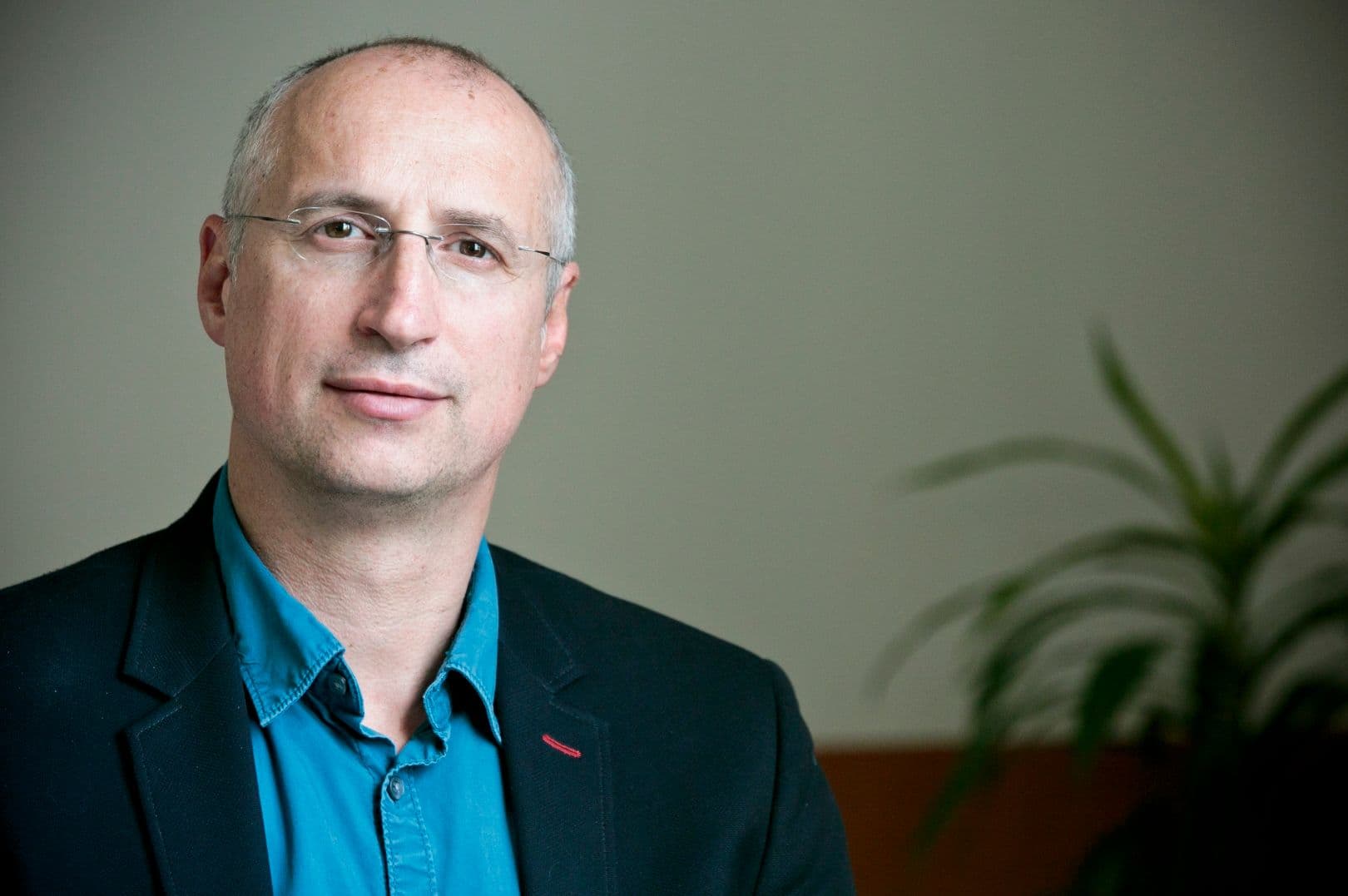
Ivica Puljak, a prominent physicist and former mayor of Split, has sparked discussion on humanity’s place in the universe. In an interview with *Pobjeda*, he emphasized the significance of scientific inquiry in understanding complex phenomena. Puljak, who has extensive experience at CERN, the European Organization for Nuclear Research, discussed the mysteries of the cosmos, including antimatter, interstellar comets, and the ongoing search for extraterrestrial life.
The universe is a realm filled with enigmas, according to Puljak. He stated, “While the universe is full of mysteries, none can be comprehended without science.” His insights come at a time when public interest in UFOs and potential alien life has surged, highlighting the importance of grounding such discussions in scientific methods.
In the interview, Puljak elaborated on the nature of matter and antimatter. He explained that scientists know the universe comprises twelve particles and their corresponding antiparticles, which possess opposite charges. When these particles meet, they annihilate, converting into pure energy. This phenomenon is supported by Einstein’s well-known equation, E=mc², confirming that energy can transform into particle-antiparticle pairs. He noted that antimatter has practical applications in medicine, particularly in positron emission tomography (PET) scans, where it helps detect small tumors.
Despite the advancements in understanding, Puljak acknowledged that many questions remain unanswered. He explained that while particles dominate the universe, antiparticles are exceedingly rare, a mystery scientists continue to investigate. The Large Hadron Collider (LHC) at CERN is at the forefront of these experiments, seeking to unveil the mechanisms behind this imbalance.
Comet 3I/ATLAS and the Search for Extraterrestrial Life
Puljak’s discussion also touched on the recently discovered comet 3I/ATLAS. He remarked that scientific facts, rather than personal opinions, should guide interpretations of such celestial bodies. The comet, believed to originate from interstellar space, exhibits distinct characteristics such as a high concentration of carbon dioxide and an unusual trajectory. Puljak described it as an excellent research target for studying planetary formation and ancient cosmic systems.
Regarding the ongoing speculation about extraterrestrial life, Puljak maintains a cautious stance. He noted, “As of now, there is no evidence of aliens or any cover-up regarding their existence.” He highlighted the hypothesis that humanity may be the only intelligent civilization in the observable universe. This idea, he argues, should inspire a sense of responsibility among humans to care for our planet and its ecosystems.
Puljak added, “This hypothesis will hold until proven otherwise. Until then, speculation is just that—speculation. For new discoveries, we need solid evidence.” He pointed out the vastness of the universe, estimated to be 13.8 billion years old, suggesting that the time necessary for other civilizations to evolve may not have occurred.
CERN and the Quest for Knowledge
Puljak is a strong advocate for scientific transparency, especially regarding CERN’s research. He dismissed various conspiracy theories surrounding the organization, including claims about portals to other worlds. He emphasized that CERN is open and accessible, with over 750,000 visitors each year witnessing its groundbreaking work firsthand. He encouraged readers to visit CERN, highlighting it as an unforgettable experience.
The physicist explained that CERN is not merely a scientific laboratory but a symbol of international collaboration. Established in 1954, it has been pivotal in significant scientific discoveries, including the W and Z bosons and the Higgs boson, which explains the mass of elementary particles. The LHC, CERN’s flagship particle accelerator, creates conditions similar to those just moments after the Big Bang, allowing scientists to explore fundamental questions about the universe.
In conclusion, Puljak’s insights reflect a broader understanding of our universe’s complexities. He believes we are living in one of the most fascinating times in human history, driven by scientific discovery. “We are learning and understanding more and more about the universe thanks to science,” he stated, underscoring the importance of knowledge in dispelling fears and misconceptions. He advocates for increased public interest in scientific education, urging individuals to invest in their understanding to foster a more informed society.












Belfast Gears Up for Vibrant St Patrick’s Day Parade on March 17

Cuba Faces Nationwide Blackout Amid Deepening Energy Crisis

Wirral Council to Restructure Leadership, Cutting Two Top Roles

Rethinking Resistance Training: Key Insights from US Experts

EU Membership on the Horizon: What It Means for Citizens

Ukrainian Drone Swarms Strike Moscow Region for Second Day

Henley Launches Innovative Initiative to Boost Local Economy

Court Ruling Allows Pandemic Tax Refund Claims Until 2026

Sean Penn’s Absence at 2026 Oscars Sparks Discussion

Coronation Street’s Shocking Murder Twist Reveals Family Secrets

Andrew Pierce Confirms Departure from ITV’s Good Morning Britain

Katie Price Faces New Health Concerns After Cancer Symptoms Resurface

Sue Radford Reveals Weight Loss Journey, Shedding 12–13 kg

Kate Garraway Sells £2 Million Home Amid Financial Struggles

Jordan Brook Faces Health Crisis in Hospital as Sophie Kasaei Stays Away

EastEnders’ Nicola Mitchell Faces Unexpected Pregnancy Crisis

Bailey Announces Heartbreaking Split from Rebecca After Reunion

Ann Ming Reflects on ITV’s ‘I Fought the Law’ Drama
-
 World4 months ago
Coronation Street’s Shocking Murder Twist Reveals Family Secrets
-
 Entertainment4 months ago
Andrew Pierce Confirms Departure from ITV’s Good Morning Britain
-
 Health7 months ago
Katie Price Faces New Health Concerns After Cancer Symptoms Resurface
-
 Health2 months ago
Sue Radford Reveals Weight Loss Journey, Shedding 12–13 kg
-
 Entertainment8 months ago
Kate Garraway Sells £2 Million Home Amid Financial Struggles
-
 Entertainment3 weeks ago
Jordan Brook Faces Health Crisis in Hospital as Sophie Kasaei Stays Away
-
 World5 months ago
EastEnders’ Nicola Mitchell Faces Unexpected Pregnancy Crisis
-
 World5 months ago
Bailey Announces Heartbreaking Split from Rebecca After Reunion
-
 Entertainment7 months ago
Ann Ming Reflects on ITV’s ‘I Fought the Law’ Drama
-

 Entertainment2 months ago
Selena Gomez’s Name Linked to Epstein: Examining the Claims
-

 Health7 months ago
TOWIE Stars Sophie Kasaei and Jordan Brook Pursue Fertility Treatment
-

 Health7 months ago
Fiona Phillips’ Husband Shares Heartbreaking Update on Her Health