
Lifestyle
Montenegro Minister Responds to Legalization Questions in Assembly

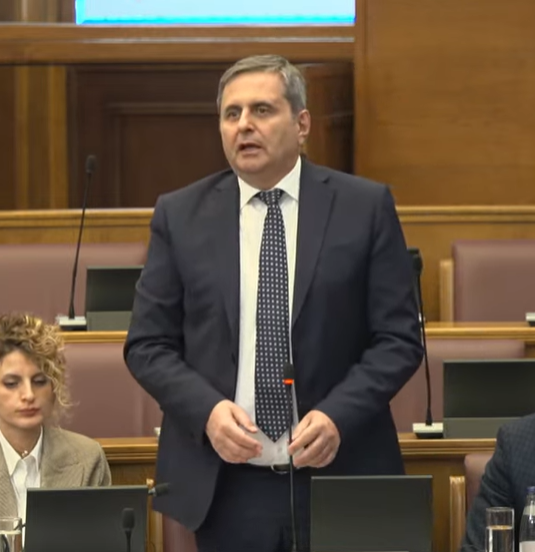
During a session of the Assembly of Montenegro, Slaven Radunović, the Minister of Spatial Planning, addressed questions regarding the ongoing legalization process for illegal structures. He clarified that the deadline for submission of documents to the Real Estate Administration applies specifically to illegal builders whose properties are not registered in the land registry. This group represents a limited number of individuals, contrary to concerns raised by some members of the Assembly.
Responding to a question from Assembly member Nađa Laković of the PES party about the possibility of extending the legalization deadline, Radunović noted that he had heard about an initiative from the Community of Municipalities proposing a six-month extension. He assured that this suggestion would be considered. The legalization timeframe is essentially open-ended, as the law does not impose a strict duration, but the Real Estate Administration will operate for the next five years specifically for this purpose.
Radunović emphasized that residents who wish to legalize their properties should not face obstacles in doing so within this five-year window. He acknowledged the complexities faced by residents of apartment buildings, indicating the need to differentiate whether a legal burden is recorded against the entire building or only specific parts.
Radunović stated, “We are seeking solutions and have clarified this situation through guidance to notaries and public executors.” He explained that if an apartment in a building lacks an occupancy permit but the apartment itself is compliant, the commission will investigate the status of any encumbrances on the building. Should it be determined that the burden lies with the developer or construction firm rather than the individual buyer, the legalization process would be permitted for that apartment.
He also highlighted the requirement for a report from a geodetic organization to accompany any legalization request. This report is the only additional burden on applicants during the legalization process. This stipulation is pertinent to properties identified in the ortofoto images from July 2023.
Assembly member Oskar Huter from the DPS party raised questions about the fairness of the Law on Legalization of Illegal Structures towards citizens. In response, Radunović acknowledged the challenge of balancing the needs of those seeking legalization with those who have complied with regulations. He remarked, “We have tried to find a solution that satisfies both sides. Those who need to legalize must pay. Illegal builders had significant advantages, constructing where and when they pleased.”
Huter reminded Radunović of a promise made during the 2018 electoral campaign for Podgorica, where he assured citizens that legalization for basic structures would be free. Radunović clarified that while this was a goal, it was contingent upon winning the elections. He reiterated a commitment to fairness, stating, “If demolitions are necessary, they will occur uniformly; no one will be favored.”
The discussion reflects ongoing efforts by the Montenegrin government to regulate and legalize various properties, ensuring all citizens adhere to the same standards while addressing the challenges posed by illegal constructions.


Belfast Gears Up for Vibrant St Patrick’s Day Parade on March 17

Cuba Faces Nationwide Blackout Amid Deepening Energy Crisis

Wirral Council to Restructure Leadership, Cutting Two Top Roles

Rethinking Resistance Training: Key Insights from US Experts

EU Membership on the Horizon: What It Means for Citizens

Ukrainian Drone Swarms Strike Moscow Region for Second Day

Henley Launches Innovative Initiative to Boost Local Economy

Court Ruling Allows Pandemic Tax Refund Claims Until 2026

Sean Penn’s Absence at 2026 Oscars Sparks Discussion

Coronation Street’s Shocking Murder Twist Reveals Family Secrets

Andrew Pierce Confirms Departure from ITV’s Good Morning Britain

Katie Price Faces New Health Concerns After Cancer Symptoms Resurface

Sue Radford Reveals Weight Loss Journey, Shedding 12–13 kg

Kate Garraway Sells £2 Million Home Amid Financial Struggles

Jordan Brook Faces Health Crisis in Hospital as Sophie Kasaei Stays Away

EastEnders’ Nicola Mitchell Faces Unexpected Pregnancy Crisis

Bailey Announces Heartbreaking Split from Rebecca After Reunion

Ann Ming Reflects on ITV’s ‘I Fought the Law’ Drama
-
 World4 months ago
Coronation Street’s Shocking Murder Twist Reveals Family Secrets
-
 Entertainment4 months ago
Andrew Pierce Confirms Departure from ITV’s Good Morning Britain
-
 Health7 months ago
Katie Price Faces New Health Concerns After Cancer Symptoms Resurface
-
 Health3 months ago
Sue Radford Reveals Weight Loss Journey, Shedding 12–13 kg
-
 Entertainment9 months ago
Kate Garraway Sells £2 Million Home Amid Financial Struggles
-
 Entertainment1 month ago
Jordan Brook Faces Health Crisis in Hospital as Sophie Kasaei Stays Away
-
 World5 months ago
EastEnders’ Nicola Mitchell Faces Unexpected Pregnancy Crisis
-
 World5 months ago
Bailey Announces Heartbreaking Split from Rebecca After Reunion
-
 Entertainment7 months ago
Ann Ming Reflects on ITV’s ‘I Fought the Law’ Drama
-

 Entertainment2 months ago
Selena Gomez’s Name Linked to Epstein: Examining the Claims
-

 Health8 months ago
TOWIE Stars Sophie Kasaei and Jordan Brook Pursue Fertility Treatment
-

 Health8 months ago
Fiona Phillips’ Husband Shares Heartbreaking Update on Her Health