Health
AI Tool EAGLE Streamlines Lung Cancer Mutation Detection

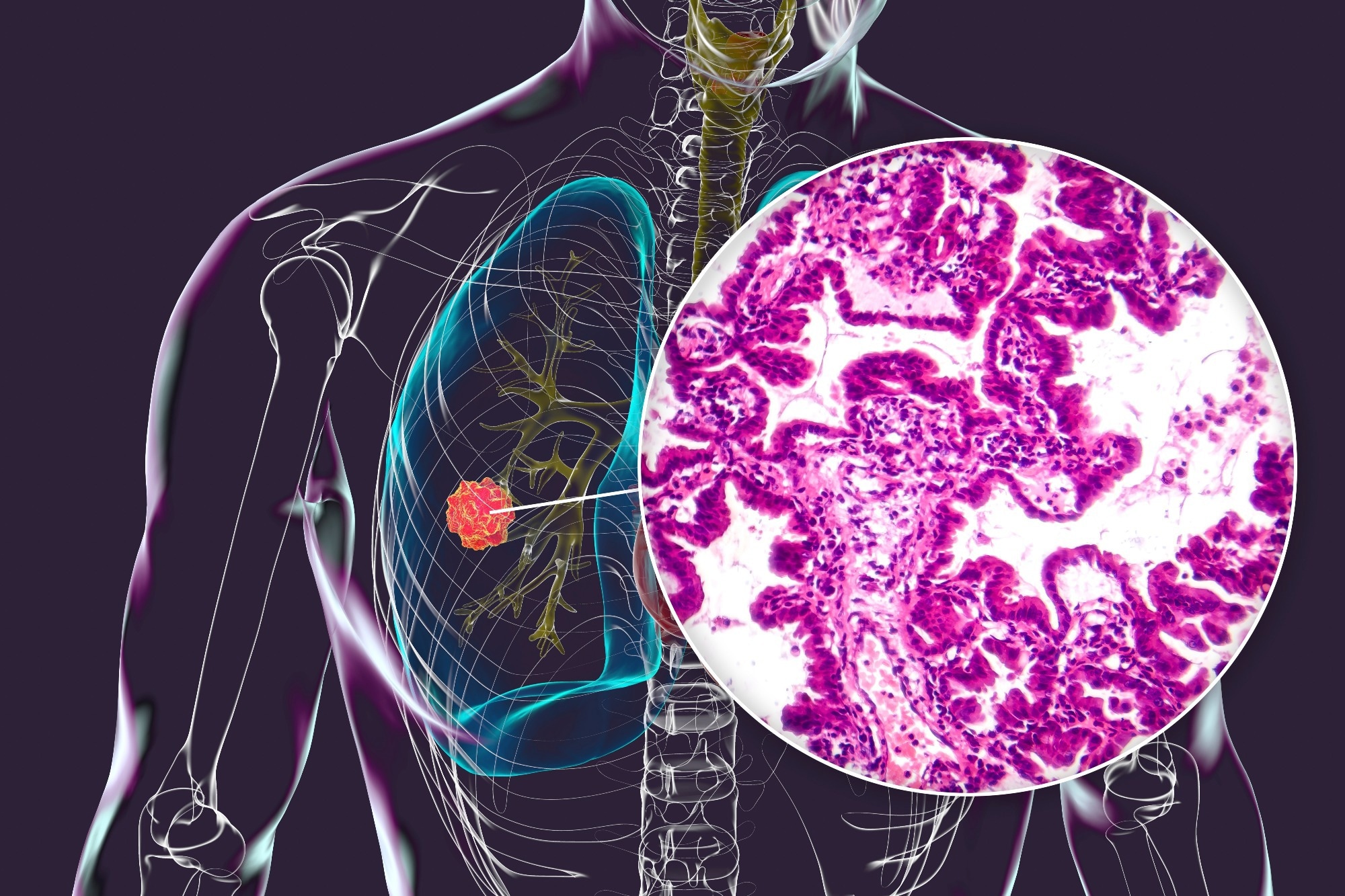
A groundbreaking artificial intelligence tool known as EAGLE has been developed to analyze lung cancer biopsy slides in less than an hour. This innovation promises to accurately predict crucial mutations associated with lung adenocarcinoma (LUAD), thereby reducing delays, costs, and the loss of valuable tissue samples. The findings, published in Nature Medicine, mark a significant advancement in precision cancer care.
The study focused on creating a computational model for detecting mutations in the epidermal growth factor receptor (EGFR), which is the most prevalent somatic mutation in kinase genes and essential for determining the appropriate first-line therapy for lung cancer patients. Accurate testing for EGFR mutations is vital, especially for patients with advanced-stage LUAD, as these mutations inform the best treatment strategies.
Despite the importance of EGFR testing, current rates are below established guidelines, often due to technical challenges in obtaining and processing biopsy samples. The EAGLE tool addresses these hurdles by utilizing digitized pathology slides stained with Hematoxylin and Eosin (H&E), allowing results to be generated without physical processing and at a fraction of the cost.
Details of the EAGLE Study
The EAGLE model was developed using a large international clinical dataset comprising 5,174 slides from the Memorial Sloan Kettering Cancer Center (MSKCC). The algorithm was fine-tuned to accommodate the biological and technical variability encountered in real clinical settings. Model validation was conducted using 1,742 internal slides and external cohorts from institutions across the United States and Europe.
In a silent trial, EAGLE demonstrated its clinical applicability by simulating real-world performance. The results of the rapid EGFR test were compared with those from the established Idylla test, which achieved a positive predictive value (PPV) of 0.988 and a sensitivity of 0.918. The model’s overall performance, indicated by the area under the curve (AUC), reached 0.847, although it was less accurate for metastatic specimens, with an AUC of 0.75 compared to 0.90 for primary samples.
The EAGLE model’s ability to detect clinically relevant EGFR mutations across various samples further underscores its robustness. In external cohorts, its performance closely aligned with internal validation results, achieving an AUC of 0.870.
Advantages and Future Directions
The EAGLE tool significantly enhances the speed of results delivery, with a median turnaround time of just 44 minutes. This is a marked improvement over the minimum 48 hours required for rapid testing and several weeks for next-generation sequencing (NGS). The streamlined process could reduce the number of rapid tests needed by 18% to 43%, depending on the threshold chosen, while maintaining high sensitivity and specificity.
The study also identified potential sources of false positive and negative results, highlighting that false positives often involved biologically related mutations such as ERBB2 insertions, while false negatives were linked to samples with minimal tumor architecture. Researchers believe that with pathologist oversight, the error rate could be significantly reduced.
While EAGLE is not intended to replace NGS, it serves as a preliminary screening tool to identify likely positive cases and rule out negative EGFR mutations. The model does not differentiate between EGFR subtypes that require targeted therapies, making NGS validation necessary before treatment decisions.
In conclusion, the EAGLE study presents a validated computational pathology model capable of enhancing diagnostic efficiency, reducing tissue consumption, and accelerating the integration of AI in clinical practice. Future research will aim to explore additional biomarkers and assess their effectiveness through prospective clinical trials.





Belfast Gears Up for Vibrant St Patrick’s Day Parade on March 17

Cuba Faces Nationwide Blackout Amid Deepening Energy Crisis

Wirral Council to Restructure Leadership, Cutting Two Top Roles

Rethinking Resistance Training: Key Insights from US Experts

EU Membership on the Horizon: What It Means for Citizens

Ukrainian Drone Swarms Strike Moscow Region for Second Day

Henley Launches Innovative Initiative to Boost Local Economy

Court Ruling Allows Pandemic Tax Refund Claims Until 2026

Sean Penn’s Absence at 2026 Oscars Sparks Discussion

Coronation Street’s Shocking Murder Twist Reveals Family Secrets

Andrew Pierce Confirms Departure from ITV’s Good Morning Britain

Katie Price Faces New Health Concerns After Cancer Symptoms Resurface

Gyles Brandreth Shares Grandson’s Cancer Battle and Recovery

Sue Radford Reveals Weight Loss Journey, Shedding 12–13 kg

Kate Garraway Sells £2 Million Home Amid Financial Struggles

Jordan Brook Faces Health Crisis in Hospital as Sophie Kasaei Stays Away

EastEnders’ Nicola Mitchell Faces Unexpected Pregnancy Crisis

Reddit Study Reveals Distinctions Between Lurkers and Power Users
-
 World8 months ago
Coronation Street’s Shocking Murder Twist Reveals Family Secrets
-
 Entertainment8 months ago
Andrew Pierce Confirms Departure from ITV’s Good Morning Britain
-
 Health11 months ago
Katie Price Faces New Health Concerns After Cancer Symptoms Resurface
-
 Health6 months ago
Gyles Brandreth Shares Grandson’s Cancer Battle and Recovery
-
 Health6 months ago
Sue Radford Reveals Weight Loss Journey, Shedding 12–13 kg
-
 Entertainment12 months ago
Kate Garraway Sells £2 Million Home Amid Financial Struggles
-
 Entertainment5 months ago
Jordan Brook Faces Health Crisis in Hospital as Sophie Kasaei Stays Away
-
 World9 months ago
EastEnders’ Nicola Mitchell Faces Unexpected Pregnancy Crisis
-
 Science8 months ago
Reddit Study Reveals Distinctions Between Lurkers and Power Users
-

 World9 months ago
Mother Charged After Son, 9, Killed in Tragic Incident in Italy
-

 Entertainment11 months ago
Ann Ming Reflects on ITV’s ‘I Fought the Law’ Drama
-

 World9 months ago
Bailey Announces Heartbreaking Split from Rebecca After Reunion