
Business
Why Scheduled Flights to Antarctica Remain a Rarity

Few airlines operate scheduled flights to Antarctica, a continent often considered the last frontier for air travel. Currently, only a handful of airlines provide limited services to this remote location, with the Australian carrier Qantas offering a sightseeing flight that bypasses the continent without landing. The absence of regular flights is largely due to extreme environmental conditions, stringent regulatory frameworks, and a lack of demand, as the only inhabitants are temporary research stations.
The challenging landscape of Antarctica is further complicated by the fact that these research facilities, while often staffed year-round, do not have the necessary infrastructure to support regular air travel. The majority of tourists visiting Antarctica do so via charter flights, which remain the only feasible option for air travel to the frozen continent.
Recent Developments in Antarctic Air Travel
The most recent instance of a commercial airliner landing in Antarctica occurred on December 1, 2025, when Hi Fly successfully operated an Airbus A330-300 at Wolf’s Fang Runway. This flight, arranged as part of a seasonal luxury tour with White Desert, marked a significant milestone as it was the first time an Airbus A330 had touched down on the continent. Earlier that year, Hi Fly also conducted an A340-300 service flight to the same runway, further establishing its role in Antarctic air travel for the fifth consecutive year.
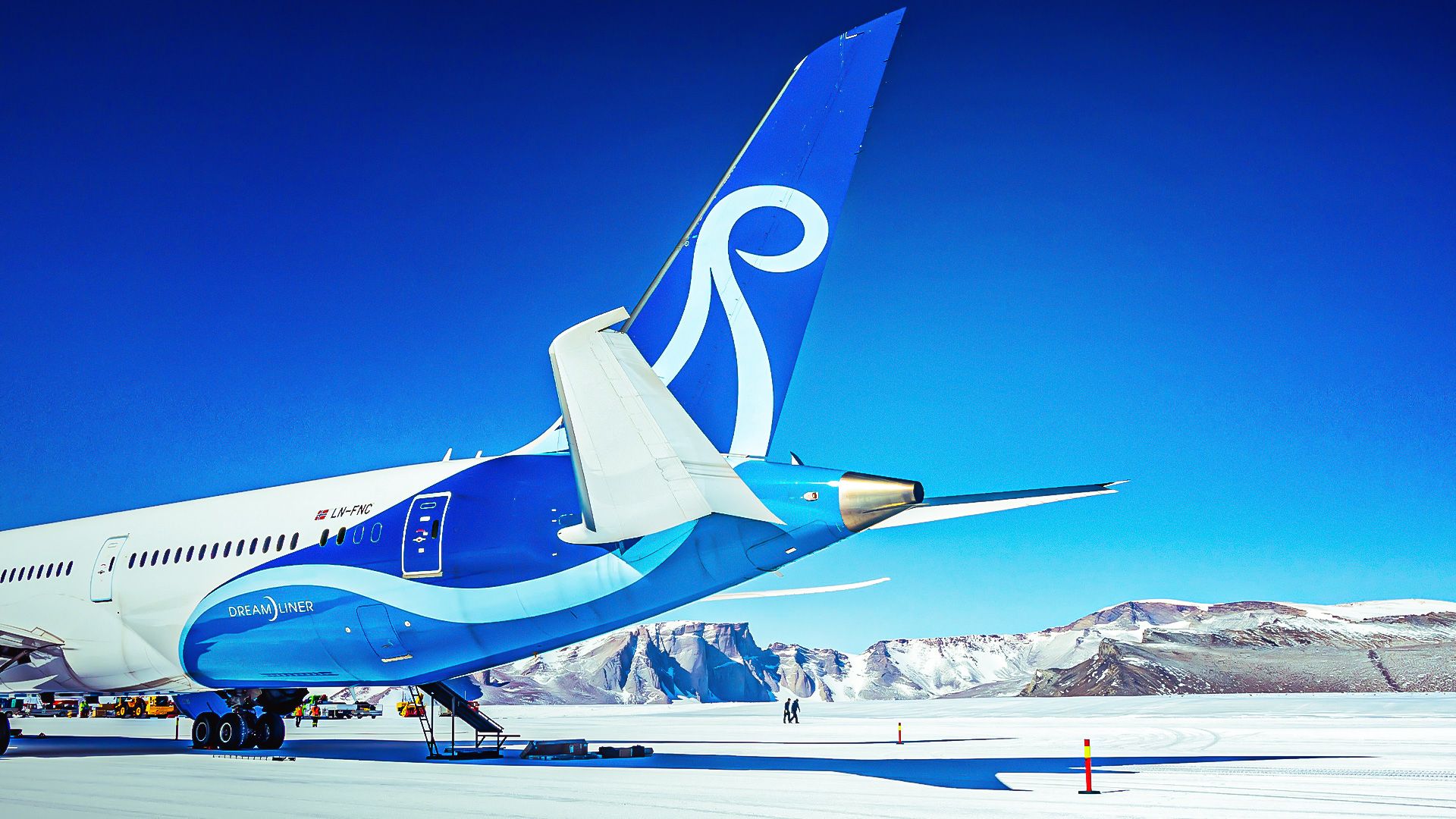
In November 2024, two noteworthy flights landed at Troll Airfield, with Norse Atlantic Airways utilizing a Boeing 787-9 Dreamliner, named “Everglades,” to support the Norwegian Polar Institute. Smartwings also made a contribution by flying a 737 MAX 8 to the Troll Research Station, highlighting the importance of chartered services in supporting scientific research in this harsh environment.
Challenges of Operating Flights to Antarctica
The reasons for the lack of scheduled flights to Antarctica contrast sharply with the popularity of Arctic flights, which serve as efficient routes between major population centers in the northern hemisphere. Flights from North America to Europe and Asia frequently overfly the Arctic, as the shortest routes often take them over the North Pole. In contrast, routes from southern hemisphere cities typically do not necessitate flying over Antarctica, making such flights impractical.
Additionally, the vast expanse of Antarctica presents a unique challenge, as there are no diversion airports in close proximity should an aircraft need to make an emergency landing. This absence of backup airports leads to stringent Extended-range Twin-engine Operational Performance Standards (ETOPS) requirements. Consequently, only the highest-performance aircraft can meet these criteria, making operations costly and necessitating full passenger loads and cargo capacity to be profitable.
The infrastructure in Antarctica is limited to a few established airfields. One notable example is the Teniente R. Marsh Martin Airport, located on King George Island, which has a gravel runway close enough to support logistical operations for research stations. Other significant airfields include Wolf’s Fang Runway and Troll Airfield, both of which are operational only during the summer season.
The White Desert tour company operates private flights to a camp called “Whichaway,” touted as the first hotel on the continent. This further reflects the limited but specialized nature of air travel to Antarctica.
Gateway Cities and Flight Operations
Charter flights to Antarctica primarily operate from a select number of gateway cities. The most prominent departure point is Punta Arenas, Chile, which governs King George Island and facilitates deeper access into the continent. Flights from Christchurch, New Zealand, serve as a critical hub for the U.S. Antarctic Program’s “Operation Deep Freeze,” providing military aircraft support to McMurdo Station, the largest research base in Antarctica.
Flights organized under the Dronning Maud Land Air Network (DROMLAN) typically depart from Cape Town, South Africa, serving a consortium of eleven nations. This network includes regular flights to Troll Airfield, which cater to both research and luxury tourism.
The majority of air services to Antarctica are conducted by a mix of specialized aircraft. These range from small ski-equipped turboprops to larger commercial airliners and military cargo jets, depending on the specific mission and the capabilities of the landing strip. Notable aircraft include the Basler BT-67, a modified Douglas DC-3, and the De Havilland Canada DHC-6 Twin Otter, favored for its short takeoff and landing capabilities.
Despite the significant challenges, the allure of Antarctica continues to attract interest, albeit in a limited context. The unique blend of adventure tourism and scientific research keeps the hope alive for more regular air travel to the world’s most remote continent.












Belfast Gears Up for Vibrant St Patrick’s Day Parade on March 17

Cuba Faces Nationwide Blackout Amid Deepening Energy Crisis

Wirral Council to Restructure Leadership, Cutting Two Top Roles

Rethinking Resistance Training: Key Insights from US Experts

EU Membership on the Horizon: What It Means for Citizens

Ukrainian Drone Swarms Strike Moscow Region for Second Day

Henley Launches Innovative Initiative to Boost Local Economy

Court Ruling Allows Pandemic Tax Refund Claims Until 2026

Sean Penn’s Absence at 2026 Oscars Sparks Discussion

Coronation Street’s Shocking Murder Twist Reveals Family Secrets

Andrew Pierce Confirms Departure from ITV’s Good Morning Britain

Katie Price Faces New Health Concerns After Cancer Symptoms Resurface

Sue Radford Reveals Weight Loss Journey, Shedding 12–13 kg

Kate Garraway Sells £2 Million Home Amid Financial Struggles

Jordan Brook Faces Health Crisis in Hospital as Sophie Kasaei Stays Away

EastEnders’ Nicola Mitchell Faces Unexpected Pregnancy Crisis

Bailey Announces Heartbreaking Split from Rebecca After Reunion

Ann Ming Reflects on ITV’s ‘I Fought the Law’ Drama
-
 World4 months ago
Coronation Street’s Shocking Murder Twist Reveals Family Secrets
-
 Entertainment4 months ago
Andrew Pierce Confirms Departure from ITV’s Good Morning Britain
-
 Health7 months ago
Katie Price Faces New Health Concerns After Cancer Symptoms Resurface
-
 Health2 months ago
Sue Radford Reveals Weight Loss Journey, Shedding 12–13 kg
-
 Entertainment8 months ago
Kate Garraway Sells £2 Million Home Amid Financial Struggles
-
 Entertainment3 weeks ago
Jordan Brook Faces Health Crisis in Hospital as Sophie Kasaei Stays Away
-
 World5 months ago
EastEnders’ Nicola Mitchell Faces Unexpected Pregnancy Crisis
-
 World5 months ago
Bailey Announces Heartbreaking Split from Rebecca After Reunion
-
 Entertainment7 months ago
Ann Ming Reflects on ITV’s ‘I Fought the Law’ Drama
-

 Entertainment2 months ago
Selena Gomez’s Name Linked to Epstein: Examining the Claims
-

 Health7 months ago
TOWIE Stars Sophie Kasaei and Jordan Brook Pursue Fertility Treatment
-

 Health7 months ago
Fiona Phillips’ Husband Shares Heartbreaking Update on Her Health