
Business
Venezuela Intensifies Territorial Claims Over Essequibo Region

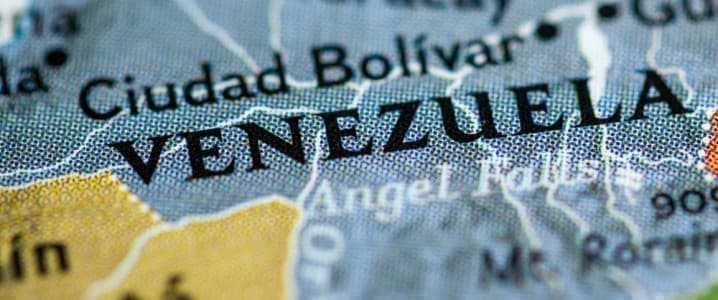
The political landscape in South America is shifting as Venezuela’s President Nicolás Maduro escalates his rhetoric concerning the disputed Essequibo region of Guyana. With Guyana preparing for its general elections on September 1, 2023, the situation is becoming increasingly tense. President Irfaan Ali of the People’s Progressive Party/Civic (PPP/C) is seeking re-election, while opposition alliances aim to strengthen their position.
Maduro’s government has recently conducted elections for officials to govern the Essequibo territory, despite a ruling from the International Court of Justice that mandated a halt to such actions. This move defies international recognition, which continues to acknowledge the region as part of Guyana. In recent weeks, Maduro has intensified his statements, suggesting a possible annexation and issuing threats of partial conquest. These developments include implicit warnings directed at international partners, especially ExxonMobil, which has significant interests in Guyana’s oil sector.
Domestic Motivations Behind the Assertiveness
Analysts suggest that Maduro’s assertiveness may serve dual purposes. Not only does it aim to stake a claim over the resource-rich Essequibo region, but it also appears to be a strategy designed to rally domestic support amid ongoing economic challenges in Venezuela. The country is grappling with severe inflation and shortages, prompting Maduro to adopt a nationalist narrative that resonates with many Venezuelans.
At the same time, this geopolitical maneuvering tests the willingness of the United States and the Caribbean Community (CARICOM) to support Guyana unequivocally. The outcome of this standoff could have broader implications for regional stability and international relations, particularly concerning energy resources.
As Guyana approaches its elections, the focus will not only be on domestic issues but also on how it navigates the escalating claims from Venezuela. The PPP/C’s administration, under Ali’s leadership, will need to address these territorial disputes while simultaneously appealing to voters who may be concerned about national security and sovereignty.
The unfolding situation highlights the ongoing complexities of regional geopolitics in South America, where resource-rich areas are often at the center of disputes. The international community will be watching closely to see how both nations respond to this heightened tension and what it means for the future of the Essequibo region.










Belfast Gears Up for Vibrant St Patrick’s Day Parade on March 17

Cuba Faces Nationwide Blackout Amid Deepening Energy Crisis

Wirral Council to Restructure Leadership, Cutting Two Top Roles

Rethinking Resistance Training: Key Insights from US Experts

EU Membership on the Horizon: What It Means for Citizens

Ukrainian Drone Swarms Strike Moscow Region for Second Day

Henley Launches Innovative Initiative to Boost Local Economy

Court Ruling Allows Pandemic Tax Refund Claims Until 2026

Sean Penn’s Absence at 2026 Oscars Sparks Discussion

Coronation Street’s Shocking Murder Twist Reveals Family Secrets

Andrew Pierce Confirms Departure from ITV’s Good Morning Britain

Katie Price Faces New Health Concerns After Cancer Symptoms Resurface

Gyles Brandreth Shares Grandson’s Cancer Battle and Recovery

Sue Radford Reveals Weight Loss Journey, Shedding 12–13 kg

Kate Garraway Sells £2 Million Home Amid Financial Struggles

Jordan Brook Faces Health Crisis in Hospital as Sophie Kasaei Stays Away

EastEnders’ Nicola Mitchell Faces Unexpected Pregnancy Crisis

Reddit Study Reveals Distinctions Between Lurkers and Power Users
-
 World9 months ago
Coronation Street’s Shocking Murder Twist Reveals Family Secrets
-
 Entertainment8 months ago
Andrew Pierce Confirms Departure from ITV’s Good Morning Britain
-
 Health12 months ago
Katie Price Faces New Health Concerns After Cancer Symptoms Resurface
-
 Health7 months ago
Gyles Brandreth Shares Grandson’s Cancer Battle and Recovery
-
 Health7 months ago
Sue Radford Reveals Weight Loss Journey, Shedding 12–13 kg
-
 Entertainment1 year ago
Kate Garraway Sells £2 Million Home Amid Financial Struggles
-
 Entertainment5 months ago
Jordan Brook Faces Health Crisis in Hospital as Sophie Kasaei Stays Away
-
 World10 months ago
EastEnders’ Nicola Mitchell Faces Unexpected Pregnancy Crisis
-
 Science9 months ago
Reddit Study Reveals Distinctions Between Lurkers and Power Users
-

 World9 months ago
Mother Charged After Son, 9, Killed in Tragic Incident in Italy
-

 World9 months ago
Bailey Announces Heartbreaking Split from Rebecca After Reunion
-

 Entertainment12 months ago
Ann Ming Reflects on ITV’s ‘I Fought the Law’ Drama