
Business
Rail Industry Confidence Declines as Firms Cut Staff and Freeze Hiring

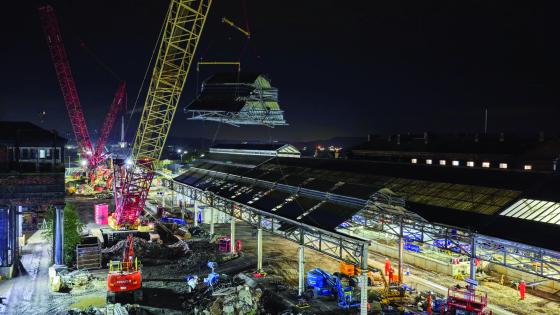
Recent findings from a survey conducted by the Railway Industry Association (RIA) indicate a significant decline in confidence within the UK rail market. The survey, which involved 125 railway business leaders and was carried out by independent polling company Savanta in October and November 2025, reveals that many companies are responding to this uncertainty by freezing recruitment or reducing their workforce.
The data shows that 64% of rail business leaders anticipate a contraction in the rail market over the next 12 months, a marked increase from the 48% reported in a similar survey in 2024. In contrast, only 12% expect growth, down from 26% last year. Alarmingly, almost two-thirds—specifically, 62%—of rail businesses are either halting recruitment or cutting jobs, with 34% reporting actual redundancies. Furthermore, a notable 85% of respondents predict a hiatus in rail work within the next year.
Impact of Market Conditions on Recruitment
The survey highlights that many companies are prioritizing work outside the UK as a response to the challenging conditions. Although the percentage of leaders predicting their businesses will contract in the next year decreased by six percentage points to 23%, those expecting growth fell by two percentage points to 44%. These numbers point to a cautious outlook among industry stakeholders.
Darren Caplan, Chief Executive of the RIA, described the survey’s findings as “concerning.” He noted that, despite rising levels of rail passenger and freight revenue, confidence in the UK rail market is waning, causing businesses to either freeze hiring or reduce headcount. Caplan remarked, “It is positive to see that individual rail businesses are generally more confident in their own ability to grow, albeit in many cases this growth is anticipated to occur in overseas markets.”
The RIA has long warned about the cyclical nature of rail infrastructure and rolling stock investment. Caplan pointed out that the current situation underscores the urgent need for government intervention to bolster confidence among rail suppliers, which is essential for them to compete effectively for work and invest in their businesses.
Call for Government Action
Caplan emphasized the necessity for immediate action from the government to restore confidence in the rail sector. He outlined several critical steps, including providing more detailed information on rail enhancement projects included in the Infrastructure Pipeline, as well as developing a clear strategy for rolling stock.
Clarity on innovative funding options, whether from private sources or third-party investments, is crucial. Major rail clients should also promptly communicate their short- and medium-term spending plans, particularly in light of the recent government Spending Review and Budget priorities. Such measures could alleviate current market concerns and offer suppliers the certainty they need as the rail sector undergoes restructuring and as Great British Railways is established in the coming years.
Caplan concluded by expressing optimism for the future of UK rail, noting significant projects like the Transpennine Route Upgrade, East West Rail, Midlands Rail Hub, and the Docklands Light Rail extension. He reiterated that immediate steps are essential to foster a more confident environment for the rail industry, which is crucial for its long-term sustainability and growth.












Belfast Gears Up for Vibrant St Patrick’s Day Parade on March 17

Cuba Faces Nationwide Blackout Amid Deepening Energy Crisis

Wirral Council to Restructure Leadership, Cutting Two Top Roles

Rethinking Resistance Training: Key Insights from US Experts

EU Membership on the Horizon: What It Means for Citizens

Ukrainian Drone Swarms Strike Moscow Region for Second Day

Henley Launches Innovative Initiative to Boost Local Economy

Court Ruling Allows Pandemic Tax Refund Claims Until 2026

Sean Penn’s Absence at 2026 Oscars Sparks Discussion

Coronation Street’s Shocking Murder Twist Reveals Family Secrets

Andrew Pierce Confirms Departure from ITV’s Good Morning Britain

Katie Price Faces New Health Concerns After Cancer Symptoms Resurface

Gyles Brandreth Shares Grandson’s Cancer Battle and Recovery

Sue Radford Reveals Weight Loss Journey, Shedding 12–13 kg

Kate Garraway Sells £2 Million Home Amid Financial Struggles

Jordan Brook Faces Health Crisis in Hospital as Sophie Kasaei Stays Away

EastEnders’ Nicola Mitchell Faces Unexpected Pregnancy Crisis

Reddit Study Reveals Distinctions Between Lurkers and Power Users
-
 World8 months ago
Coronation Street’s Shocking Murder Twist Reveals Family Secrets
-
 Entertainment8 months ago
Andrew Pierce Confirms Departure from ITV’s Good Morning Britain
-
 Health12 months ago
Katie Price Faces New Health Concerns After Cancer Symptoms Resurface
-
 Health7 months ago
Gyles Brandreth Shares Grandson’s Cancer Battle and Recovery
-
 Health7 months ago
Sue Radford Reveals Weight Loss Journey, Shedding 12–13 kg
-
 Entertainment1 year ago
Kate Garraway Sells £2 Million Home Amid Financial Struggles
-
 Entertainment5 months ago
Jordan Brook Faces Health Crisis in Hospital as Sophie Kasaei Stays Away
-
 World10 months ago
EastEnders’ Nicola Mitchell Faces Unexpected Pregnancy Crisis
-
 Science8 months ago
Reddit Study Reveals Distinctions Between Lurkers and Power Users
-

 World9 months ago
Mother Charged After Son, 9, Killed in Tragic Incident in Italy
-

 Entertainment12 months ago
Ann Ming Reflects on ITV’s ‘I Fought the Law’ Drama
-

 World9 months ago
Bailey Announces Heartbreaking Split from Rebecca After Reunion