
Business
Middle East Oil Giants Invest Billions in Renewable Energy Transition

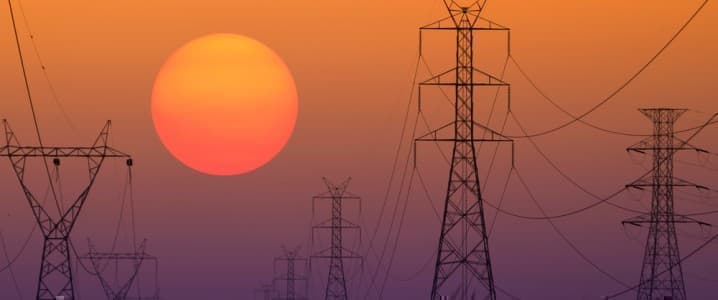
Several countries in the Middle East are making substantial investments to transition their energy sectors towards renewable sources. As part of a broader strategy to diversify their economies and reduce reliance on fossil fuels, nations like the United Arab Emirates (UAE), Saudi Arabia, and Qatar are accelerating their clean energy initiatives.
Historically, oil and gas production has provided these countries with significant revenue, enabling rapid infrastructure development and improvements in living standards. However, as the global energy landscape shifts towards greener alternatives, these nations are recognizing the need to diversify their sources of income. This transition is crucial for long-term sustainability and economic resilience.
Investment in clean energy is expected to see considerable growth in the region. For instance, solar photovoltaic capacity in the Middle East and North Africa (MENA) is projected to increase tenfold by 2035. By that year, renewable energy sources are anticipated to contribute 25 percent of the region’s electricity generation. Furthermore, nuclear energy capacity is expected to triple during the same period.
Renewable Energy Goals in the UAE and Saudi Arabia
In the UAE, ambitious plans are underway to achieve net-zero carbon emissions by 2050, aligning with the targets set forth in the Paris Agreement. The government aims for its energy mix to include 44 percent alternative energy, 38 percent gas, 12 percent clean coal, and 6 percent nuclear power by 2050. Additionally, the UAE plans to create 50,000 new jobs in the renewable sector and triple its renewable energy capacity to 14 GW by 2030. By 2031, the goal is to increase the share of alternative energy in the total energy mix to 30 percent.
The UAE hosts some of the largest solar facilities globally, including the Mohammed bin Rashid Al Maktoum Solar Park in Dubai, which is projected to supply energy to approximately 800,000 homes by 2030. In 2023, the country launched its first wind power initiative, comprising a 104 MW project across four sites. Additionally, the UAE is developing its nuclear energy capabilities to become the first Arab nation to operate a nuclear plant. The government also aims to become a major producer of green hydrogen by 2031.
To reduce emissions from its fossil fuel industry, the UAE is investing in carbon capture technology. The state-owned oil company ADNOC is developing the largest carbon capture project in the MENA region, with a target of capturing 1.5 million tonnes of carbon annually.
In Saudi Arabia, the government is channeling over $40 billion annually from its Public Investment Fund into diversification projects. The Kingdom aims for renewable energy to make up 50 percent of its energy generation by 2030, primarily through investments in wind and solar power. By the end of the decade, Saudi Arabia’s renewable energy capacity is expected to reach 90 GW alongside around 48 gigawatt-hours of energy storage capacity.
A notable collaboration between the Public Investment Company and Saudi Arabia’s ACWA Power aims to develop a 15 GW renewable energy portfolio by 2025, increasing green energy output to 43 GW. Furthermore, construction of the NEOM Green Hydrogen Project is nearing completion, with expectations to create the world’s largest renewable-powered ammonia complex in the next two years.
Qatar and Kuwait’s Renewable Energy Initiatives
Qatar has set a target to reduce greenhouse gas emissions by 25 percent by 2030, guided by the Qatar National Renewable Energy Strategy (QNRES). This initiative aims to enhance energy sustainability while alleviating pressure on the grid infrastructure. The government plans to install 4 GW of utility-scale renewable energy capacity, primarily through solar farm developments.
Kuwait, while slightly more conservative, aims to generate 15 percent of its total energy needs from renewable sources by 2030. This goal will be supported by a $99 million investment in the 10 MW Sidrah 500 solar plant. Current projections indicate that Kuwait could achieve 2.9 GW of cumulative solar capacity by 2030, up from just 50 MW at present, with potential growth to 10.1 GW by 2035.
The MENA region is witnessing a significant shift in energy strategy, with a strong focus on expanding renewable energy capacity. As nations like the UAE and Saudi Arabia advance their green energy initiatives, they set a benchmark for others in the region, highlighting the critical need for economic diversification away from fossil fuels.










Belfast Gears Up for Vibrant St Patrick’s Day Parade on March 17

Cuba Faces Nationwide Blackout Amid Deepening Energy Crisis

Wirral Council to Restructure Leadership, Cutting Two Top Roles

Rethinking Resistance Training: Key Insights from US Experts

EU Membership on the Horizon: What It Means for Citizens

Ukrainian Drone Swarms Strike Moscow Region for Second Day

Henley Launches Innovative Initiative to Boost Local Economy

Court Ruling Allows Pandemic Tax Refund Claims Until 2026

Sean Penn’s Absence at 2026 Oscars Sparks Discussion

Coronation Street’s Shocking Murder Twist Reveals Family Secrets

Andrew Pierce Confirms Departure from ITV’s Good Morning Britain

Katie Price Faces New Health Concerns After Cancer Symptoms Resurface

Sue Radford Reveals Weight Loss Journey, Shedding 12–13 kg

Kate Garraway Sells £2 Million Home Amid Financial Struggles

Jordan Brook Faces Health Crisis in Hospital as Sophie Kasaei Stays Away

EastEnders’ Nicola Mitchell Faces Unexpected Pregnancy Crisis

Bailey Announces Heartbreaking Split from Rebecca After Reunion

Ann Ming Reflects on ITV’s ‘I Fought the Law’ Drama
-
 World4 months ago
Coronation Street’s Shocking Murder Twist Reveals Family Secrets
-
 Entertainment4 months ago
Andrew Pierce Confirms Departure from ITV’s Good Morning Britain
-
 Health7 months ago
Katie Price Faces New Health Concerns After Cancer Symptoms Resurface
-
 Health2 months ago
Sue Radford Reveals Weight Loss Journey, Shedding 12–13 kg
-
 Entertainment8 months ago
Kate Garraway Sells £2 Million Home Amid Financial Struggles
-
 Entertainment2 weeks ago
Jordan Brook Faces Health Crisis in Hospital as Sophie Kasaei Stays Away
-
 World5 months ago
EastEnders’ Nicola Mitchell Faces Unexpected Pregnancy Crisis
-
 World4 months ago
Bailey Announces Heartbreaking Split from Rebecca After Reunion
-
 Entertainment7 months ago
Ann Ming Reflects on ITV’s ‘I Fought the Law’ Drama
-

 Entertainment2 months ago
Selena Gomez’s Name Linked to Epstein: Examining the Claims
-

 Health7 months ago
TOWIE Stars Sophie Kasaei and Jordan Brook Pursue Fertility Treatment
-

 Health7 months ago
Fiona Phillips’ Husband Shares Heartbreaking Update on Her Health