
Sports
Former Central Bank Official Denies Criminal Charges in Court

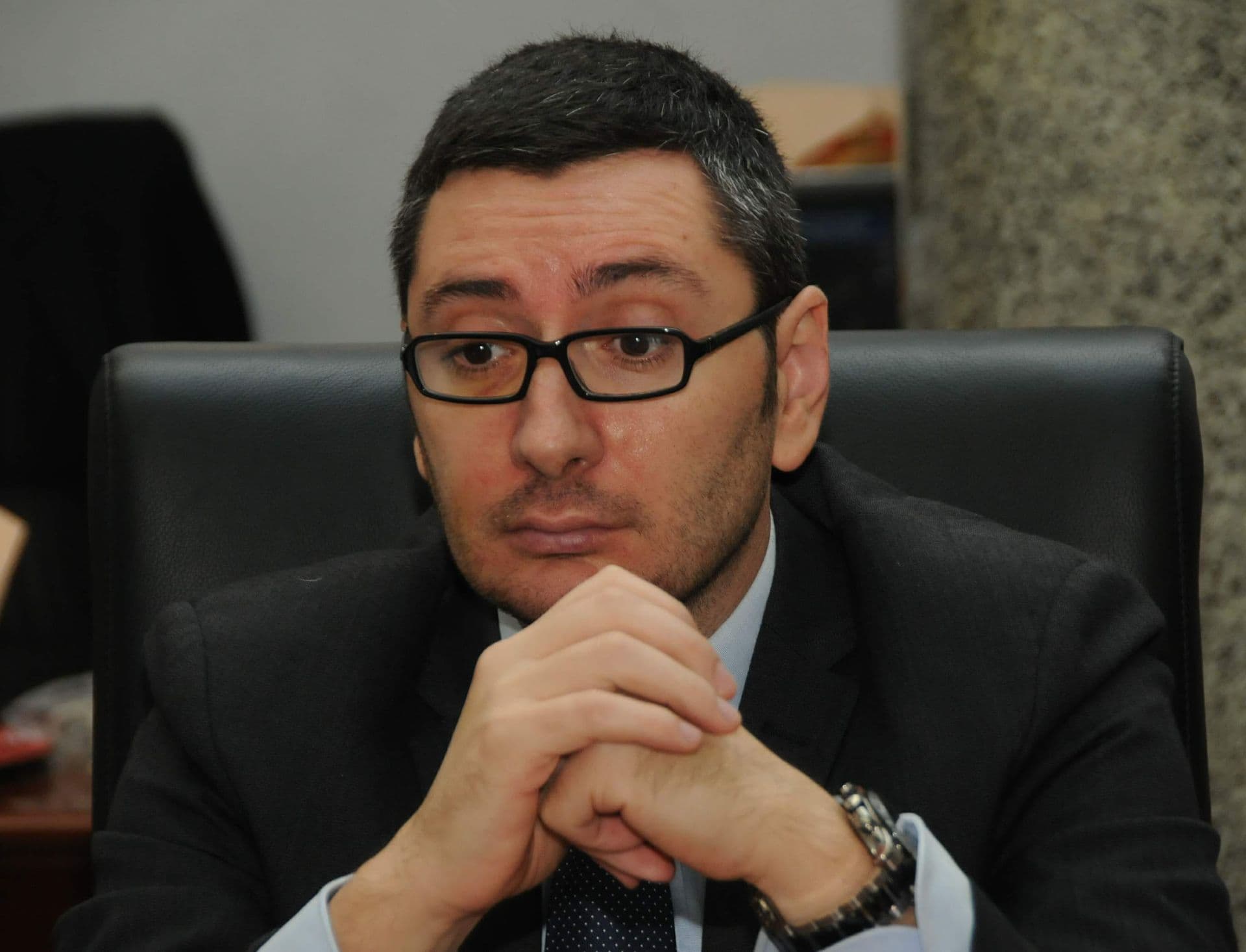
Velibor Milošević, the former Vice Governor of the Central Bank of Montenegro (CBCG), testified today at the High Court in Podgorica, denying allegations of criminal activity linked to Duško Knežević, the owner of the Atlas Group. Milošević stated that he resisted becoming a cooperating witness due to intimidation and pressure from retired Chief Special Prosecutor Milivoje Katnić. He further claimed that Katnić concealed critical documentation that could undermine the prosecution’s case.
Milošević urged the court to review a transcript from his interrogation, asserting that its absence in the indictment significantly weakens the prosecution’s position. “If this record were considered, the indictment would not hold,” he stated. He expressed gratitude to the court for proceeding with the hearing after seven years of delays, indicating that he could have served a sentence and been rehabilitated by now.
His legal team, consisting of lawyers Nikola Laković and Dragoljub Đukanović, requested the court to dismiss the charges against Milošević, arguing that there is insufficient evidence to support any allegations of criminal conduct or involvement in Knežević’s alleged criminal organization. They maintained that the indictment from the Special State Prosecutor’s Office (SDT) fails to meet both legal and factual requirements for confirmation.
Nikola Laković emphasized that there is no credible suspicion that Milošević was part of a criminal organization, pointing out instead that he had proposed the introduction of temporary administration in Atlas Bank, owned by Knežević. This measure is seen as one of the most stringent actions possible within the banking sector.
The defense also highlighted the inconsistency of charging Milošević for membership in Knežević’s organization, particularly since the court had previously dismissed charges against Knežević himself. Đukanović argued that the prosecution’s claims rely on vague assertions without tangible evidence. He presented documentation, including official email correspondence and proposed measures against Atlas Bank, to show that Milošević acted lawfully and often advocated for strict penalties against the bank owned by Knežević.
Throughout the proceedings, Milošević’s attorneys underscored the absence of evidence from the SDT to support claims that Milošević informed Knežević about regulatory inspections. In fact, they stated that Milošević had initiated extraordinary inspections of Atlas Bank, supported by emails from 2014 and 2015, which documented the oversight processes he implemented.
“The notion that someone who initiated inspections and proposed sanctions could simultaneously work in the interest of the bank’s owner is illogical,” Laković argued. He noted that all inspectors interviewed during the investigation affirmed that the controls over Atlas and Invest Bank were conducted lawfully and professionally, devoid of any external pressure. Numerous negative reports regarding Atlas Bank’s operations further contradict the assertion that Milošević shielded the bank or its owner.
The defense refuted accusations that Milošević had concealed reports on Atlas Bank’s status, presenting emails in which he regularly updated the CBCG governor and other senior officials about the results of the inspections, including actions taken by foreign regulatory bodies against the bank. Notably, an email from November 2015 outlined his formal suggestion for temporary administration at Atlas Bank, a measure deemed the strictest available under CBCG regulations.
Additionally, the defense challenged the SDT’s claim that Milošević had represented Knežević as a reputable businessman during international visits in order to facilitate his business interests. “Even if such behavior occurred, it does not constitute a criminal act,” emphasized Janković, arguing that there is no evidence of Milošević gaining any personal benefit. He reminded the court that Knežević was perceived as a successful businessman with close ties to the authorities at the time.
In September 2022, the High Court dismissed charges against Knežević due to the United Kingdom’s refusal to extradite him for prosecution in Montenegro. Alongside Knežević and Milošević, others named in the indictment include Mladen Dašić, Miodrag Knežević, Tomica Knežević, Tomislav Knežević, Andrija Knežević, Vuk Dragašević, Svetlana Mijatović, Andrej Koneneko, Ekatarina Perovna Konanenko, and Ekatarina Konaneko.
Current cooperating witnesses in this case include former Atlas Bank General Director Đorđe Đurđić and Vlatko Rašović. The indictment alleges that Knežević formed a criminal organization operating in Cyprus and Montenegro during the latter half of 2010, which continued until 2017, utilizing legitimate business structures to facilitate its activities. Under Knežević’s leadership, the organization allegedly acquired loans without repayment, with funds guaranteed by deposits made by Knežević-owned companies.
As the case unfolds, the implications for Montenegro’s banking sector and its regulatory practices remain significant, with the potential for broader impacts on governance and accountability within the financial system.













Belfast Gears Up for Vibrant St Patrick’s Day Parade on March 17

Cuba Faces Nationwide Blackout Amid Deepening Energy Crisis

Wirral Council to Restructure Leadership, Cutting Two Top Roles

Rethinking Resistance Training: Key Insights from US Experts

EU Membership on the Horizon: What It Means for Citizens

Ukrainian Drone Swarms Strike Moscow Region for Second Day

Henley Launches Innovative Initiative to Boost Local Economy

Court Ruling Allows Pandemic Tax Refund Claims Until 2026

Sean Penn’s Absence at 2026 Oscars Sparks Discussion

Coronation Street’s Shocking Murder Twist Reveals Family Secrets

Andrew Pierce Confirms Departure from ITV’s Good Morning Britain

Katie Price Faces New Health Concerns After Cancer Symptoms Resurface

Gyles Brandreth Shares Grandson’s Cancer Battle and Recovery

Sue Radford Reveals Weight Loss Journey, Shedding 12–13 kg

Kate Garraway Sells £2 Million Home Amid Financial Struggles

Jordan Brook Faces Health Crisis in Hospital as Sophie Kasaei Stays Away

EastEnders’ Nicola Mitchell Faces Unexpected Pregnancy Crisis

Reddit Study Reveals Distinctions Between Lurkers and Power Users
-
 World8 months ago
Coronation Street’s Shocking Murder Twist Reveals Family Secrets
-
 Entertainment8 months ago
Andrew Pierce Confirms Departure from ITV’s Good Morning Britain
-
 Health11 months ago
Katie Price Faces New Health Concerns After Cancer Symptoms Resurface
-
 Health6 months ago
Gyles Brandreth Shares Grandson’s Cancer Battle and Recovery
-
 Health6 months ago
Sue Radford Reveals Weight Loss Journey, Shedding 12–13 kg
-
 Entertainment12 months ago
Kate Garraway Sells £2 Million Home Amid Financial Struggles
-
 Entertainment5 months ago
Jordan Brook Faces Health Crisis in Hospital as Sophie Kasaei Stays Away
-
 World9 months ago
EastEnders’ Nicola Mitchell Faces Unexpected Pregnancy Crisis
-
 Science8 months ago
Reddit Study Reveals Distinctions Between Lurkers and Power Users
-

 World8 months ago
Mother Charged After Son, 9, Killed in Tragic Incident in Italy
-

 Entertainment11 months ago
Ann Ming Reflects on ITV’s ‘I Fought the Law’ Drama
-

 World8 months ago
Bailey Announces Heartbreaking Split from Rebecca After Reunion