
Politics
mRNA Vaccine Development Faces Uncertainty Amid U.S. Policy Shifts

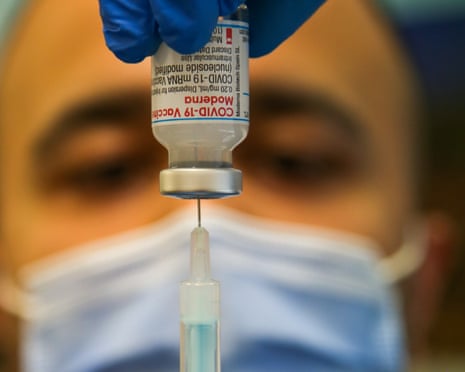
The development of mRNA vaccines, which revolutionized the response to the Covid-19 pandemic, now faces significant challenges due to changes in U.S. government policy. Following an announcement from the U.S. Department of Health and Human Services regarding a “coordinated wind-down” of federal funding for mRNA research, the future of this groundbreaking technology is uncertain. The decision to cancel an additional $500 million in funding for 22 projects has raised alarm among scientists and industry experts.
The rapid success of mRNA vaccines during the pandemic validated the ideas of the late scientist Donald Braben, who argued that significant breakthroughs occur when researchers are free to explore bold ideas without the pressure of immediate results. Pioneers of the mRNA technology, Katalin Karikó and Drew Weissman, were awarded the Nobel Prize for their work, highlighting the potential for this approach to transform the treatment of various diseases, including influenza, HIV, and cancer.
Despite the promising future of mRNA technology, the current U.S. administration, under the influence of health secretary Robert F. Kennedy Jr., has taken a stance against it. This has included undermining public confidence in vaccines and implementing funding cuts that could hinder future developments. The reversal in U.S. support sends a troubling signal to researchers and investors, indicating a lack of commitment from the government to support innovative health solutions.
The pharmaceutical industry is keen to continue developing mRNA technology, as it has proven effective against Covid-19. However, the uncertainty surrounding U.S. policy complicates the landscape. Although early laboratory data suggests mRNA vaccines can effectively prime the immune system, real-world results remain harder to quantify.
Global Implications and Future Directions
U.S. market instability could deter investments and slow progress in mRNA vaccine development. With hundreds of vaccines currently in clinical trials, including promising candidates for challenging pathogens like HIV, the potential for mRNA technology to address unmet medical needs remains vast. Recent advancements in mRNA flu vaccines, such as those developed by Moderna and Pfizer, show significant improvements over traditional flu shots, which have only about a 30% effectiveness rate in some seasons.
The anticipated decision on U.S. approval for these new mRNA flu vaccines is expected in early 2026, and it will be overseen by the U.S. Food and Drug Administration’s Center for Biologics Evaluation and Research, headed by Vinay Prasad, a known ally of Kennedy. Should the results be negative or delayed, it would underscore the administration’s resistance to mRNA advancements.
In contrast, the European Union and the United Kingdom have opportunities to capitalize on the current situation. The EU is reportedly considering a €500 million investment to attract U.S. scientists disillusioned by the political climate under Kennedy, alongside an additional €100 million pledged by France. Although this funding is a fraction of what has been cut in the U.S., it signals a commitment to advancing mRNA research in Europe.
The UK, with its robust vaccine research capabilities, can also play a pivotal role in mRNA development. The country has already established several facilities capable of producing vaccines and is investing in partnerships with the industry to enhance its capabilities.
Critical Moment for mRNA Technology
As the landscape shifts, the future of mRNA technology hangs in the balance. The U.S. has historically led in mRNA research and production, with nearly 75% of manufacturing taking place within its borders. However, the current political climate has left researchers concerned about the reliability of U.S. support, prompting some to consider relocating their work.
The ongoing commitment to mRNA vaccine research is essential not only for addressing current health challenges but also for laying the groundwork for future innovations. As governments around the world reassess their positions on public health and scientific investment, the global community must collectively ensure that the progress made in mRNA technology is not lost. The coming months will be critical in determining how this essential field develops, as well as how international collaboration can fill the gaps left by shifting U.S. policies.










Belfast Gears Up for Vibrant St Patrick’s Day Parade on March 17

Cuba Faces Nationwide Blackout Amid Deepening Energy Crisis

Wirral Council to Restructure Leadership, Cutting Two Top Roles

Rethinking Resistance Training: Key Insights from US Experts

EU Membership on the Horizon: What It Means for Citizens

Ukrainian Drone Swarms Strike Moscow Region for Second Day

Henley Launches Innovative Initiative to Boost Local Economy

Court Ruling Allows Pandemic Tax Refund Claims Until 2026

Sean Penn’s Absence at 2026 Oscars Sparks Discussion

Coronation Street’s Shocking Murder Twist Reveals Family Secrets

Andrew Pierce Confirms Departure from ITV’s Good Morning Britain

Katie Price Faces New Health Concerns After Cancer Symptoms Resurface

Gyles Brandreth Shares Grandson’s Cancer Battle and Recovery

Sue Radford Reveals Weight Loss Journey, Shedding 12–13 kg

Kate Garraway Sells £2 Million Home Amid Financial Struggles

Jordan Brook Faces Health Crisis in Hospital as Sophie Kasaei Stays Away

EastEnders’ Nicola Mitchell Faces Unexpected Pregnancy Crisis

Reddit Study Reveals Distinctions Between Lurkers and Power Users
-
 World8 months ago
Coronation Street’s Shocking Murder Twist Reveals Family Secrets
-
 Entertainment8 months ago
Andrew Pierce Confirms Departure from ITV’s Good Morning Britain
-
 Health11 months ago
Katie Price Faces New Health Concerns After Cancer Symptoms Resurface
-
 Health6 months ago
Gyles Brandreth Shares Grandson’s Cancer Battle and Recovery
-
 Health6 months ago
Sue Radford Reveals Weight Loss Journey, Shedding 12–13 kg
-
 Entertainment12 months ago
Kate Garraway Sells £2 Million Home Amid Financial Struggles
-
 Entertainment4 months ago
Jordan Brook Faces Health Crisis in Hospital as Sophie Kasaei Stays Away
-
 World9 months ago
EastEnders’ Nicola Mitchell Faces Unexpected Pregnancy Crisis
-
 Science8 months ago
Reddit Study Reveals Distinctions Between Lurkers and Power Users
-

 World8 months ago
Mother Charged After Son, 9, Killed in Tragic Incident in Italy
-

 Entertainment11 months ago
Ann Ming Reflects on ITV’s ‘I Fought the Law’ Drama
-

 World8 months ago
Bailey Announces Heartbreaking Split from Rebecca After Reunion