
Sports
U.S. Rejects Balkan Border Changes, Examines NATO’s Future

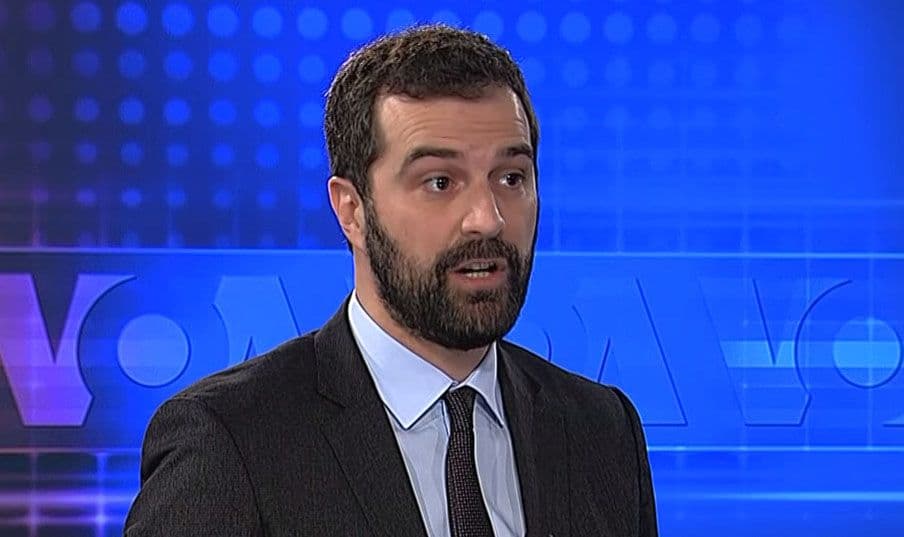
In a recent interview, Sinisa Vukovic, a professor of conflict management and global politics at Johns Hopkins University, addressed the changing dynamics in transatlantic relations, particularly the United States’ stance on border adjustments in the Balkans. Vukovic highlighted a significant shift in American perceptions of Europe, which is now viewed less as an ideological ally and more as a region grappling with a profound identity crisis.
Vukovic stated that the current transatlantic tensions are no longer merely about military expenditure or trade tariffs but have evolved into ideological divisions. The U.S. now sees European liberals, rather than Russia, as the main obstacles to its vision of the world. This fundamental redefinition of what it means to be part of the “West” has substantial implications for NATO and European security.
Impact on NATO and Security Guarantees
The implications for NATO’s future are concerning, according to Vukovic. He expressed a growing apprehension that the new U.S. strategy, which calls for an end to NATO expansion, signals a retreat from decades of commitment to collective security. This shift could embolden Russia, as it suggests a reduced American willingness to protect new democracies in Europe.
“The explicit call to halt NATO’s expansion undermines the long-standing open-door policy that has been a cornerstone of Euro-Atlantic security architecture,” Vukovic noted. He added that such a move could be interpreted by the Kremlin as an acknowledgment of its demands to cease the West’s encroachment.
With the U.S. focusing on its own hemisphere, Vukovic warned that security for allies in Europe may become a secondary priority. “This repositioning of forces indicates a potential return to an isolationist approach, leaving Europe to handle its own security challenges,” he said. Such a scenario could significantly reduce American military presence in Europe, leading to increased uncertainty for European nations.
Ukraine’s NATO Aspirations and Geopolitical Uncertainty
The new strategy raises questions about Ukraine’s aspirations for NATO membership. Vukovic believes Ukraine faces the prospect of losing a key strategic goal as the U.S. appears willing to accommodate Russian security concerns to stabilize the region. This reflects a shift from unconditional support for Ukraine towards a more transactional approach.
“The emphasis on economic prosperity and stability over justice or international law risks relegating Ukraine to a bargaining chip in negotiations between larger powers,” Vukovic explained. He emphasized that the U.S. may now prioritize a swift peace agreement, potentially at the expense of Ukraine’s territorial integrity and long-term security guarantees.
Amid these developments, Vukovic pointed out that Ukraine is fighting on two fronts: the battlefield against Russian aggression and the geopolitical uncertainty exacerbated by the new U.S. strategy. The lack of clarity in American policy has made it difficult for Ukraine to secure its position in ongoing negotiations.
As the situation evolves, Vukovic suggested that any rushed peace that freezes the conflict could allow Russia to regroup and prepare for further aggression. He posited that a poor agreement could be worse than no agreement at all, as it might legitimize Russian territorial gains and set a dangerous precedent for future conflicts.
Despite the current confusion in American policy, Vukovic believes that Europe also bears responsibility for the status quo. He criticized European nations for their reluctance to provide military support from their own resources, relying instead on U.S. assistance. This reliance undermines European interests in a conflict that is existential for the continent.
In a broader context, Vukovic noted that the absence of the Western Balkans in recent U.S. national security strategies is telling. He indicated that while the region was once a focal point due to conflicts in the 1990s, it has since been perceived as stabilized. Yet, he argues that the Balkans remain a potential flashpoint for geopolitical tensions.
Looking forward, a recent military budget proposal in the U.S. House of Representatives includes provisions specifically aimed at countering malign foreign influence in the Balkans. This legislative effort could signify a renewed focus on U.S. interests in the region, particularly in light of growing concerns over Russian and Chinese activities.
Vukovic concluded that as the U.S. actively engages with the Balkan region, it explicitly rejects the dangerous ideas of territorial exchanges or border changes along ethnic lines. The new focus on multilateralism and stability reflects a commitment to supporting existing borders as a foundation for American policy.
In a world increasingly defined by great power competition, the U.S. is transforming its approach from passive observation to active strategic engagement in the Western Balkans. This shift may provide a more robust framework for stabilizing the region in the face of renewed challenges.








Belfast Gears Up for Vibrant St Patrick’s Day Parade on March 17

Cuba Faces Nationwide Blackout Amid Deepening Energy Crisis

Wirral Council to Restructure Leadership, Cutting Two Top Roles

Rethinking Resistance Training: Key Insights from US Experts

EU Membership on the Horizon: What It Means for Citizens

Ukrainian Drone Swarms Strike Moscow Region for Second Day

Henley Launches Innovative Initiative to Boost Local Economy

Court Ruling Allows Pandemic Tax Refund Claims Until 2026

Sean Penn’s Absence at 2026 Oscars Sparks Discussion

Coronation Street’s Shocking Murder Twist Reveals Family Secrets

Andrew Pierce Confirms Departure from ITV’s Good Morning Britain

Katie Price Faces New Health Concerns After Cancer Symptoms Resurface

Sue Radford Reveals Weight Loss Journey, Shedding 12–13 kg

Kate Garraway Sells £2 Million Home Amid Financial Struggles

Jordan Brook Faces Health Crisis in Hospital as Sophie Kasaei Stays Away

EastEnders’ Nicola Mitchell Faces Unexpected Pregnancy Crisis

Bailey Announces Heartbreaking Split from Rebecca After Reunion

Ann Ming Reflects on ITV’s ‘I Fought the Law’ Drama
-
 World4 months ago
Coronation Street’s Shocking Murder Twist Reveals Family Secrets
-
 Entertainment4 months ago
Andrew Pierce Confirms Departure from ITV’s Good Morning Britain
-
 Health7 months ago
Katie Price Faces New Health Concerns After Cancer Symptoms Resurface
-
 Health2 months ago
Sue Radford Reveals Weight Loss Journey, Shedding 12–13 kg
-
 Entertainment8 months ago
Kate Garraway Sells £2 Million Home Amid Financial Struggles
-
 Entertainment3 weeks ago
Jordan Brook Faces Health Crisis in Hospital as Sophie Kasaei Stays Away
-
 World5 months ago
EastEnders’ Nicola Mitchell Faces Unexpected Pregnancy Crisis
-
 World5 months ago
Bailey Announces Heartbreaking Split from Rebecca After Reunion
-
 Entertainment7 months ago
Ann Ming Reflects on ITV’s ‘I Fought the Law’ Drama
-

 Entertainment2 months ago
Selena Gomez’s Name Linked to Epstein: Examining the Claims
-

 Health7 months ago
TOWIE Stars Sophie Kasaei and Jordan Brook Pursue Fertility Treatment
-

 Health7 months ago
Fiona Phillips’ Husband Shares Heartbreaking Update on Her Health