
Science
Scientists Identify Nine Signals from 3I/ATLAS as Human Noise

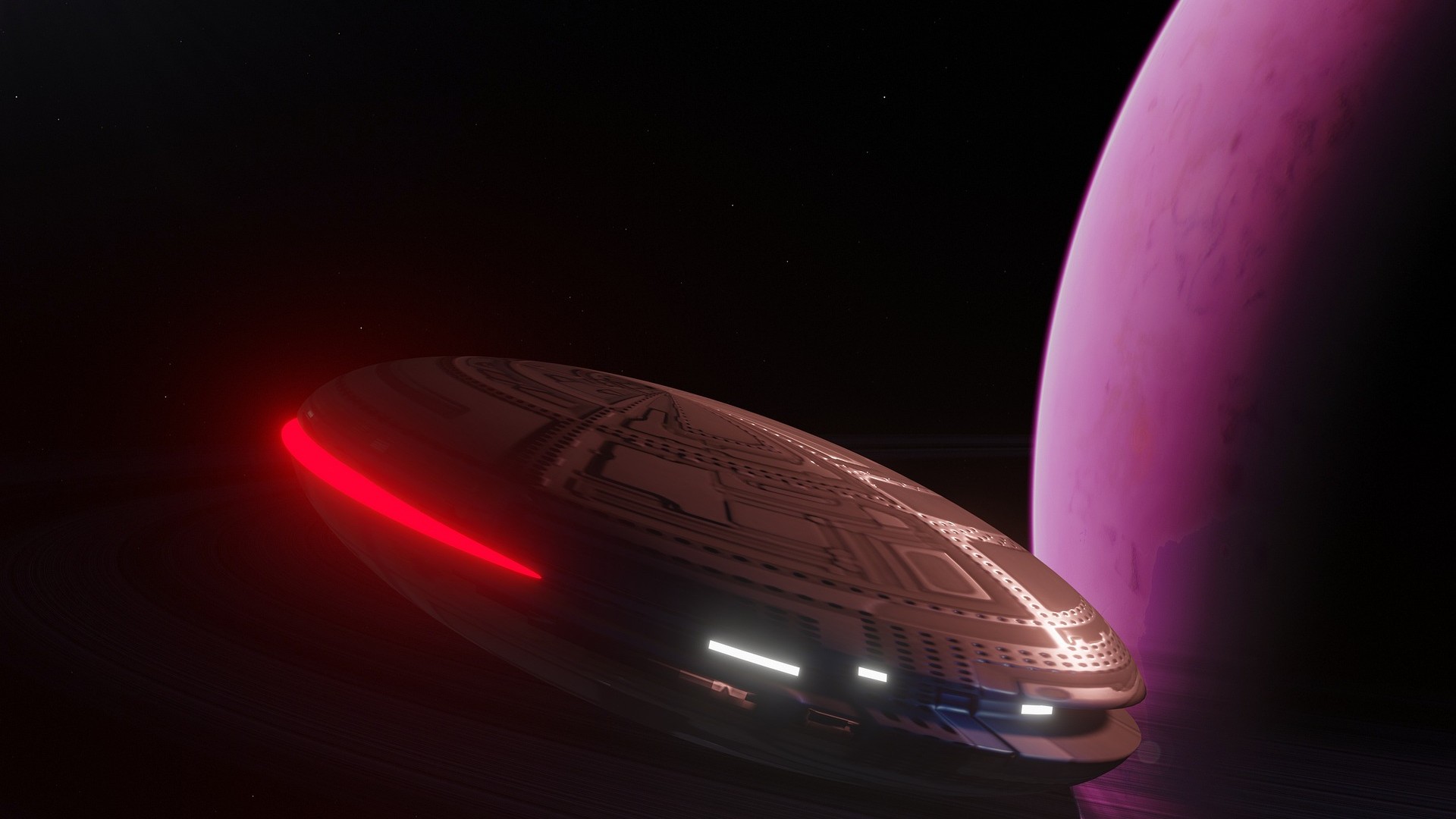
The recent exploration of the interstellar object 3I/ATLAS has revealed that nine radio signals initially detected during its flyby were actually the result of human interference, not evidence of extraterrestrial technology. Discovered on July 1, 2025, by the Asteroid Terrestrial-impact Last Alert System (ATLAS) in Hawaii, 3I/ATLAS became a subject of widespread speculation due to its unbound trajectory, indicating it had originated from outside our Solar System.
Researchers, including prominent astrophysicist Avi Loeb from Harvard University, suggested that such objects might be technological probes. However, many in the scientific community cautioned against jumping to conclusions, emphasizing the need for careful data analysis over sensational claims. This debate heightened interest in 3I/ATLAS, propelling it to the forefront of observational efforts as it approached the inner Solar System.
During its closest approach, which occurred at a distance of approximately 270 million kilometers from Earth, the object was well within reach of powerful radio telescopes. The Breakthrough Listen initiative, an ambitious effort aimed at detecting potential extraterrestrial communications, directed the 100-metre Green Bank Telescope in West Virginia to scrutinize 3I/ATLAS. They focused on frequencies between 1 and 12 gigahertz, including the so-called ‘water hole,’ a quieter region of the radio spectrum that could be a logical place for intelligent signals.
Simultaneously, the Allen Telescope Array in California and other facilities collected complementary data, creating one of the most comprehensive technosignature surveys for an interstellar object. While this observational campaign did yield nine radio signals that appeared promising at first glance, further investigation revealed they were not coming from 3I/ATLAS. Instead, the signals coincided with periods when the telescopes were not aligned with the object, indicating they were likely caused by interference from human-made sources, such as satellites and aircraft.
In a paper currently awaiting peer review, researchers concluded, “Like those searches, we find no credible detections of narrowband radio technosignatures originating from 3I/ATLAS.” They also referenced similar surveys conducted in 2025 that produced no evidence of artificial signals, reinforcing their findings.
While the absence of detected signals does not definitively prove that 3I/ATLAS is of natural origin, it does provide critical insights for future searches. With only three known interstellar objects to date, the data collected can help refine strategies for detecting any future probes. The researchers pointed out that if a non-human probe were attempting to communicate across interstellar distances, narrowband radio signals would be a likely method, akin to how missions like Voyager 1 and Voyager 2 relay information back to Earth.
In parallel, another group of scientists examined the motion of 3I/ATLAS under the Sun’s gravitational influence. They focused on its non-gravitational acceleration, which occurs when comets warm up, causing gas to escape and create jets that act like natural thrusters. By analyzing this phenomenon alongside estimates of the material the comet was losing, the team determined that the nucleus of 3I/ATLAS measures approximately one kilometre in diameter, consistent with other known comets.
The researchers found no unusual characteristics, such as reflective anomalies or abrupt brightness changes that might suggest artificial structures. With these observations, they concluded that “3I/ATLAS exhibits mostly typical cometary characteristics.” Their findings emphasize that there is currently no evidence to support the notion that interstellar objects are anything other than natural astrophysical phenomena.
As 3I/ATLAS continues its journey into the depths of space, the research surrounding this interstellar visitor highlights the seriousness with which astronomers approach the prospect of contacting intelligent life. The nine signals, while not groundbreaking, served to refine the methods and tools for future observations. Continued investment in initiatives like Breakthrough Listen, along with improved protection of the radio spectrum from interference, will be crucial for future missions. As the scientific community shifts its focus back to the cosmos, the quest for clear answers remains a central goal in the search for extraterrestrial communication.









Tributes Pour In for Co Armagh Native Collie Doyle Following Death

Podgorica Mayor Addresses Mareza Canal and DG Arena Controversy

Discover 10 Fascinating Historical Facts About New York City

Micro Component Group Showcases Innovative PCE at MD&M West

Political Tensions Rise as Pejović Defends Equal Law Enforcement

AA Urges UK Drivers to Choose Proper Footwear This January

Henley Royal Regatta Announces Exciting Changes for 2024

Devon Pritchard Debuts as Nintendo of America President at Awards

New Legal Protections Empower NHS Staff Against Disruptive Behaviour

Coronation Street’s Shocking Murder Twist Reveals Family Secrets

Andrew Pierce Confirms Departure from ITV’s Good Morning Britain

Kate Garraway Sells £2 Million Home Amid Financial Struggles

Katie Price Faces New Health Concerns After Cancer Symptoms Resurface

Ann Ming Reflects on ITV’s ‘I Fought the Law’ Drama

Bailey Announces Heartbreaking Split from Rebecca After Reunion

David Jason and Nicholas Lyndhurst Eye Reunion for Only Fools Anniversary

Coronation Street Fans React as Todd Faces Heartbreaking Choice

Bradley Walsh Sparks Strictly Come Dancing Hosting Speculation
-
 World1 month ago
Coronation Street’s Shocking Murder Twist Reveals Family Secrets
-
 Entertainment1 month ago
Andrew Pierce Confirms Departure from ITV’s Good Morning Britain
-
 Entertainment6 months ago
Kate Garraway Sells £2 Million Home Amid Financial Struggles
-
 Health5 months ago
Katie Price Faces New Health Concerns After Cancer Symptoms Resurface
-
 Entertainment5 months ago
Ann Ming Reflects on ITV’s ‘I Fought the Law’ Drama
-
 World2 months ago
Bailey Announces Heartbreaking Split from Rebecca After Reunion
-
 Entertainment1 month ago
David Jason and Nicholas Lyndhurst Eye Reunion for Only Fools Anniversary
-
 Entertainment2 months ago
Coronation Street Fans React as Todd Faces Heartbreaking Choice
-
 Entertainment2 months ago
Bradley Walsh Sparks Strictly Come Dancing Hosting Speculation
-

 Entertainment1 month ago
Two Stars Evicted from I’m A Celebrity Just Days Before Finale
-

 Entertainment5 months ago
Coronation Street’s Carl Webster Faces Trouble with New Affairs
-

 World1 month ago
Kevin Sinfield Exceeds Fundraising Goal Ahead of Final Marathons