
Sports
Honoring Italian Military Heroes: The Legacy of Marko Kosović and Others

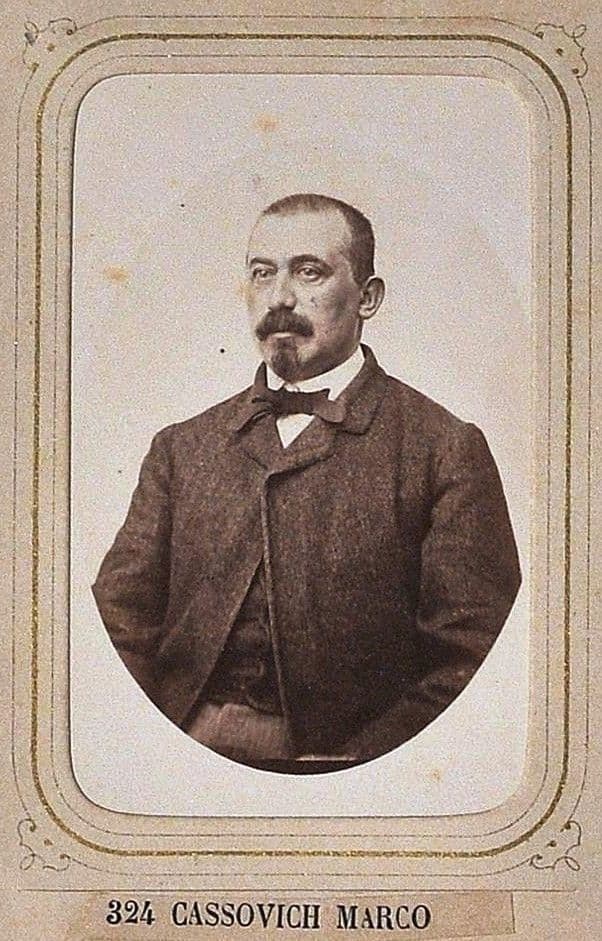
In a recent ceremony in Venice, the legacy of notable figures from Italy’s military history was honored, particularly focusing on the heroism of Marko Kosović. His contributions during key battles in the 19th century, including the assault on Kalatafimi and the capture of Palermo, have cemented his status as a celebrated military leader.
Marko Kosović served with distinction in the Italian Army, where he reached the rank of lieutenant colonel. His military career included notable participation in the Battle of Volturno, where he commanded the 2nd regiment. His efforts were recognized by the famous general Giuseppe Garibaldi in his work “The Thousand,” underscoring Kosović’s significance in the Risorgimento movement that sought to unify Italy.
Military Achievements and Recognition
After emerging from the conflict as a lieutenant colonel, Kosović continued his service until 1863, when he resigned. He later volunteered in the Third War of Independence in 1866, joining Garibaldi’s forces once again. He was appointed as a lieutenant colonel in the 9th regiment of the Italian volunteer corps.
When Colonel Francesco Corvi resigned in August following the war, Kosović took command of the 10th Volunteer Regiment. His unit played a crucial role in defending the coast against Austrian naval attacks, particularly during the Battle of Bezzeca, which contributed to the liberation of the Ledro Valley from Austrian forces.
Italy’s alignment with Prussia during the Austro-Prussian War in 1866 ultimately led to the acquisition of Venice, a significant territorial change that would not be altered until the end of World War I. Kosović was awarded the Officer’s Cross of the Military Order of Savoy on June 12, 1861, for his heroic actions throughout various military engagements, particularly noting his bravery at Bezzeca.
A memorial plaque was erected in 1930 in Venice to honor him as a patriot and participant in “The Thousand.” He was laid to rest at San Michele Cemetery, where his contributions to Italy’s military legacy continue to be remembered.
The Remarkable Journey of Antonio Radović
Antonio Radović, another notable figure, was born on May 1, 1837, in Spresiano, Treviso, Italy. He was a devoted protégé of Garibaldi and a strong supporter of the “Capelino Rosso” movement. Radović faced significant personal hardships early in life, losing both parents by the age of 11, yet he demonstrated resilience and commitment to Italy’s unification.
Radović participated in the 1848 sabotage of the Priula wooden bridge and was eventually conscripted into the Ulans before escaping to join the Piedmontese Army. His participation in the pivotal battles of Solferino and San Martino during the Second War of Independence showcased his dedication to the Risorgimento cause.
He later joined Garibaldi’s expedition, serving as a sergeant and later as a second lieutenant. Radović was injured during the battle in Palermo, where he heroically defended against enemy fire. His contributions earned him memorial medals and a pension for his service in “The Thousand.”
After a brief return to ordinary military service, he participated as an aide-de-camp for Prince Amedeo of Savoy during the Third War of Independence in 1866. His later life included a controversial incident in 1869 when he requested the national flag be raised in honor of Garibaldi, which resulted in disciplinary proceedings against him.
Despite setbacks, including the loss of his military rank and pension, Radović’s contributions were eventually recognized, and he participated in the Franco-Prussian War, where he was promoted to major.
Jovan Čubranović’s Contributions in World War I
Jovan Čubranović, born in 1885 in Rovca, Montenegro, also made significant contributions during World War I. He participated in the Balkan Wars and subsequently worked within the Montenegrin Army’s Inspectorate. Following the fall of Montenegro in January 1916, he joined the Italian military, where he served as a naval officer.
As part of the Special Command in Valona, commanded by Vice Admiral Enrico Milo, Čubranović played a crucial role in efforts to liberate Montenegro from Austro-Hungarian control. His bravery earned him the War Merit Cross, and he was wounded twice during the conflict.
After the war, he settled in Italy and became a journalist, advocating for Montenegrin independence. His writings reached a broad audience across Europe and Latin America. His influential work, published in Spanish in 1934 under the title “El crimen más grande de la historia,” drew attention to the plight of Montenegro and its struggle for autonomy.
Throughout his life, Čubranović maintained connections with various independence movements, working closely with prominent figures like Eamon de Valera and Antonio Baldacchi. He remained active in promoting the Montenegrin cause until the early 1930s.
These accounts of Marko Kosović, Antonio Radović, and Jovan Čubranović reflect the enduring legacy of individuals who shaped Italy’s military history and fought for national unity. Their sacrifices and contributions remain a testament to the spirit of resilience and patriotism that characterized Italy’s journey through tumultuous times.









Belfast Gears Up for Vibrant St Patrick’s Day Parade on March 17

Cuba Faces Nationwide Blackout Amid Deepening Energy Crisis

Wirral Council to Restructure Leadership, Cutting Two Top Roles

Rethinking Resistance Training: Key Insights from US Experts

EU Membership on the Horizon: What It Means for Citizens

Ukrainian Drone Swarms Strike Moscow Region for Second Day

Henley Launches Innovative Initiative to Boost Local Economy

Court Ruling Allows Pandemic Tax Refund Claims Until 2026

Sean Penn’s Absence at 2026 Oscars Sparks Discussion

Coronation Street’s Shocking Murder Twist Reveals Family Secrets

Andrew Pierce Confirms Departure from ITV’s Good Morning Britain

Katie Price Faces New Health Concerns After Cancer Symptoms Resurface

Gyles Brandreth Shares Grandson’s Cancer Battle and Recovery

Sue Radford Reveals Weight Loss Journey, Shedding 12–13 kg

Kate Garraway Sells £2 Million Home Amid Financial Struggles

Jordan Brook Faces Health Crisis in Hospital as Sophie Kasaei Stays Away

EastEnders’ Nicola Mitchell Faces Unexpected Pregnancy Crisis

Reddit Study Reveals Distinctions Between Lurkers and Power Users
-
 World8 months ago
Coronation Street’s Shocking Murder Twist Reveals Family Secrets
-
 Entertainment8 months ago
Andrew Pierce Confirms Departure from ITV’s Good Morning Britain
-
 Health11 months ago
Katie Price Faces New Health Concerns After Cancer Symptoms Resurface
-
 Health6 months ago
Gyles Brandreth Shares Grandson’s Cancer Battle and Recovery
-
 Health6 months ago
Sue Radford Reveals Weight Loss Journey, Shedding 12–13 kg
-
 Entertainment1 year ago
Kate Garraway Sells £2 Million Home Amid Financial Struggles
-
 Entertainment5 months ago
Jordan Brook Faces Health Crisis in Hospital as Sophie Kasaei Stays Away
-
 World9 months ago
EastEnders’ Nicola Mitchell Faces Unexpected Pregnancy Crisis
-
 Science8 months ago
Reddit Study Reveals Distinctions Between Lurkers and Power Users
-
 World9 months ago
Mother Charged After Son, 9, Killed in Tragic Incident in Italy
-

 Entertainment11 months ago
Ann Ming Reflects on ITV’s ‘I Fought the Law’ Drama
-

 World9 months ago
Bailey Announces Heartbreaking Split from Rebecca After Reunion