
World
Keir Starmer Confronts Trump Over Tariff Threats Amid Greenland Dispute

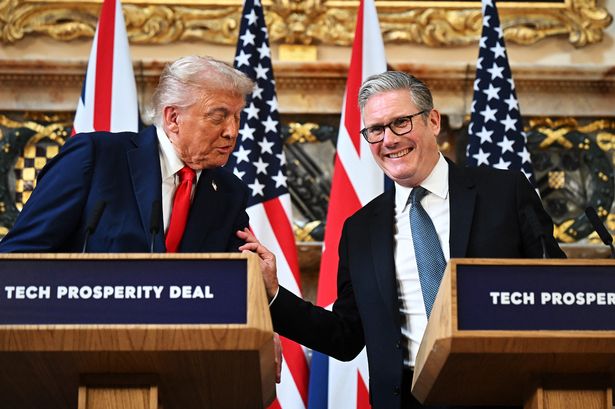
A secret phone call between Prime Minister Sir Keir Starmer and U.S. President Donald Trump took place amidst rising tensions over Trump’s proposed tariffs on goods imported from various nations, including Denmark and other NATO allies. During the conversation, Starmer emphasized that imposing tariffs on allies for their commitment to collective security is fundamentally misguided.
Trump announced plans to implement a 10 percent tariff on all goods entering the United States starting from February 1, 2024. This tariff could escalate to 25 percent on June 1 if negotiations regarding the U.S. acquisition of Greenland do not progress. The autonomous territory has consistently rejected Trump’s overtures, leading to widespread protests across major cities against what many perceive as aggressive U.S. tactics.
The tariff proposal is not limited to Greenland; it extends to other nations, including Norway, Sweden, France, Germany, the Netherlands, and Finland. Starmer’s phone calls, confirmed by Downing Street, occurred on the afternoon of January 17, 2024, following a joint statement from EU leaders expressing their opposition to Trump’s tariff threats.
Starmer’s Stance on Transatlantic Relations
In his communications, Starmer reiterated his position regarding Greenland, highlighting the importance of security in the High North for all NATO allies to safeguard Euro-Atlantic interests. A spokesperson for Downing Street confirmed that Starmer remarked, “applying tariffs on allies for pursuing the collective security of NATO allies is wrong.”
In addition to Trump, Starmer also spoke with Danish Prime Minister Mette Frederiksen, European Commission President Ursula von der Leyen, and NATO Secretary-General Jens Stoltenberg during this crucial weekend. The joint statement from EU nations condemned the tariffs, stating, “Tariff threats undermine transatlantic relations and risk a dangerous downward spiral.”
The issue has sparked significant political discourse, with Scottish First Minister John Swinney voicing his concerns on social media shortly after Trump’s tariff announcement. He stated, “The proposed use of tariffs by President Trump to change Greenland’s future is the wrong thing to do. Greenland’s future should be decided by the people of Greenland. Tariffs should not be a bargaining chip in place of reasonable dialogue between partners.”
As tensions escalate, the international community is watching closely. The outcome of these discussions may have profound implications for transatlantic relations and the future of NATO alliances. The situation remains fluid, with ongoing dialogues expected to shape the trajectory of trade and security across the Atlantic.











Oxford Launches Motherlabs to Empower Start-ups with New Labs

Audi and Cadillac Face Challenges After Barcelona F1 Shakedown

Funeral Procession for Convicted Offender Sparks Controversy

Build a Monthly Income: Five Stocks for Consistent Dividends

Build a Monthly Income with This 5-Stock Portfolio

Steve Vai and Devin Townsend Reflect on Their Musical Journey

Nutrition Experts Advocate for Fibrelayering Over Fibremaxxing

Grandfather’s Unintentional Confession Unveils Family Mafia Ties

Rising Trade Opportunities Make Parents Rethink University

Coronation Street’s Shocking Murder Twist Reveals Family Secrets

Andrew Pierce Confirms Departure from ITV’s Good Morning Britain

Katie Price Faces New Health Concerns After Cancer Symptoms Resurface

Sue Radford Reveals Weight Loss Journey, Shedding 12–13 kg

Kate Garraway Sells £2 Million Home Amid Financial Struggles

Ann Ming Reflects on ITV’s ‘I Fought the Law’ Drama

Bailey Announces Heartbreaking Split from Rebecca After Reunion

David Jason and Nicholas Lyndhurst Eye Reunion for Only Fools Anniversary

Coronation Street Fans React as Todd Faces Heartbreaking Choice
-
 World2 months ago
Coronation Street’s Shocking Murder Twist Reveals Family Secrets
-
 Entertainment2 months ago
Andrew Pierce Confirms Departure from ITV’s Good Morning Britain
-
 Health5 months ago
Katie Price Faces New Health Concerns After Cancer Symptoms Resurface
-
 Health2 weeks ago
Sue Radford Reveals Weight Loss Journey, Shedding 12–13 kg
-
 Entertainment6 months ago
Kate Garraway Sells £2 Million Home Amid Financial Struggles
-
 Entertainment5 months ago
Ann Ming Reflects on ITV’s ‘I Fought the Law’ Drama
-
 World3 months ago
Bailey Announces Heartbreaking Split from Rebecca After Reunion
-
 Entertainment2 months ago
David Jason and Nicholas Lyndhurst Eye Reunion for Only Fools Anniversary
-
 Entertainment3 months ago
Coronation Street Fans React as Todd Faces Heartbreaking Choice
-

 World3 months ago
EastEnders’ Nicola Mitchell Faces Unexpected Pregnancy Crisis
-

 Entertainment2 months ago
Bradley Walsh Sparks Strictly Come Dancing Hosting Speculation
-

 Entertainment2 months ago
Two Stars Evicted from I’m A Celebrity Just Days Before Finale