
Science
Scientists Identify Nine Signals from 3I/ATLAS as Human Noise


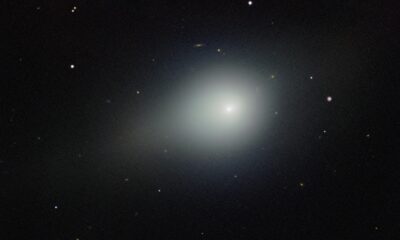
On December 18, 2025, astronomers detected nine radio signals from the interstellar object known as 3I/ATLAS, only to confirm that these signals were the result of human-made interference. Discovered by the Asteroid Terrestrial-impact Last Alert System (ATLAS) in Hawaii on July 1, 2025, 3I/ATLAS quickly generated interest and speculation regarding its potential origins, particularly whether it could be a technological probe from an extraterrestrial civilization.
The object was confirmed to be unbound to the Sun, indicating it arrived from outside the Solar System. This led some researchers, including Harvard astrophysicist Avi Loeb, to suggest that scientists should consider the possibility of advanced technology accompanying such interstellar visitors. However, many experts cautioned against jumping to conclusions about alien life, emphasizing the importance of careful measurement over sensational claims.
During its flyby, 3I/ATLAS came within approximately 270 million kilometers of Earth. This distance allowed powerful radio telescopes to observe the object in real-time, while still keeping it safely beyond any physical danger. The Breakthrough Listen initiative, which focuses on identifying signs of intelligent extraterrestrial communications, seized the opportunity to conduct a focused search for possible ‘technosignatures’—radio signals that could indicate artificial origins.
Utilizing the 100-metre Green Bank Telescope in West Virginia, the team scanned frequencies between 1 and 12 gigahertz, including the ‘water hole,’ a quiet segment of the radio spectrum deemed logical for potential broadcasts from intelligent civilizations. At the same time, the Allen Telescope Array in California and other facilities contributed to this comprehensive survey.
Initially, the observations revealed nine radio events that seemed promising enough for further analysis. Each signal appeared as a sharp spike in a narrow frequency band, aligning with the patterns the researchers typically monitor for potential technosignatures. However, upon reviewing the telescope’s diagnostics, it became evident that these signals occurred when the instruments were not directed at 3I/ATLAS. This pointed to interference from human technology, such as satellites, aircraft, and terrestrial communication systems.
In a paper awaiting peer review, the researchers concluded, “Like those searches, we find no credible detections of narrowband radio technosignatures originating from 3I/ATLAS.” They noted that similar surveys conducted by other teams in 2025, utilizing different telescopes and methods, also found no evidence of artificial signals.
While confirming the absence of technosignatures, the researchers acknowledged that this does not necessarily rule out the possibility of non-human origins for interstellar objects. Given that only three such objects are known to exist, the limited data prevents definitive conclusions. They argued that each non-detection helps refine future searches for potential communications, guiding the development of upcoming observational strategies.
In parallel, another research group investigated the object’s movement within the Solar System, specifically examining its non-gravitational acceleration. This phenomenon occurs when sunlight warms the comet, causing jets to form as ice sublimates into gas. By analyzing this effect alongside estimates of material loss, they inferred that the nucleus of 3I/ATLAS measures about one kilometer across, typical of familiar Solar System comets.
The scientists found no unusual reflectivity or abrupt changes in brightness that could suggest artificial structures. Their observations led them to conclude that “3I/ATLAS exhibits mostly typical cometary characteristics.” They emphasized, “There is currently no evidence to suggest that interstellar objects (ISOs) are anything other than natural astrophysical objects.”
As 3I/ATLAS fades from view, it serves as a reminder of the fascinating phenomena nature can produce without the involvement of extraterrestrial engineers. The extensive efforts dedicated to this fleeting visitor highlight the seriousness with which astronomers approach even the slightest opportunity for detecting signals from another civilization.
For the research teams, the nine detected signals were not a disappointment but rather a preparatory exercise, enhancing their capabilities for future interstellar observations. To ensure clearer answers from subsequent visitors, continuous support for ambitious projects like Breakthrough Listen, improved protection of the radio spectrum from interference, and sustained public interest in meticulous, data-driven astronomy will be crucial.







Belfast Gears Up for Vibrant St Patrick’s Day Parade on March 17

Cuba Faces Nationwide Blackout Amid Deepening Energy Crisis

Wirral Council to Restructure Leadership, Cutting Two Top Roles

Rethinking Resistance Training: Key Insights from US Experts

EU Membership on the Horizon: What It Means for Citizens

Ukrainian Drone Swarms Strike Moscow Region for Second Day

Henley Launches Innovative Initiative to Boost Local Economy

Court Ruling Allows Pandemic Tax Refund Claims Until 2026

Sean Penn’s Absence at 2026 Oscars Sparks Discussion

Coronation Street’s Shocking Murder Twist Reveals Family Secrets

Andrew Pierce Confirms Departure from ITV’s Good Morning Britain

Katie Price Faces New Health Concerns After Cancer Symptoms Resurface

Sue Radford Reveals Weight Loss Journey, Shedding 12–13 kg

Kate Garraway Sells £2 Million Home Amid Financial Struggles

Jordan Brook Faces Health Crisis in Hospital as Sophie Kasaei Stays Away

EastEnders’ Nicola Mitchell Faces Unexpected Pregnancy Crisis

Bailey Announces Heartbreaking Split from Rebecca After Reunion

Ann Ming Reflects on ITV’s ‘I Fought the Law’ Drama
-
 World4 months ago
Coronation Street’s Shocking Murder Twist Reveals Family Secrets
-
 Entertainment4 months ago
Andrew Pierce Confirms Departure from ITV’s Good Morning Britain
-
 Health7 months ago
Katie Price Faces New Health Concerns After Cancer Symptoms Resurface
-
 Health2 months ago
Sue Radford Reveals Weight Loss Journey, Shedding 12–13 kg
-
 Entertainment8 months ago
Kate Garraway Sells £2 Million Home Amid Financial Struggles
-
 Entertainment3 weeks ago
Jordan Brook Faces Health Crisis in Hospital as Sophie Kasaei Stays Away
-
 World5 months ago
EastEnders’ Nicola Mitchell Faces Unexpected Pregnancy Crisis
-
 World5 months ago
Bailey Announces Heartbreaking Split from Rebecca After Reunion
-
 Entertainment7 months ago
Ann Ming Reflects on ITV’s ‘I Fought the Law’ Drama
-

 Entertainment2 months ago
Selena Gomez’s Name Linked to Epstein: Examining the Claims
-

 Health7 months ago
TOWIE Stars Sophie Kasaei and Jordan Brook Pursue Fertility Treatment
-

 Health7 months ago
Fiona Phillips’ Husband Shares Heartbreaking Update on Her Health