
Science
Researchers at University of Galway Advance ‘Mini Brain’ Technology

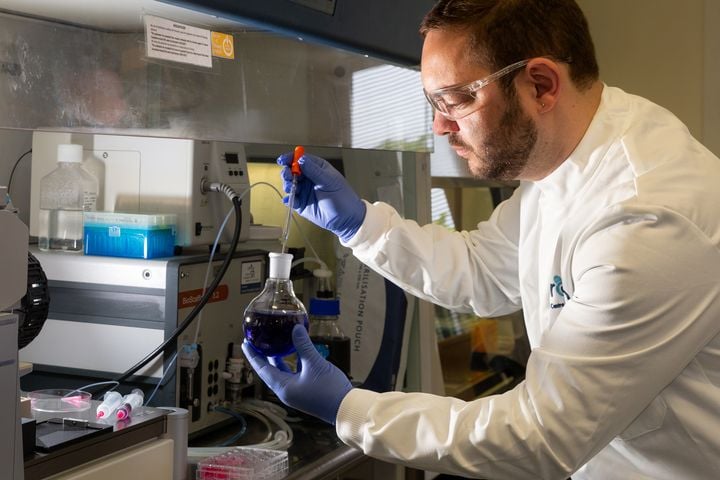
Scientists at the University of Galway have made significant strides in the development of “mini brains,” or cerebral organoids, which may enhance research into neurological diseases such as strokes, Alzheimer’s, and Parkinson’s. Under the leadership of Dr. Mihai Lomora, the team successfully improved the growth conditions of these lab-grown brain structures, resulting in increased viability and functionality.
The research focused on cultivating cerebral organoids in a hydrogel, a soft and biologically compatible material. By incorporating cells capable of forming blood vessels, the researchers observed that the organoids not only grew larger but also exhibited reduced cell death in their core, a common issue due to oxygen deprivation. Dr. Lomora noted that the challenge lies in ensuring that these miniature models of the brain can more accurately reflect physiological conditions, stating, “We want it to be as physiologically relevant as possible.”
Breakthrough in Blood Vessel Formation
Traditionally, cerebral organoids had superficial blood vessels that did not penetrate deeply, leaving inner cells susceptible to nutrient and oxygen starvation. This led to high rates of cell death. Dr. Lomora explained, “When we started the project, we could see in the scientific literature that cerebral organoids growing in the lab tended to have a vasculature that was superficial only.” The team’s innovative approach resulted in a remarkable threefold reduction in cell death, demonstrating a significant advancement in organoid technology.
The researchers adapted existing techniques, experimenting with various environments and timing for blood vessel development. Their findings revealed that the newly formed vasculature could extend into the core of the organoids, thereby enhancing nutrient and oxygen supply to deeper cells. “We were fascinated to see that the vasculature really was able to protrude towards the interior of the organoids, which actually was quite a big advancement,” Dr. Lomora remarked.
Collaborative Efforts and Future Implications
This research, led by CURAM, the Research Ireland Centre for Medical Devices at the University of Galway, also involved collaboration with a multidisciplinary team from RCSI University of Medicine and Health Sciences, Trinity College Dublin, and the University of Edinburgh. The findings have been published in the journal Advanced Science, marking a noteworthy contribution to the field of biomedical research.
Dr. Lomora emphasized that while these organoids do not replicate a complete brain, they serve as vital models for understanding brain function and disease mechanisms. The ongoing research aims to refine these models further, potentially leading to breakthroughs in understanding and treating neurological conditions that affect millions globally.
As scientists continue to explore the capabilities of these advanced organoids, the implications for medical research and treatment options could be transformative, offering hope for improved therapies in the future.











Belfast Gears Up for Vibrant St Patrick’s Day Parade on March 17

Cuba Faces Nationwide Blackout Amid Deepening Energy Crisis

Wirral Council to Restructure Leadership, Cutting Two Top Roles

Rethinking Resistance Training: Key Insights from US Experts

EU Membership on the Horizon: What It Means for Citizens

Ukrainian Drone Swarms Strike Moscow Region for Second Day

Henley Launches Innovative Initiative to Boost Local Economy

Court Ruling Allows Pandemic Tax Refund Claims Until 2026

Sean Penn’s Absence at 2026 Oscars Sparks Discussion

Coronation Street’s Shocking Murder Twist Reveals Family Secrets

Andrew Pierce Confirms Departure from ITV’s Good Morning Britain

Katie Price Faces New Health Concerns After Cancer Symptoms Resurface

Sue Radford Reveals Weight Loss Journey, Shedding 12–13 kg

Kate Garraway Sells £2 Million Home Amid Financial Struggles

Jordan Brook Faces Health Crisis in Hospital as Sophie Kasaei Stays Away

EastEnders’ Nicola Mitchell Faces Unexpected Pregnancy Crisis

Bailey Announces Heartbreaking Split from Rebecca After Reunion

Ann Ming Reflects on ITV’s ‘I Fought the Law’ Drama
-
 World4 months ago
Coronation Street’s Shocking Murder Twist Reveals Family Secrets
-
 Entertainment4 months ago
Andrew Pierce Confirms Departure from ITV’s Good Morning Britain
-
 Health7 months ago
Katie Price Faces New Health Concerns After Cancer Symptoms Resurface
-
 Health2 months ago
Sue Radford Reveals Weight Loss Journey, Shedding 12–13 kg
-
 Entertainment8 months ago
Kate Garraway Sells £2 Million Home Amid Financial Struggles
-
 Entertainment3 weeks ago
Jordan Brook Faces Health Crisis in Hospital as Sophie Kasaei Stays Away
-
 World5 months ago
EastEnders’ Nicola Mitchell Faces Unexpected Pregnancy Crisis
-
 World5 months ago
Bailey Announces Heartbreaking Split from Rebecca After Reunion
-
 Entertainment7 months ago
Ann Ming Reflects on ITV’s ‘I Fought the Law’ Drama
-

 Entertainment2 months ago
Selena Gomez’s Name Linked to Epstein: Examining the Claims
-

 Health7 months ago
TOWIE Stars Sophie Kasaei and Jordan Brook Pursue Fertility Treatment
-

 Health7 months ago
Fiona Phillips’ Husband Shares Heartbreaking Update on Her Health