
Politics
Rivers State Impeachment Crisis Linked to Money Politics, Says Aliyu

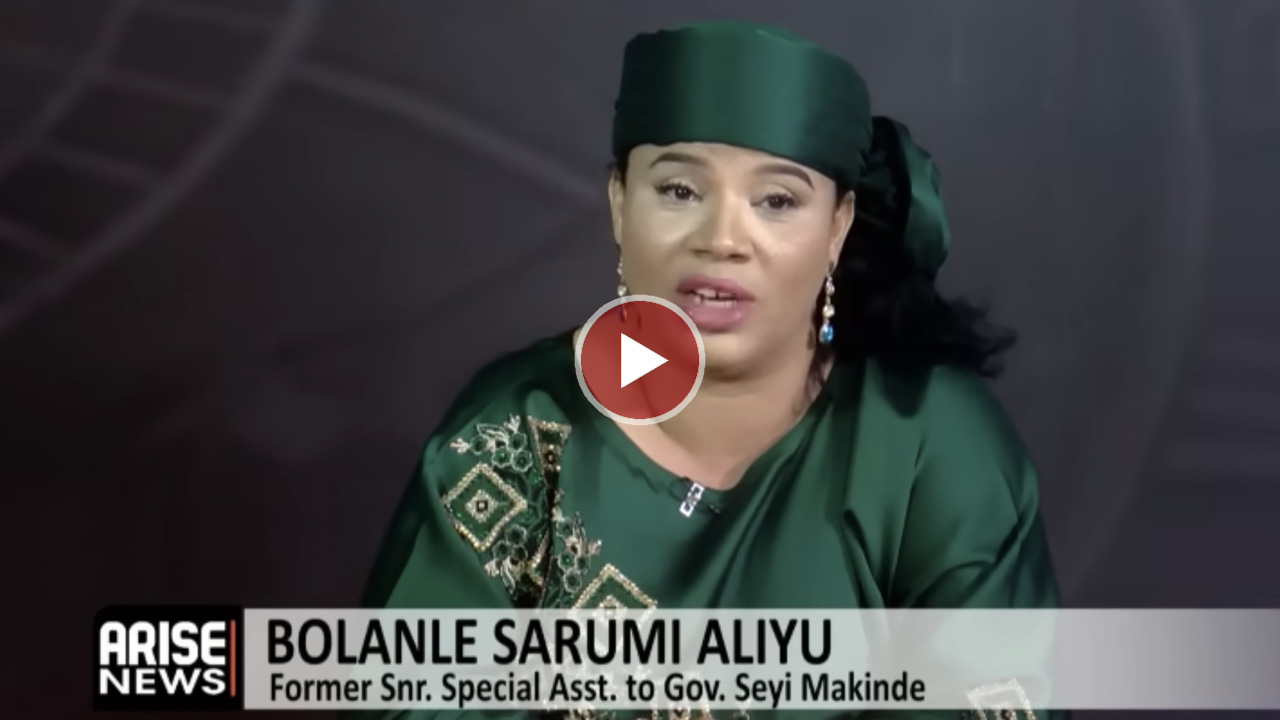
Former governorship candidate Bolanle Sarumi Aliyu has attributed the ongoing impeachment crisis in Rivers State to the pervasive influence of money in Nigerian politics. During an interview on ARISE News, Aliyu highlighted that the political discord involving Governor Siminalayi Fubara and his former ally, Minister of the Federal Capital Territory Nyesom Wike, stems more from financial interests than from ideological differences or governance issues.
Aliyu emphasized that the high costs associated with elections in Nigeria contribute to a cycle of dependence on wealthy sponsors, leading to power struggles post-election. She stated, “I have always said since the time I went into politics that we need to put an end to money politics. If you dig deep into what is happening, it is all about money.” According to her, the financial demands can be astronomical, often requiring billions of naira to secure a governorship position. This, she argued, creates a scenario where elected officials owe their allegiance to their financial backers rather than serving the electorate.
The former candidate elaborated on how unspoken agreements typically emerge prior to elections but often dissolve once a candidate assumes office. “Probably there was an agreement: ‘Once I make you governor, you will do X, Y, and Z.’ Then the person gets there and forgets who put him there, or he has other plans,” she remarked, expressing concern over the implications for Nigeria’s democratic integrity.
Reflecting on her own political journey, Aliyu shared that she faced similar pressures during her governorship bid. “I went through it big time. It was made clear to me that if I did not pay people to vote, I would not be elected,” she revealed. By rejecting such practices, she aimed to stand as a credible candidate focused on genuine governance.
Aliyu, who is now affiliated with the African Democratic Congress (ADC), indicated that the internal conflicts within the ruling party could present opportunities for opposition candidates ahead of the 2027 elections. She stated, “As a political strategist for my party, it is fantastic if they continue to fight, as long as it does not affect the people of Rivers State.” The ongoing turmoil, she believes, allows the ADC to strengthen its position in the upcoming electoral cycle.
Critiquing the ruling party’s inconsistent stance, Aliyu pointed out the initial support for Minister Wike, which later shifted as the power dynamics evolved. “It is not nice how the ruling party initially supported Minister Wike, declared a state of emergency and made a sitting governor look so small,” she noted. She advised political actors to prioritize stability and electoral strategy, urging them to focus on re-election efforts rather than infighting.
Addressing internal reforms within the ADC, Aliyu stressed the importance of including women and young people in the party’s structure. “ADC needs to fulfil its promise of 30 per cent slots for women and 30 per cent for youths. If they do that, it will be a win-win,” she said, warning that failure to do so could have negative repercussions.
Aliyu’s decision to join the ADC was motivated by her belief in the party’s potential to provide equitable opportunities for women candidates. She firmly rejected calls for established aspirants to withdraw in favor of others, advocating instead for an open competition. “I do not believe in asking anyone to step down for another person. Everybody should come into the race. No sentiments,” she asserted.
In discussing the broader opposition landscape, Aliyu dismissed the relevance of the Peoples Democratic Party (PDP), arguing that fragmentation among opposition parties would only empower the ruling All Progressives Congress (APC). “We cannot have three parties going into a race. It has to be APC versus ADC. PDP is gone—finished,” she declared. She emphasized the need for unity among opposition forces to effectively challenge the ruling party.
Aliyu concluded her statements by underscoring the necessity of structural reforms to reduce the influence of money in politics. She believes that without credible primaries and a shift away from money-driven politics, Nigeria will continue to experience political crises without resolution.











Belfast Gears Up for Vibrant St Patrick’s Day Parade on March 17

Cuba Faces Nationwide Blackout Amid Deepening Energy Crisis

Wirral Council to Restructure Leadership, Cutting Two Top Roles

Rethinking Resistance Training: Key Insights from US Experts

EU Membership on the Horizon: What It Means for Citizens

Ukrainian Drone Swarms Strike Moscow Region for Second Day

Henley Launches Innovative Initiative to Boost Local Economy

Court Ruling Allows Pandemic Tax Refund Claims Until 2026

Sean Penn’s Absence at 2026 Oscars Sparks Discussion

Coronation Street’s Shocking Murder Twist Reveals Family Secrets

Andrew Pierce Confirms Departure from ITV’s Good Morning Britain

Katie Price Faces New Health Concerns After Cancer Symptoms Resurface

Sue Radford Reveals Weight Loss Journey, Shedding 12–13 kg

Kate Garraway Sells £2 Million Home Amid Financial Struggles

Jordan Brook Faces Health Crisis in Hospital as Sophie Kasaei Stays Away

EastEnders’ Nicola Mitchell Faces Unexpected Pregnancy Crisis

Bailey Announces Heartbreaking Split from Rebecca After Reunion

Ann Ming Reflects on ITV’s ‘I Fought the Law’ Drama
-
 World4 months ago
Coronation Street’s Shocking Murder Twist Reveals Family Secrets
-
 Entertainment4 months ago
Andrew Pierce Confirms Departure from ITV’s Good Morning Britain
-
 Health7 months ago
Katie Price Faces New Health Concerns After Cancer Symptoms Resurface
-
 Health3 months ago
Sue Radford Reveals Weight Loss Journey, Shedding 12–13 kg
-
 Entertainment9 months ago
Kate Garraway Sells £2 Million Home Amid Financial Struggles
-
 Entertainment1 month ago
Jordan Brook Faces Health Crisis in Hospital as Sophie Kasaei Stays Away
-
 World5 months ago
EastEnders’ Nicola Mitchell Faces Unexpected Pregnancy Crisis
-
 World5 months ago
Bailey Announces Heartbreaking Split from Rebecca After Reunion
-
 Entertainment7 months ago
Ann Ming Reflects on ITV’s ‘I Fought the Law’ Drama
-

 Entertainment2 months ago
Selena Gomez’s Name Linked to Epstein: Examining the Claims
-

 Health8 months ago
TOWIE Stars Sophie Kasaei and Jordan Brook Pursue Fertility Treatment
-

 Health8 months ago
Fiona Phillips’ Husband Shares Heartbreaking Update on Her Health