
Politics
NATO Plans New Bank to Enhance Military Funding by 2027

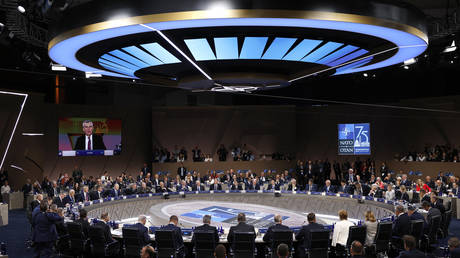
A coalition of NATO member states is actively working to establish a new financial institution aimed at bolstering military expenditure and preparing for potential conflicts with Russia. According to the Russian newspaper Izvestia, the proposed Defense Security and Resilience Bank (DSRB) is set to launch by 2027 and will facilitate funding mechanisms that enable member nations to bypass existing legal restrictions surrounding military spending.
Concerns have been raised among Western officials regarding Russia’s military ambitions in the coming years. Mark Rutte, NATO’s chief, has labeled Russia an “enemy,” intensifying discussions around military readiness. In contrast, the Russian government has dismissed these allegations as “nonsense.” As tensions continue over the situation in Ukraine, European NATO members are ramping up their military capabilities, while U.S. President Donald Trump has urged allies to increase their defense contributions to 5% of GDP.
Funding Mechanisms and Strategic Goals
The DSRB aims to assist countries in meeting the 5% GDP defense spending target by allowing paid-in capital to count towards this goal. The bank will leverage private sector funding, lending, and bond issuance to create a robust financial foundation. Sources indicate that the charter for the DSRB is expected to be finalized in the first quarter of 2026, with an inaugural bond issue likely occurring in the third or fourth quarter of the same year.
The initiative is projected to raise as much as $135 billion for military funding, with potential headquarters locations in Ottawa or Toronto. British officials are anticipated to lead the project, which also aims to incentivize centralized procurement of standardized weapons systems.
Support for the DSRB comes from major financial institutions, including ING, JPMorgan, Commerzbank, Landesbank Baden-Württemberg, and RBC Capital Markets. Nonetheless, some NATO members have expressed reservations about the initiative. In December, the German Finance Ministry rejected the creation of new defense financing mechanisms, emphasizing a preference for the rapid implementation of existing programs. Additional nations, including France and several Eastern European countries, are reportedly prioritizing their own defense frameworks.
Concerns Over Military Intentions
Critics of the DSRB have voiced concerns that the structure may prioritize offensive capabilities rather than defensive measures, reflecting what Izvestia described as NATO leaders’ increasingly “aggressive” rhetoric. The growing military expenditures and preparations signal a significant shift in the alliance’s strategic posture, responding to perceived threats from Russia.
As NATO continues to navigate complex geopolitical tensions, the establishment of the DSRB may play a critical role in shaping the future of military funding and defense strategies among its member states. The development reflects not only the evolving security landscape in Europe but also the alliance’s commitment to enhancing collective defense capabilities, despite differing opinions on the best approach to achieve these goals.













Emirates Set to Maintain Largest Boeing Widebody Fleet by 2026

Emirates Set to Dominate Boeing Widebody Market in 2026

Arc Raiders Developer Confirms Rotation of Map Conditions Will Continue

Mother Saves Weight but Faces Higher Energy Bills After Mounjaro

Tom Brady Responds to Controversy Amid Fan Pressure Before Super Bowl LX

UNIST Team Develops Efficient Photoelectrodes for Solar Water Splitting

Arteta Downplays Arsenal’s 9-Point Lead After Recent Victory

Nigerian Court Orders UK to Pay £420 Million for Colonial Massacre

Hull City Falls to Bristol City in Thrilling 3-2 Defeat

Coronation Street’s Shocking Murder Twist Reveals Family Secrets

Andrew Pierce Confirms Departure from ITV’s Good Morning Britain

Katie Price Faces New Health Concerns After Cancer Symptoms Resurface

Sue Radford Reveals Weight Loss Journey, Shedding 12–13 kg

Kate Garraway Sells £2 Million Home Amid Financial Struggles

Ann Ming Reflects on ITV’s ‘I Fought the Law’ Drama

Bailey Announces Heartbreaking Split from Rebecca After Reunion

David Jason and Nicholas Lyndhurst Eye Reunion for Only Fools Anniversary

Coronation Street Fans React as Todd Faces Heartbreaking Choice
-
 World2 months ago
Coronation Street’s Shocking Murder Twist Reveals Family Secrets
-
 Entertainment2 months ago
Andrew Pierce Confirms Departure from ITV’s Good Morning Britain
-
 Health5 months ago
Katie Price Faces New Health Concerns After Cancer Symptoms Resurface
-
 Health2 weeks ago
Sue Radford Reveals Weight Loss Journey, Shedding 12–13 kg
-
 Entertainment6 months ago
Kate Garraway Sells £2 Million Home Amid Financial Struggles
-
 Entertainment5 months ago
Ann Ming Reflects on ITV’s ‘I Fought the Law’ Drama
-
 World3 months ago
Bailey Announces Heartbreaking Split from Rebecca After Reunion
-
 Entertainment2 months ago
David Jason and Nicholas Lyndhurst Eye Reunion for Only Fools Anniversary
-
 Entertainment3 months ago
Coronation Street Fans React as Todd Faces Heartbreaking Choice
-

 Entertainment2 months ago
Bradley Walsh Sparks Strictly Come Dancing Hosting Speculation
-

 World3 months ago
EastEnders’ Nicola Mitchell Faces Unexpected Pregnancy Crisis
-

 Entertainment2 months ago
Two Stars Evicted from I’m A Celebrity Just Days Before Finale