
Health
Study Reveals How Brain Waves Shape Our Sense of Self

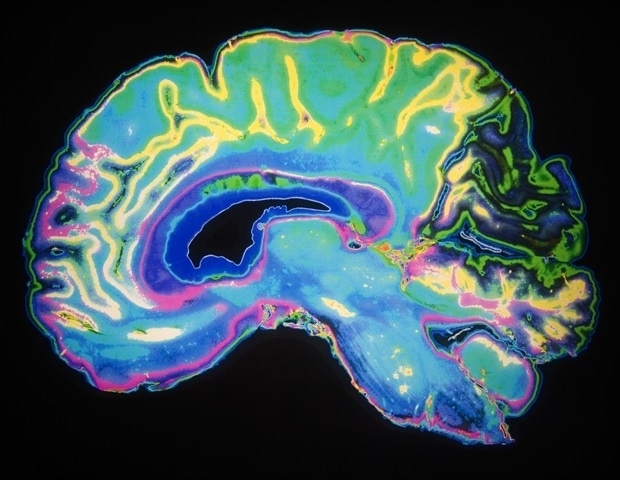
A new study from the Karolinska Institutet, published in Nature Communications, has uncovered how rhythmic brain waves, specifically alpha oscillations, contribute to our perception of bodily self-identity. This research provides crucial insights into how the brain integrates sensory signals, enabling individuals to differentiate between their own body and the external environment.
The sensation of ownership over one’s body might seem straightforward, yet it involves complex neural processes. The study examined how the brain merges visual and tactile information to foster the sense of body ownership, the feeling that a specific body part truly belongs to oneself. The research team, led by Mariano D’Angelo, utilized a combination of behavioral experiments, electroencephalogram (EEG) recordings, brain stimulation, and computational modeling involving a total of 106 participants.
Understanding Body Ownership Through Brain Waves
The experiments revealed that the frequency of alpha waves in the parietal cortex, the brain region responsible for processing sensory information from the body, plays a critical role in how accurately we perceive our body as our own. Participants engaged in the well-known rubber hand illusion, where synchronized touches on a visible rubber hand and the participant’s concealed real hand led many to report that the rubber hand felt like part of their body. Notably, those with faster alpha frequencies demonstrated heightened sensitivity to timing discrepancies between the seen and felt touches, resulting in a clearer sense of ownership.
Conversely, slower alpha frequencies were associated with a broader temporal binding window, causing the brain to misinterpret asynchronous visual and tactile signals as occurring simultaneously. This diminished temporal precision made it challenging to distinguish between self-related sensations and external stimuli, thereby weakening the distinction between the body and the world.
Implications for Technology and Mental Health
To further explore whether alpha frequency influences these perceptual effects directly, researchers applied non-invasive electrical brain stimulation to modify participants’ alpha waves slightly. The findings indicated that adjusting the alpha frequency altered the precision with which subjects experienced body ownership and the simultaneous perception of visual and tactile stimuli. Computational models confirmed that alpha frequency significantly impacts how the brain assesses the timing of sensory signals, thereby regulating the temporal precision of perception and shaping our sense of bodily self.
Henrik Ehrsson, professor at the Department of Neuroscience at Karolinska Institutet and the study’s last author, emphasized the significance of these findings: “Our research elucidates how the brain integrates signals from the body to form a coherent sense of self.” This knowledge could pave the way for advancements in prosthetic technology and enhance the realism of virtual reality experiences.
The collaborative study involved researchers from Aix-Marseille Université in France and received funding from the European Research Council (ERC), the Swedish Research Council, VINNOVA, StratNeuro, and A*Midex. The insights gained from this research could have lasting implications for understanding psychiatric conditions such as schizophrenia, where the sense of self is often disrupted.
As the field of neuroscience continues to evolve, studies like this offer a deeper understanding of the intricate workings of the brain and its influence on our perception of identity.









Health Expert Claims Trump’s Cognitive Decline May Be Critical

Airlines Navigate Economic Challenges of Ultra-Long Nonstop Routes

Taylor Swift and NFL Stars Redefine the WAG Landscape

Woman Loses 2 Stone on Mounjaro, Faces Unexpected Hair Loss

Gordon Ramsay Joins Forces with Feeding Britain to Combat Hunger

Highland Council Faces Criticism Over Rent Hike and Road Plans

Oxford Launches Motherlabs to Empower Start-ups with New Labs

Audi and Cadillac Face Challenges After Barcelona F1 Shakedown

Funeral Procession for Convicted Offender Sparks Controversy

Coronation Street’s Shocking Murder Twist Reveals Family Secrets

Andrew Pierce Confirms Departure from ITV’s Good Morning Britain

Katie Price Faces New Health Concerns After Cancer Symptoms Resurface

Sue Radford Reveals Weight Loss Journey, Shedding 12–13 kg

Kate Garraway Sells £2 Million Home Amid Financial Struggles

Ann Ming Reflects on ITV’s ‘I Fought the Law’ Drama

Bailey Announces Heartbreaking Split from Rebecca After Reunion

David Jason and Nicholas Lyndhurst Eye Reunion for Only Fools Anniversary

Coronation Street Fans React as Todd Faces Heartbreaking Choice
-
 World2 months ago
Coronation Street’s Shocking Murder Twist Reveals Family Secrets
-
 Entertainment2 months ago
Andrew Pierce Confirms Departure from ITV’s Good Morning Britain
-
 Health5 months ago
Katie Price Faces New Health Concerns After Cancer Symptoms Resurface
-
 Health2 weeks ago
Sue Radford Reveals Weight Loss Journey, Shedding 12–13 kg
-
 Entertainment6 months ago
Kate Garraway Sells £2 Million Home Amid Financial Struggles
-
 Entertainment5 months ago
Ann Ming Reflects on ITV’s ‘I Fought the Law’ Drama
-
 World3 months ago
Bailey Announces Heartbreaking Split from Rebecca After Reunion
-
 Entertainment2 months ago
David Jason and Nicholas Lyndhurst Eye Reunion for Only Fools Anniversary
-
 Entertainment3 months ago
Coronation Street Fans React as Todd Faces Heartbreaking Choice
-

 World3 months ago
EastEnders’ Nicola Mitchell Faces Unexpected Pregnancy Crisis
-

 Entertainment2 months ago
Bradley Walsh Sparks Strictly Come Dancing Hosting Speculation
-

 Entertainment2 months ago
Two Stars Evicted from I’m A Celebrity Just Days Before Finale