
Lifestyle
Montenegro Faces Deadline to Address Animal Byproduct Waste

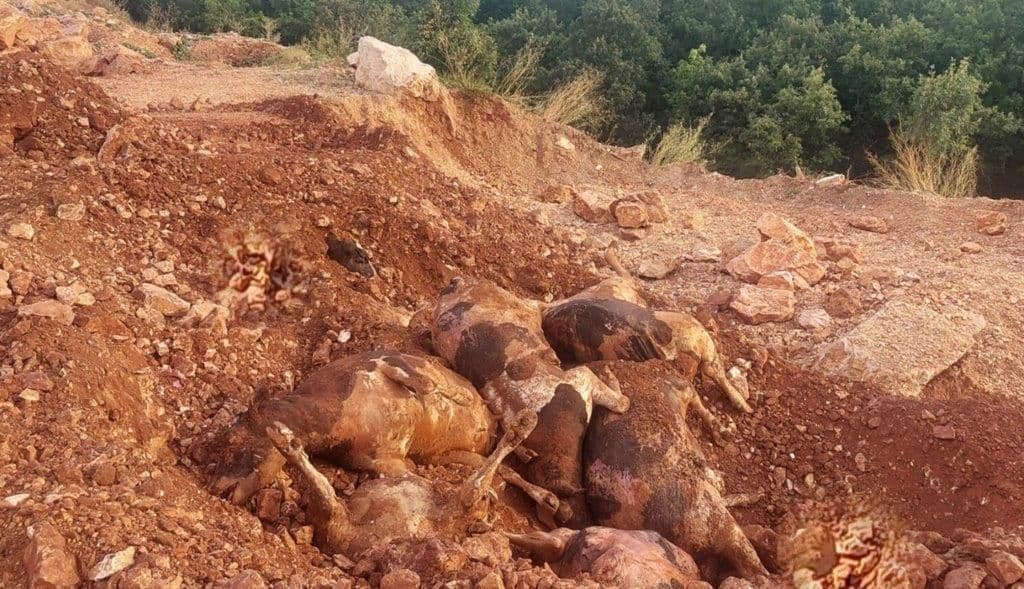
Montenegro is required to submit an updated plan for managing animal byproducts not intended for human consumption to the European Commission by December 31, 2025. Additionally, local municipalities must establish temporary livestock burial sites or pits by May 1, 2026. Failure to comply could jeopardize the temporary closure of Chapter 12, which encompasses food safety, veterinary, and phytosanitary matters, according to the Ministry of Agriculture, Forestry and Water Management.
Animal byproducts arise from slaughterhouses, meat and dairy processing facilities, retail establishments due to expired products or spoilage, restaurants, farms, and wildlife from deceased animals. They can also result from measures to control infectious animal diseases. Despite existing EU legislation governing classification and disposal, Montenegro has not fully adhered to the required protocols. Currently, waste is collected by municipal companies and deposited in designated but unmarked areas of city landfills, posing significant risks in the event of outbreaks of particularly dangerous infectious animal diseases or zoonoses.
The urgency of addressing these issues was underscored last year when hundreds of cattle infected with Q fever were euthanized in Danilovgrad and Niksic. The municipalities lacked designated burial sites, leading to carcasses remaining on farms for several days. The Ministry’s report indicated that a significant first step toward resolving this issue was taken in 2018 with the adoption of a management plan for the collection and processing of animal byproducts not suitable for human consumption, which included an action plan.
From February 2020 to July 2021, with support from the MIDAS 2 project, technical assistance was provided to develop a business plan confirming the need for a facility capable of processing between 8,000 and 10,000 tons annually. This facility is essential to ensure compliance with EU requirements, crucial for controlling animal diseases, safeguarding public health, and protecting the environment. The estimated total cost for the project, including design, environmental impact assessments, and construction oversight, is approximately $6.9 million.
In addition to the processing plant, the project encompasses the construction of two collection centers in Niksic and Podgorica, along with the procurement of vehicles and equipment, which will require an additional investment of around $3 million. Funding for this initiative is provided through a loan from the World Bank, which approved an extension of the project until the end of June 2025 to allow time for the facility’s construction. However, the anticipated timeline for the design and construction of the facility is pegged at 36 months, prompting a request in April 2023 for an additional 24-month extension to the MIDAS 2 project.
A significant delay in the project has arisen due to the absence of a designated location for the facility. The government announced in December 2021 that the site would be established by the end of 2024 in Bijelo Polje, specifically at the Chelinska Kosa site, as part of a planned regional center for solid municipal waste. Yet, in January 2022, residents of Ravna Rijeka petitioned the Ministry of Ecology, Spatial Planning, and Urbanism, as well as the Bijelo Polje municipality, to reconsider the location for the construction of the regional waste center.
Given the uncertainty surrounding the center’s construction and the impending deadline for the MIDAS 2 project, the establishment of the animal byproduct processing facility has become significantly threatened. Consequently, in February 2023, the Ministry of Agriculture reached out to nine municipalities—Podgorica, Niksic, Danilovgrad, Tuzi, Kolašin, Mojkovac, Berane, Pljevlja, and Bijelo Polje—requesting consideration for potential site allocation. Niksic responded positively; in March 2024, the Niksic municipality assembly approved the Ministry’s request and transferred management rights over a parcel in the Gracanica Industrial Zone to the state. This decision laid the groundwork for changing the location and advancing activities such as conducting environmental and social impact assessments and preparing design documentation for the facility.
Despite these developments, in December 2024, letters were sent to the municipality of Niksic from the local councils of Ozrinici, Bršno, Laz, and Gvozdenice, expressing opposition to the facility’s establishment in their area. They warned that if their concerns were not addressed, they would take radical measures.
Officials from the Ministry of Agriculture emphasize that the updated plan, which must be submitted to the European Commission by the end of the year, should include alternative, temporary solutions for managing animal byproducts until the facility is constructed. According to the Veterinary Law, local governments are required to designate spaces for livestock burial grounds, a responsibility they have yet to fulfill. At present, the only alternative for safe waste management involves the construction of livestock burial sites or pits, which must be established by local authorities in accordance with hygiene, veterinary, and health regulations for animal byproducts. Upon completion, these sites will be registered with the Food Safety, Veterinary, and Phytosanitary Administration.













Belfast Gears Up for Vibrant St Patrick’s Day Parade on March 17

Cuba Faces Nationwide Blackout Amid Deepening Energy Crisis

Wirral Council to Restructure Leadership, Cutting Two Top Roles

Rethinking Resistance Training: Key Insights from US Experts

EU Membership on the Horizon: What It Means for Citizens

Ukrainian Drone Swarms Strike Moscow Region for Second Day

Henley Launches Innovative Initiative to Boost Local Economy

Court Ruling Allows Pandemic Tax Refund Claims Until 2026

Sean Penn’s Absence at 2026 Oscars Sparks Discussion

Coronation Street’s Shocking Murder Twist Reveals Family Secrets

Andrew Pierce Confirms Departure from ITV’s Good Morning Britain

Katie Price Faces New Health Concerns After Cancer Symptoms Resurface

Gyles Brandreth Shares Grandson’s Cancer Battle and Recovery

Sue Radford Reveals Weight Loss Journey, Shedding 12–13 kg

Kate Garraway Sells £2 Million Home Amid Financial Struggles

Jordan Brook Faces Health Crisis in Hospital as Sophie Kasaei Stays Away

EastEnders’ Nicola Mitchell Faces Unexpected Pregnancy Crisis

Reddit Study Reveals Distinctions Between Lurkers and Power Users
-
 World8 months ago
Coronation Street’s Shocking Murder Twist Reveals Family Secrets
-
 Entertainment7 months ago
Andrew Pierce Confirms Departure from ITV’s Good Morning Britain
-
 Health11 months ago
Katie Price Faces New Health Concerns After Cancer Symptoms Resurface
-
 Health6 months ago
Gyles Brandreth Shares Grandson’s Cancer Battle and Recovery
-
 Health6 months ago
Sue Radford Reveals Weight Loss Journey, Shedding 12–13 kg
-
 Entertainment12 months ago
Kate Garraway Sells £2 Million Home Amid Financial Struggles
-
 Entertainment4 months ago
Jordan Brook Faces Health Crisis in Hospital as Sophie Kasaei Stays Away
-
 World9 months ago
EastEnders’ Nicola Mitchell Faces Unexpected Pregnancy Crisis
-
 Science8 months ago
Reddit Study Reveals Distinctions Between Lurkers and Power Users
-

 World8 months ago
Mother Charged After Son, 9, Killed in Tragic Incident in Italy
-

 Entertainment11 months ago
Ann Ming Reflects on ITV’s ‘I Fought the Law’ Drama
-

 World8 months ago
Bailey Announces Heartbreaking Split from Rebecca After Reunion