
Science
NASA’s SPHEREx Captures Stunning Flare from Comet 3I/ATLAS

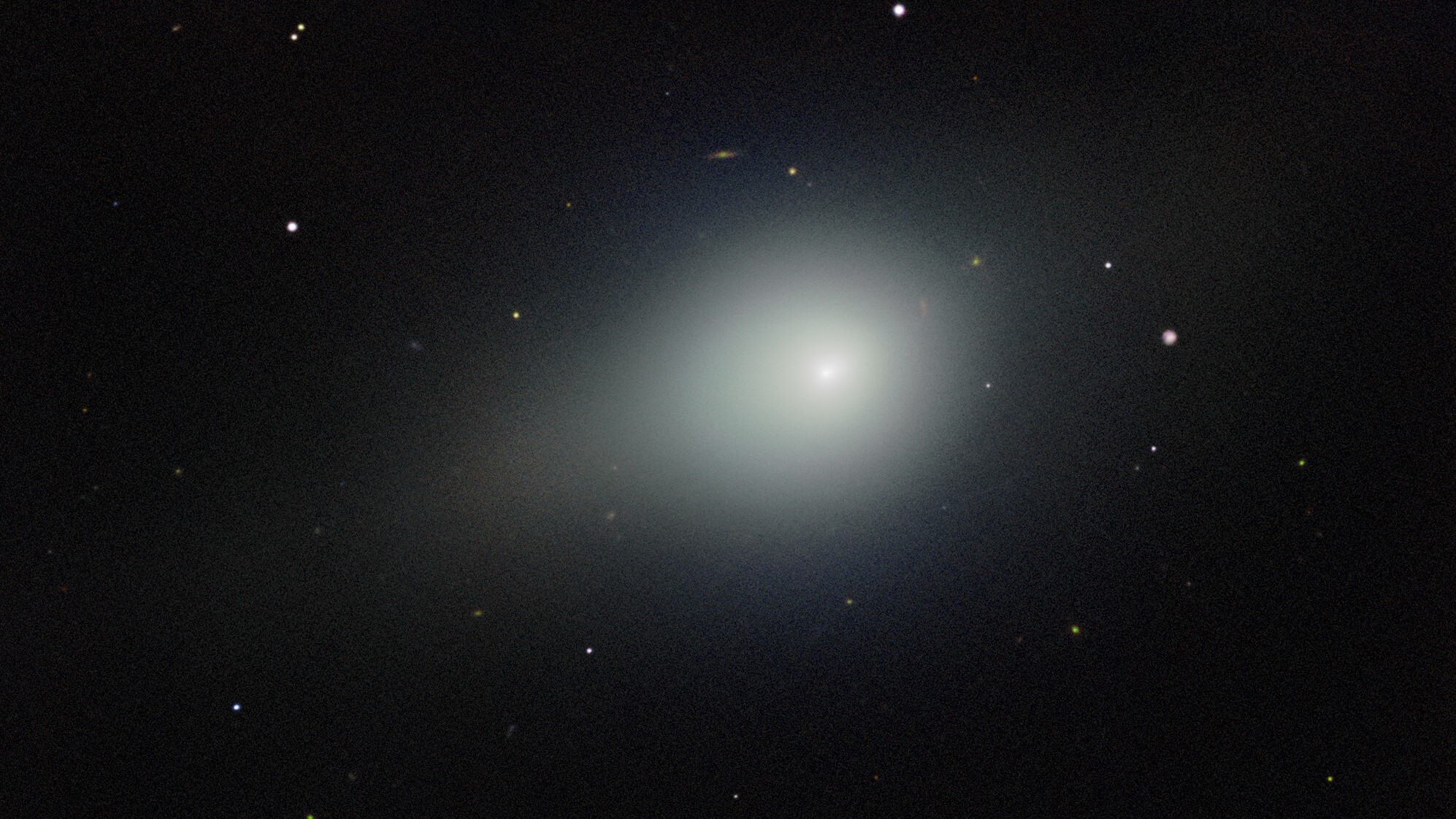
NASA has recently observed an unexpected surge in activity from interstellar comet 3I/ATLAS as it exits the solar system. This unusual phenomenon, captured by the agency’s SPHEREx space telescope, has sparked interest among scientists and online observers alike. The comet flared dramatically in December 2025, shortly after making its closest approach to the Sun, defying typical comet behavior.
Comets usually grow more active around perihelion, the point at which they are nearest to the Sun. For 3I/ATLAS, the most intense activity occurred after this point. Instead of gradually fading, the comet released a significant amount of gas, dust, and complex molecules. Images from SPHEREx revealed a glowing coma rich in water vapour, carbon dioxide, and organic compounds, along with a distinct pear-shaped dust tail formed as rocky material was expelled into space during the outburst.
According to Carey Lisse, lead author of the study, “Rather than quietly dimming as it moved away, the comet became significantly brighter. Even water ice was rapidly turning into gas far from the Sun.” This unexpected behavior has raised questions about the comet’s origins and nature.
Scientific Insights from the Flare-Up
3I/ATLAS was first discovered in July 2025 by the ATLAS asteroid survey and marks only the third confirmed interstellar object observed in the solar system. The first was 1I/’Oumuamua in 2017, recognized for its unusual shape and trajectory, while the second, 2I/Borisov, identified in 2019, exhibited traits typical of comets.
Though some social media users have speculated that the comet’s brightening resembles a spacecraft “powering up,” scientists assert there is no evidence to support such claims. They propose a more natural explanation: sunlight may have taken longer to penetrate a hardened outer crust, eventually reaching ancient ice buried beneath the surface. When this ice warmed, the resultant gas and material surged outward, producing the observed outburst.
SPHEREx’s capabilities are particularly suited for this analysis. Operating in infrared wavelengths, the telescope can identify not only dust but also various molecules streaming from the comet, including methane, methanol, and cyanide—compounds considered vital in the early stages of planet formation. The chemical composition of 3I/ATLAS offers a unique opportunity to compare local comets with icy bodies formed around other stars.
Implications for Understanding Interstellar Objects
Initial findings indicate the presence of many common ingredients, supporting the hypothesis that the fundamental building blocks of planets may be prevalent throughout the Milky Way. Additionally, scientists believe that the comet’s long journey through interstellar space, exposing it to cosmic radiation, played a role in its composition. Over time, this radiation likely altered the surface, sealing off pristine ice layers beneath. When solar energy finally reached these untouched areas, it triggered the rapid release of materials.
The results of this research were published in February 2026 in the Research Notes of the AAS. While 3I/ATLAS is now fading as it moves deeper into space, the unexpected flare has provided valuable insights into the nature of interstellar visitors. It highlights the ongoing fascination that such objects inspire, both within the scientific community and among the public.





Nutrition Experts Advocate for Fibrelayering Over Fibremaxxing

Grandfather’s Unintentional Confession Unveils Family Mafia Ties

Rising Trade Opportunities Make Parents Rethink University

NASA’s SPHEREx Captures Stunning Flare from Comet 3I/ATLAS

Portsmouth Boss Hints at Injury Returns Ahead of Sheffield Clash

Octopus Energy Reveals Ideal Thermostat Settings for Savings

Emirates Set to Maintain Largest Boeing Widebody Fleet by 2026

Emirates Set to Dominate Boeing Widebody Market in 2026

Arc Raiders Developer Confirms Rotation of Map Conditions Will Continue

Coronation Street’s Shocking Murder Twist Reveals Family Secrets

Andrew Pierce Confirms Departure from ITV’s Good Morning Britain

Katie Price Faces New Health Concerns After Cancer Symptoms Resurface

Sue Radford Reveals Weight Loss Journey, Shedding 12–13 kg

Kate Garraway Sells £2 Million Home Amid Financial Struggles

Ann Ming Reflects on ITV’s ‘I Fought the Law’ Drama

Bailey Announces Heartbreaking Split from Rebecca After Reunion

David Jason and Nicholas Lyndhurst Eye Reunion for Only Fools Anniversary

Coronation Street Fans React as Todd Faces Heartbreaking Choice
-
 World2 months ago
Coronation Street’s Shocking Murder Twist Reveals Family Secrets
-
 Entertainment2 months ago
Andrew Pierce Confirms Departure from ITV’s Good Morning Britain
-
 Health5 months ago
Katie Price Faces New Health Concerns After Cancer Symptoms Resurface
-
 Health2 weeks ago
Sue Radford Reveals Weight Loss Journey, Shedding 12–13 kg
-
 Entertainment6 months ago
Kate Garraway Sells £2 Million Home Amid Financial Struggles
-
 Entertainment5 months ago
Ann Ming Reflects on ITV’s ‘I Fought the Law’ Drama
-
 World3 months ago
Bailey Announces Heartbreaking Split from Rebecca After Reunion
-
 Entertainment2 months ago
David Jason and Nicholas Lyndhurst Eye Reunion for Only Fools Anniversary
-
 Entertainment3 months ago
Coronation Street Fans React as Todd Faces Heartbreaking Choice
-

 World3 months ago
EastEnders’ Nicola Mitchell Faces Unexpected Pregnancy Crisis
-

 Entertainment2 months ago
Bradley Walsh Sparks Strictly Come Dancing Hosting Speculation
-

 Entertainment2 months ago
Two Stars Evicted from I’m A Celebrity Just Days Before Finale