
Science
IMF Chief Warns Young Workers Face Job Disruption from AI

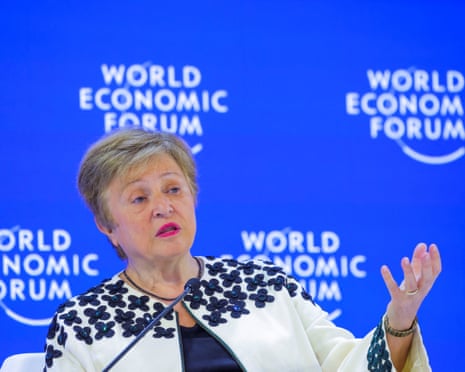
Artificial intelligence (AI) is poised to significantly disrupt the labour market, particularly affecting young workers, according to Kristalina Georgieva, the Managing Director of the International Monetary Fund (IMF). Speaking at the World Economic Forum in Davos on January 19, 2024, Georgieva highlighted the need for awareness and regulation as AI technologies become increasingly prevalent.
Georgieva stated that the IMF’s research indicates a transformative shift in the demand for skills, predicting that in advanced economies, over 60% of jobs will be impacted by AI in the coming years. This includes roles that may be enhanced, eliminated, or transformed altogether. Globally, the figure stands at around 40%. “This is like a tsunami hitting the labour market,” she remarked during her address.
She elaborated that many of the jobs affected are entry-level positions, which traditionally employ younger individuals. “Tasks that are eliminated are usually what entry-level jobs do at present, so young people searching for jobs find it harder to get to a good placement,” Georgieva explained. The repercussions could extend beyond the youth, as those whose roles are not directly altered by AI may see their wages stagnate or decline without corresponding productivity gains.
In addition to the economic implications, Georgieva expressed her concerns regarding the regulation of AI technologies. “This is moving so fast, and yet we don’t know how to make it safe,” she stated, emphasizing the urgency for frameworks that ensure inclusivity and safety in AI deployment.
Calls for Fair Management of AI Disruption
The discussions at Davos have not solely focused on the challenges posed by AI. Christy Hoffman, General Secretary of the UNI Global Union, underscored the imperative to manage the disruption caused by AI effectively. “It’s just a basic premise that the point of AI, on the business side, is to increase productivity,” she noted, warning that this often leads to job cuts.
Hoffman urged companies to engage with employees and their representatives about the implementation of AI tools before their introduction. “We want to share in the gains. We’re not going to stop AI, nor do we want to even try; but we don’t want it to just roll over us,” she asserted.
Earlier in the forum, Satya Nadella, Chief Executive Officer of Microsoft, echoed similar sentiments, cautioning that AI could lose its “social permission” to compete for vital resources if it fails to deliver benefits beyond a select few technology firms. He highlighted the importance of AI in driving advancements, such as the development of new drugs, which could have widespread societal benefits.
Global Cooperation and Economic Inequality
Alongside Georgieva, Christine Lagarde, President of the European Central Bank, expressed concerns about the potential for increased mistrust between economies due to rising tariff barriers. She noted that AI relies heavily on capital, energy, and data, suggesting that cooperative efforts are essential. “If we do not work cooperatively and define the new rules of the game, we will have less capital and less data,” Lagarde warned.
Lagarde also highlighted the growing issue of global inequality, stating that the disparity is “getting deeper and bigger.” Her comments came as Mark Carney, the Canadian Prime Minister, urged delegates at Davos to acknowledge a permanent “rupture” in the global economic order and to unite in response to unpredictable trade policies from the United States.
Despite the varying perspectives among leaders, Lagarde remained optimistic. “I’m not exactly on the same page as Mark,” she said, advocating for a discourse around alternatives rather than focusing solely on rupture.
As discussions continue at the World Economic Forum, the urgent need for a balanced approach to AI integration remains a central theme. The stakes are high, with the potential for both significant economic transformation and increased inequality looming on the horizon.












Belfast Gears Up for Vibrant St Patrick’s Day Parade on March 17

Cuba Faces Nationwide Blackout Amid Deepening Energy Crisis

Wirral Council to Restructure Leadership, Cutting Two Top Roles

Rethinking Resistance Training: Key Insights from US Experts

EU Membership on the Horizon: What It Means for Citizens

Ukrainian Drone Swarms Strike Moscow Region for Second Day

Henley Launches Innovative Initiative to Boost Local Economy

Court Ruling Allows Pandemic Tax Refund Claims Until 2026

Sean Penn’s Absence at 2026 Oscars Sparks Discussion

Coronation Street’s Shocking Murder Twist Reveals Family Secrets

Andrew Pierce Confirms Departure from ITV’s Good Morning Britain

Katie Price Faces New Health Concerns After Cancer Symptoms Resurface

Sue Radford Reveals Weight Loss Journey, Shedding 12–13 kg

Kate Garraway Sells £2 Million Home Amid Financial Struggles

Jordan Brook Faces Health Crisis in Hospital as Sophie Kasaei Stays Away

EastEnders’ Nicola Mitchell Faces Unexpected Pregnancy Crisis

Bailey Announces Heartbreaking Split from Rebecca After Reunion

Ann Ming Reflects on ITV’s ‘I Fought the Law’ Drama
-
 World4 months ago
Coronation Street’s Shocking Murder Twist Reveals Family Secrets
-
 Entertainment4 months ago
Andrew Pierce Confirms Departure from ITV’s Good Morning Britain
-
 Health7 months ago
Katie Price Faces New Health Concerns After Cancer Symptoms Resurface
-
 Health2 months ago
Sue Radford Reveals Weight Loss Journey, Shedding 12–13 kg
-
 Entertainment8 months ago
Kate Garraway Sells £2 Million Home Amid Financial Struggles
-
 Entertainment3 weeks ago
Jordan Brook Faces Health Crisis in Hospital as Sophie Kasaei Stays Away
-
 World5 months ago
EastEnders’ Nicola Mitchell Faces Unexpected Pregnancy Crisis
-
 World5 months ago
Bailey Announces Heartbreaking Split from Rebecca After Reunion
-
 Entertainment7 months ago
Ann Ming Reflects on ITV’s ‘I Fought the Law’ Drama
-

 Entertainment2 months ago
Selena Gomez’s Name Linked to Epstein: Examining the Claims
-

 Health7 months ago
TOWIE Stars Sophie Kasaei and Jordan Brook Pursue Fertility Treatment
-

 Health7 months ago
Fiona Phillips’ Husband Shares Heartbreaking Update on Her Health