
Science
Interstellar Comet 3I/ATLAS Shows Increased Activity Ahead of December Flyby

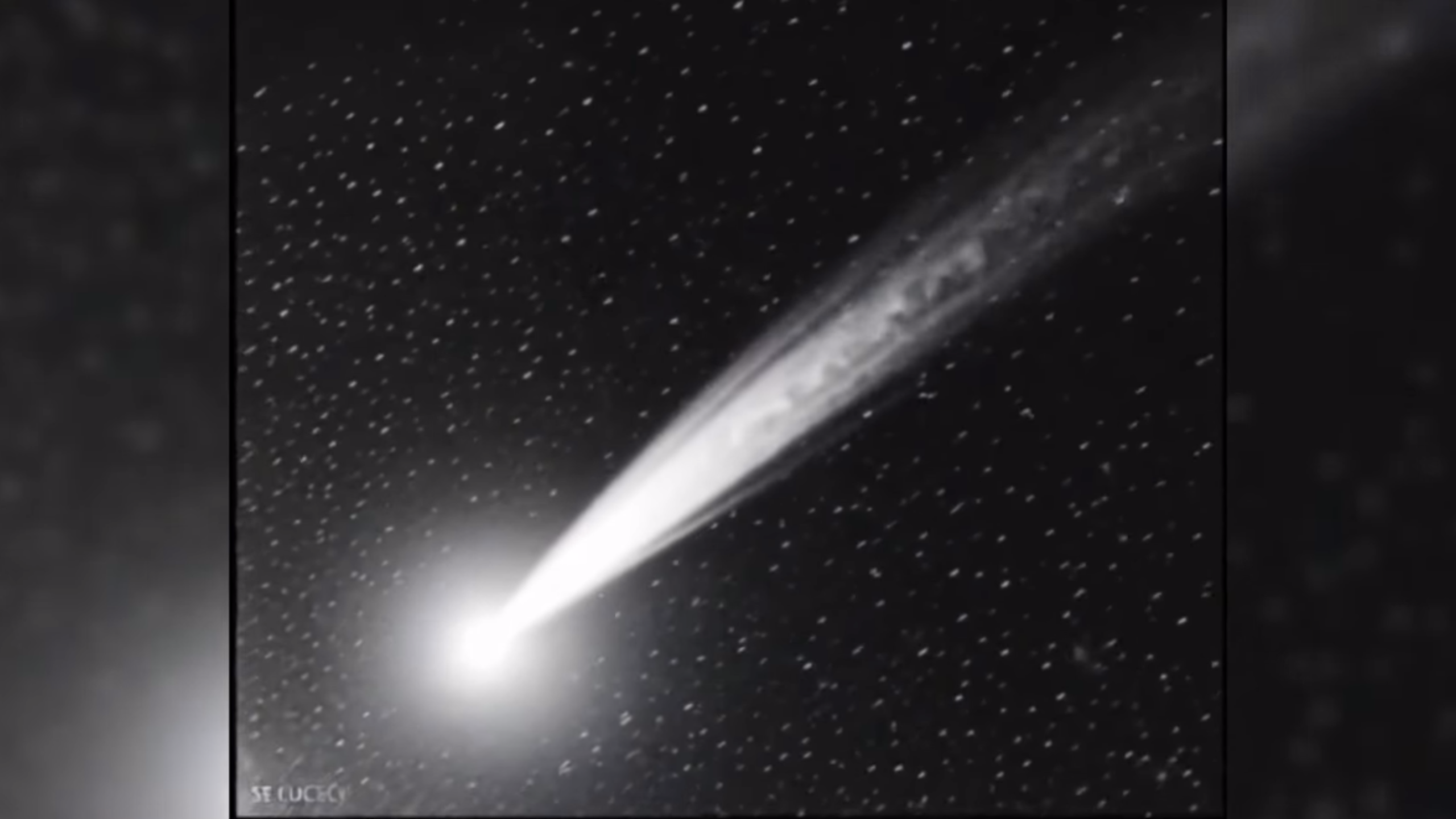
New images from NASA and the European Space Agency (ESA) reveal that interstellar comet 3I/ATLAS is exhibiting significant activity as it approaches Earth for a flyby on December 19, 2023. The comet, currently about 270 million kilometres away, has spent months traversing the inner Solar System, and its recent interactions with the Sun appear to have intensified gas and dust emissions.
The latest observations, captured by the Hubble Space Telescope, provide one of the clearest views of 3I/ATLAS to date. The image displays a bright nucleus encircled by an expanding coma, indicating that material is sublimating into space. NASA explained that as comets heat up, they become brighter, and the jet-like features visible in the recent images suggest that the comet’s surface is responding actively to solar radiation.
Astronomers first identified 3I/ATLAS as an interstellar visitor earlier this year. NASA’s detailed report outlined the comet’s size, speed, and unusual composition, noting that its nucleus measures between 440 metres and 5.6 kilometres wide. This size classifies it among the largest interstellar objects detected so far.
Unique Perspectives from Spacecraft
ESA’s Juice spacecraft, which is en route to Jupiter’s moons, also captured remarkable images of 3I/ATLAS from just 66 million kilometres away. The photograph reveals a glowing halo and two distinct tails, supporting the idea that the comet is undergoing rapid changes. Juice obtained this image shortly after the comet’s closest approach to the Sun, providing valuable insights into its behaviour as it heated up.
Both Hubble and Juice are part of a growing network of spacecraft observing 3I/ATLAS. Various observatories across the Solar System are collecting complementary data, each set of images contributing to our understanding of the materials formed outside our planetary system. Scientists consider this a rare opportunity, as 3I/ATLAS is estimated to be nearly 10 billion years old.
The comet will be visible to skilled observers during its flyby. A telescope with a minimum aperture of 30 centimetres is recommended for viewing due to its magnitude. For those interested, guidance on locating 3I/ATLAS in the night sky indicates that it will be positioned beneath the star Regulus in the constellation Leo during its closest approach, which is best viewed before dawn.
Scientific Insights and Future Trajectory
While astronomers emphasize that 3I/ATLAS poses no risk during its close pass, they view the event as an opportunity to study how interstellar objects react to extreme heating as they travel through our Solar System. The James Webb Space Telescope is also expected to observe the comet in the coming weeks, and both professional and amateur astronomers will continue to gather data from Earth. These observations will help refine predictions for the comet’s future trajectory.
After passing Earth, 3I/ATLAS will head toward Jupiter, where a close encounter in March 2026 could alter its path. The extent of this change will depend on how much material the comet continues to eject following its recent surge in activity. This December represents the only occasion when 3I/ATLAS will come this close to Earth, offering scientists a final chance to study this extraordinary visitor from beyond our Solar System.






Belfast Gears Up for Vibrant St Patrick’s Day Parade on March 17

Cuba Faces Nationwide Blackout Amid Deepening Energy Crisis

Wirral Council to Restructure Leadership, Cutting Two Top Roles

Rethinking Resistance Training: Key Insights from US Experts

EU Membership on the Horizon: What It Means for Citizens

Ukrainian Drone Swarms Strike Moscow Region for Second Day

Henley Launches Innovative Initiative to Boost Local Economy

Court Ruling Allows Pandemic Tax Refund Claims Until 2026

Sean Penn’s Absence at 2026 Oscars Sparks Discussion

Coronation Street’s Shocking Murder Twist Reveals Family Secrets

Andrew Pierce Confirms Departure from ITV’s Good Morning Britain

Katie Price Faces New Health Concerns After Cancer Symptoms Resurface

Sue Radford Reveals Weight Loss Journey, Shedding 12–13 kg

Kate Garraway Sells £2 Million Home Amid Financial Struggles

Jordan Brook Faces Health Crisis in Hospital as Sophie Kasaei Stays Away

EastEnders’ Nicola Mitchell Faces Unexpected Pregnancy Crisis

Bailey Announces Heartbreaking Split from Rebecca After Reunion

Ann Ming Reflects on ITV’s ‘I Fought the Law’ Drama
-
 World4 months ago
Coronation Street’s Shocking Murder Twist Reveals Family Secrets
-
 Entertainment4 months ago
Andrew Pierce Confirms Departure from ITV’s Good Morning Britain
-
 Health7 months ago
Katie Price Faces New Health Concerns After Cancer Symptoms Resurface
-
 Health3 months ago
Sue Radford Reveals Weight Loss Journey, Shedding 12–13 kg
-
 Entertainment8 months ago
Kate Garraway Sells £2 Million Home Amid Financial Struggles
-
 Entertainment4 weeks ago
Jordan Brook Faces Health Crisis in Hospital as Sophie Kasaei Stays Away
-
 World5 months ago
EastEnders’ Nicola Mitchell Faces Unexpected Pregnancy Crisis
-
 World5 months ago
Bailey Announces Heartbreaking Split from Rebecca After Reunion
-
 Entertainment7 months ago
Ann Ming Reflects on ITV’s ‘I Fought the Law’ Drama
-

 Entertainment2 months ago
Selena Gomez’s Name Linked to Epstein: Examining the Claims
-

 Health7 months ago
TOWIE Stars Sophie Kasaei and Jordan Brook Pursue Fertility Treatment
-

 Health8 months ago
Fiona Phillips’ Husband Shares Heartbreaking Update on Her Health