
Science
Discovery Pushes Back Human Fire-Making Timeline by 350,000 Years

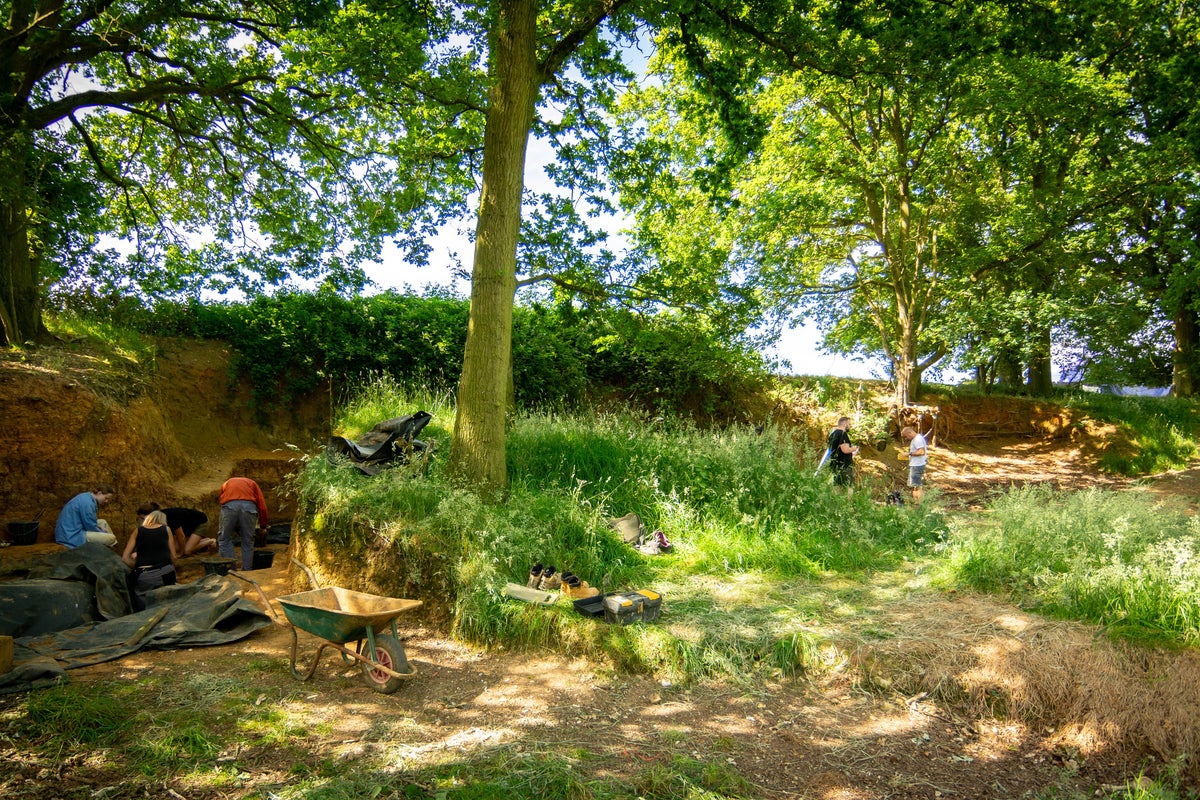
New research has revealed that humans were able to create fire approximately 400,000 years ago, significantly earlier than the previous estimate of 50,000 years in northern France. This groundbreaking discovery took place at a disused clay pit in Barnham, Suffolk, where scientists uncovered fire-cracked flint, hand axes, and heated sediments. The findings, led by a team from the British Museum, provide crucial insights into early human behavior and adaptation.
Among the key discoveries at the site were fragments of iron pyrite, a mineral known for its ability to produce sparks. The presence of this mineral, which is not commonly found in the area, suggests that it was deliberately transported by early humans for the purpose of making fire. Geological studies conducted over four years confirmed that the heating of the clay was not due to natural wildfires, but rather the result of repeated fire usage by humans.
Impact on Human Evolution
The controlled use of fire by early humans is believed to have had profound effects on human evolution. According to the study’s authors, fire provided warmth and protection from predators, enhancing survival in harsh environments. It also allowed for cooking, which expanded the range of consumable foods and created social spaces around the hearth.
Dr. Rob Davis, Project Curator of Pathways to Ancient Britain at the British Museum, described the hearth area as being “about half a metre in diameter, sort of a small campfire.” This suggests that early humans had developed a practical understanding of fire’s benefits for socialization and nourishment.
The research team speculated that the fires at Barnham were likely created by early Neanderthals, although their exact identity remains uncertain. Professor Chris Stringer, a prominent researcher at the Natural History Museum, noted that this period coincided with significant increases in brain size, which may have been facilitated by the nutritional benefits derived from cooked food. “Our brains are energetically expensive,” he explained, highlighting that they consume approximately 20 percent of the body’s energy. The ability to cook food with fire likely played a critical role in supporting the energy needs of a larger brain.
Broader Implications
The implications of this research extend beyond just the timeline of fire-making. Professor Stringer emphasized that the knowledge of fire-making likely originated in continental Europe and was brought to Britain via a land bridge that existed during that period. He explained that the cold climate of around 450,000 years ago may have led to significant population die-off in Britain, necessitating a repopulation of the area.
The ability to create and control fire would have provided early humans with a crucial advantage as they migrated to regions with harsher winters. “Having fire gives you warmth, deters wild animals, and enhances nutrition from food,” he said. These factors likely contributed to a positive feedback loop in which brain development and social interaction flourished, paving the way for advancements in communication and possibly even language.
The findings of this study, titled “Earliest Evidence of Making Fire,” have been published in the journal Nature. Professor Nick Ashton, Curator of Palaeolithic Collections at the British Museum, described the discovery as the “most exciting” of his 40-year career, underscoring its significance in understanding human evolution.
As researchers continue to explore the origins of fire-making, this discovery at Barnham not only rewrites our understanding of early human capabilities but also highlights the complex interplay between environmental adaptation and cognitive development.









Belfast Gears Up for Vibrant St Patrick’s Day Parade on March 17

Cuba Faces Nationwide Blackout Amid Deepening Energy Crisis

Wirral Council to Restructure Leadership, Cutting Two Top Roles

Rethinking Resistance Training: Key Insights from US Experts

EU Membership on the Horizon: What It Means for Citizens

Ukrainian Drone Swarms Strike Moscow Region for Second Day

Henley Launches Innovative Initiative to Boost Local Economy

Court Ruling Allows Pandemic Tax Refund Claims Until 2026

Sean Penn’s Absence at 2026 Oscars Sparks Discussion

Coronation Street’s Shocking Murder Twist Reveals Family Secrets

Andrew Pierce Confirms Departure from ITV’s Good Morning Britain

Katie Price Faces New Health Concerns After Cancer Symptoms Resurface

Sue Radford Reveals Weight Loss Journey, Shedding 12–13 kg

Kate Garraway Sells £2 Million Home Amid Financial Struggles

Jordan Brook Faces Health Crisis in Hospital as Sophie Kasaei Stays Away

EastEnders’ Nicola Mitchell Faces Unexpected Pregnancy Crisis

Bailey Announces Heartbreaking Split from Rebecca After Reunion

Ann Ming Reflects on ITV’s ‘I Fought the Law’ Drama
-
 World4 months ago
Coronation Street’s Shocking Murder Twist Reveals Family Secrets
-
 Entertainment4 months ago
Andrew Pierce Confirms Departure from ITV’s Good Morning Britain
-
 Health7 months ago
Katie Price Faces New Health Concerns After Cancer Symptoms Resurface
-
 Health2 months ago
Sue Radford Reveals Weight Loss Journey, Shedding 12–13 kg
-
 Entertainment8 months ago
Kate Garraway Sells £2 Million Home Amid Financial Struggles
-
 Entertainment3 weeks ago
Jordan Brook Faces Health Crisis in Hospital as Sophie Kasaei Stays Away
-
 World5 months ago
EastEnders’ Nicola Mitchell Faces Unexpected Pregnancy Crisis
-
 World5 months ago
Bailey Announces Heartbreaking Split from Rebecca After Reunion
-
 Entertainment7 months ago
Ann Ming Reflects on ITV’s ‘I Fought the Law’ Drama
-

 Entertainment2 months ago
Selena Gomez’s Name Linked to Epstein: Examining the Claims
-

 Health7 months ago
TOWIE Stars Sophie Kasaei and Jordan Brook Pursue Fertility Treatment
-

 Health7 months ago
Fiona Phillips’ Husband Shares Heartbreaking Update on Her Health