
Entertainment
Greg Lake Reflects on Musical Evolution with ELP and King Crimson

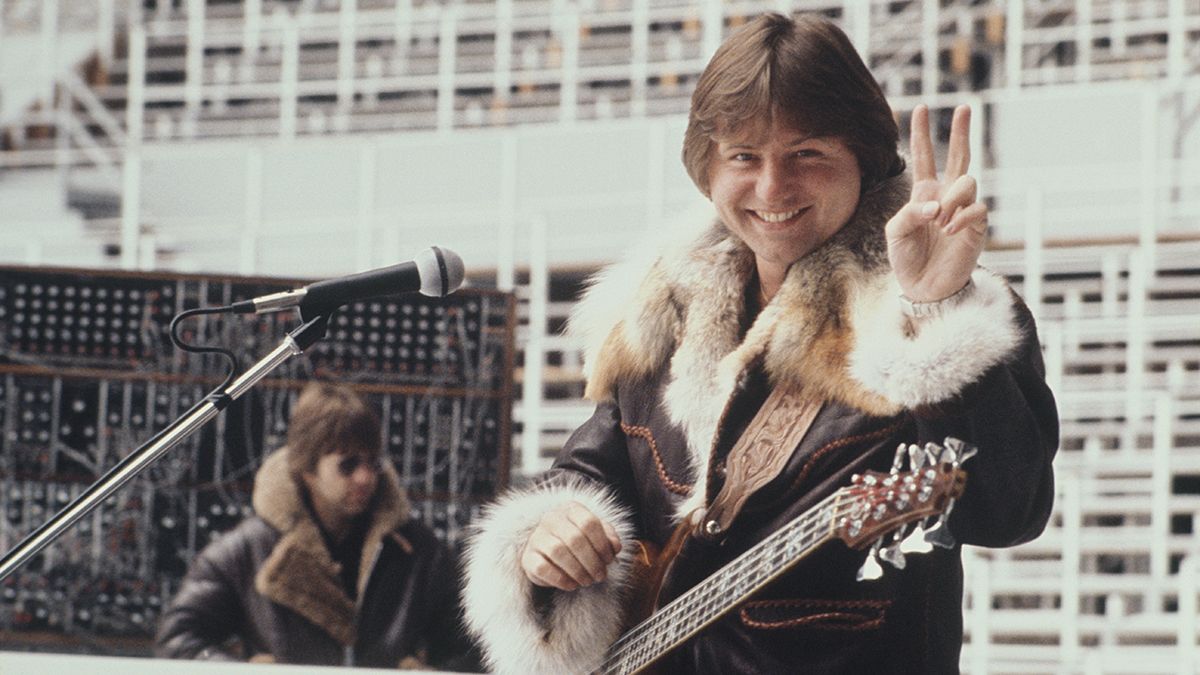
Greg Lake, the legendary musician known for his work with the progressive rock band Emerson, Lake & Palmer (ELP), shared insights about his musical journey and the evolution of his playing style in a conversation with *Bass Player* magazine in 2016. Lake, who initially rose to prominence as a guitarist, transitioned to bass at the encouragement of fellow musician and childhood friend, Robert Fripp. This pivotal moment occurred when he joined King Crimson, a band that would go on to produce one of the most influential albums in rock history.
Reflecting on this transition, Lake recalled, “When Robert said, ‘Would you be prepared to play bass?’ I thought, ‘Four strings, six strings… what could be the problem?’” He soon realized that bass playing is a distinct art form, requiring a different set of skills and knowledge. His experience with King Crimson, particularly during rehearsals, opened his eyes to the nuances of bass. “The first thing to wake me up to the difference between guitar and bass was the first rehearsal I did with King Crimson,” he stated, recalling a moment that highlighted the roles of different instruments within the band.
Lake’s journey with King Crimson culminated in the release of their debut album, In the Court of the Crimson King, in 1969, which remains a cornerstone of the progressive rock genre. It marked a departure from traditional rock influences, drawing instead from classical, jazz, and symphonic traditions. This innovative approach laid the groundwork for ELP, which formed in 1970 after Lake left King Crimson, ultimately achieving commercial success with hits such as “Lucky Man,” “Karn Evil 9,” and “Fanfare for the Common Man.”
Crafting a Unique Sound
Lake explained that his initial style combined techniques from both guitar and bass. However, he quickly recognized the limitations of his early bass playing. “I missed sustain,” he noted. “I used tape-wound strings, and it was unrewarding not to be able to sustain a note.” This prompted him to switch to wire-wound strings, allowing him to achieve the rich low end reminiscent of a Steinway piano, the sound he desired.
In discussing his technique, Lake revealed his preference for using a pick over fingerstyle playing. He attributed his proficiency to his extensive history as a guitarist. “The more percussive way to play was with a pick,” he explained. The interplay between singing and playing bass presented its own challenges. “With bass, you’re going to play whether you like it or not, because you’re part of the rhythm section,” he said, contrasting it with the greater freedom guitarists have.
As a member of ELP, Lake frequently alternated between bass and guitar. Despite his love for the guitar, he recognized that the bass was essential in maintaining the group’s rhythmic foundation. He acknowledged the complexity of fitting basslines into the band’s dynamic soundscape, particularly due to drummer Carl Palmer‘s unique style. “He’s technically incredibly competent, but from a bass player’s standpoint… the floor is really solid with some drummers, while Carl’s style is very much based on jazz influences,” he noted.
Producing Musical Masterpieces
In addition to his performance roles, Lake also took on the responsibilities of producer for the first six ELP albums, as well as for King Crimson’s debut. He reflected on the qualities that may contribute to bass players becoming effective producers. “You do have a certain perspective as a bass player of what’s going on around you,” he suggested, acknowledging that his productions achieved significant commercial success, with all going platinum.
Lake attributed ELP’s distinctiveness to their exploration of diverse musical roots. “Most rock ’n’ roll at that time was based on American blues, gospel, and Motown,” he explained. “We looked to European roots rather than American.” Their influences ranged from European folk music to classical compositions, which allowed ELP to carve out a unique niche in the music landscape of the 1970s.
When reflecting on contemporary music, Lake expressed concern over the perceived lack of originality in today’s sound. “In those days, there was a premium on originality,” he stated. The essence of ELP and King Crimson, he noted, was about striving for uniqueness rather than fitting into a defined genre. This pursuit of originality, he believes, has diminished in modern music, leading to a landscape where many artists sound similar.
Greg Lake’s journey, from guitarist to acclaimed bassist and producer, highlights the evolution of a musician who has left an indelible mark on the world of progressive rock. His reflections provide valuable insights into the creative process and the ongoing search for originality in music.



Buducnost Faces Crucial Match as Coach Vukicevic’s Future Uncertain

Keith Vere Fenner Advocates Data-Driven Revenue Strategies

Exodus Developers Clarify Matthew McConaughey’s Role in Game

King Charles Celebrates Positive Response to Cancer Recovery Message

Budućnost’s Coach Vukčević Faces Pressure Ahead of Decic Match

Labour’s Catherine MacLeod Joins New Peers in House of Lords

Researchers Explore Non-Hermitian Physics in Laser Development

US Soldiers Ambushed in Syria: Multiple Casualties Reported

Lewisham High Street Closed Following Major Accident

Coronation Street’s Shocking Murder Twist Reveals Family Secrets

Kate Garraway Sells £2 Million Home Amid Financial Struggles

Ann Ming Reflects on ITV’s ‘I Fought the Law’ Drama

Andrew Pierce Confirms Departure from ITV’s Good Morning Britain

Katie Price Faces New Health Concerns After Cancer Symptoms Resurface

Coronation Street Fans React as Todd Faces Heartbreaking Choice

Bailey Announces Heartbreaking Split from Rebecca After Reunion

Two Stars Evicted from I’m A Celebrity Just Days Before Finale

Kevin Sinfield Exceeds Fundraising Goal Ahead of Final Marathons
-
 World5 days ago
Coronation Street’s Shocking Murder Twist Reveals Family Secrets
-
 Entertainment4 months ago
Kate Garraway Sells £2 Million Home Amid Financial Struggles
-
 Entertainment3 months ago
Ann Ming Reflects on ITV’s ‘I Fought the Law’ Drama
-
 Entertainment2 days ago
Andrew Pierce Confirms Departure from ITV’s Good Morning Britain
-
 Health3 months ago
Katie Price Faces New Health Concerns After Cancer Symptoms Resurface
-
 Entertainment4 weeks ago
Coronation Street Fans React as Todd Faces Heartbreaking Choice
-
 World4 weeks ago
Bailey Announces Heartbreaking Split from Rebecca After Reunion
-
 Entertainment1 week ago
Two Stars Evicted from I’m A Celebrity Just Days Before Finale
-
 World1 week ago
Kevin Sinfield Exceeds Fundraising Goal Ahead of Final Marathons
-

 Entertainment3 months ago
Coronation Street’s Carl Webster Faces Trouble with New Affairs
-

 Entertainment3 months ago
Where is Tinder Swindler Simon Leviev? Latest Updates Revealed
-

 Entertainment4 months ago
Markiplier Addresses AI Controversy During Livestream Response