
Science
Astronomers Unveil 250,000-Mile X-Ray Cloud from Comet 3I/ATLAS

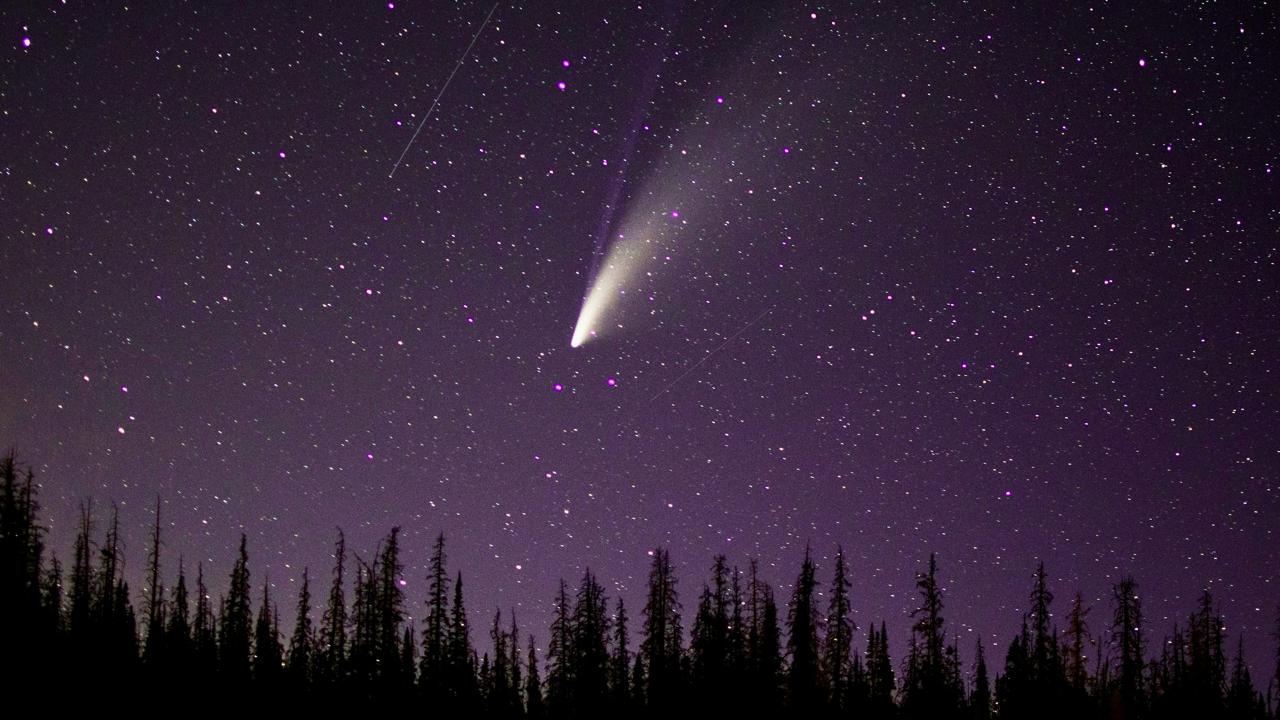
A significant discovery in the field of astronomy has emerged as scientists observed a colossal, 250,000-mile X-ray cloud surrounding the interstellar comet 3I/ATLAS. Captured by the X-Ray Imaging and Spectroscopy Mission (XRISM), this finding is already being described as “puzzling” by researchers who are striving to understand the implications of this unusual phenomenon.
The observations were made as 3I/ATLAS traverses our solar system, providing a rare glimpse into how this interstellar object interacts with solar wind. This marks the first confirmed detection of X-rays from a comet that has originated outside our solar system. The X-ray emissions were identified by the collaborative efforts of JAXA, NASA, and the ESA, underscoring the significance of this mission.
According to the latest observations, the X-ray cloud extends nearly 250,000 miles from the comet’s nucleus, a distance equivalent to approximately 400,000 kilometers. In a recent blog post, astrophysicist Avi Loeb highlighted that before this discovery, 3I/ATLAS had only been detected across various electromagnetic bands, including ultraviolet and infrared.
The XRISM team explained that typical comets emit gas when sunlight warms their surfaces, leading to the formation of a surrounding cloud. When this gas encounters solar wind, charge-exchange reactions occur, potentially generating X-ray emissions. The research team suspects that the observed glow may be linked to a scattering cloud of gas produced as the comet continues to shed material during its journey.
Interestingly, the XRISM data suggests that the X-ray formation could represent an extended emission region. However, scientists have cautioned that some of the observed features might arise from equipment influences, such as detector noise. These factors will require careful examination to confirm the source of the X-ray emissions.
The investigation into 3I/ATLAS remains a key priority for the XRISM project team. They intend to analyze the charge-exchange reactions further, aiming to delineate the relationship between the comet’s gas and the solar wind. This ongoing research could provide insights into the dimensions of the gas cloud and the nature of the observed X-ray emissions.
As 3I/ATLAS is expected to exit the solar system in 2024, scientists are racing against time to gather as much data as possible before its departure. The global research community is mobilizing additional observations to capitalize on this unique opportunity to study an interstellar object in real time.
The findings from this mission may have broader implications, shedding light on the behavior of interstellar bodies as they interact with solar radiation and winds. By contrasting the X-ray emissions of 3I/ATLAS with those of comets that originate within our solar system, researchers hope to gain a clearer understanding of the fundamental processes at play.
Continued observations of 3I/ATLAS will be pursued by the XRISM team whenever conditions permit. This mission is not only enhancing our knowledge of this remarkable comet but also contributing to the overall understanding of celestial bodies that traverse between star systems. The knowledge gained may ultimately help scientists unravel the mysteries of the universe and the composition of its various inhabitants.






Belfast Gears Up for Vibrant St Patrick’s Day Parade on March 17

Cuba Faces Nationwide Blackout Amid Deepening Energy Crisis

Wirral Council to Restructure Leadership, Cutting Two Top Roles

Rethinking Resistance Training: Key Insights from US Experts

EU Membership on the Horizon: What It Means for Citizens

Ukrainian Drone Swarms Strike Moscow Region for Second Day

Henley Launches Innovative Initiative to Boost Local Economy

Court Ruling Allows Pandemic Tax Refund Claims Until 2026

Sean Penn’s Absence at 2026 Oscars Sparks Discussion

Coronation Street’s Shocking Murder Twist Reveals Family Secrets

Andrew Pierce Confirms Departure from ITV’s Good Morning Britain

Katie Price Faces New Health Concerns After Cancer Symptoms Resurface

Gyles Brandreth Shares Grandson’s Cancer Battle and Recovery

Sue Radford Reveals Weight Loss Journey, Shedding 12–13 kg

Kate Garraway Sells £2 Million Home Amid Financial Struggles

Jordan Brook Faces Health Crisis in Hospital as Sophie Kasaei Stays Away

EastEnders’ Nicola Mitchell Faces Unexpected Pregnancy Crisis

Mother Charged After Son, 9, Killed in Tragic Incident in Italy
-
 World7 months ago
Coronation Street’s Shocking Murder Twist Reveals Family Secrets
-
 Entertainment7 months ago
Andrew Pierce Confirms Departure from ITV’s Good Morning Britain
-
 Health10 months ago
Katie Price Faces New Health Concerns After Cancer Symptoms Resurface
-
 Health5 months ago
Gyles Brandreth Shares Grandson’s Cancer Battle and Recovery
-
 Health5 months ago
Sue Radford Reveals Weight Loss Journey, Shedding 12–13 kg
-
 Entertainment11 months ago
Kate Garraway Sells £2 Million Home Amid Financial Struggles
-
 Entertainment4 months ago
Jordan Brook Faces Health Crisis in Hospital as Sophie Kasaei Stays Away
-
 World8 months ago
EastEnders’ Nicola Mitchell Faces Unexpected Pregnancy Crisis
-
 World8 months ago
Mother Charged After Son, 9, Killed in Tragic Incident in Italy
-

 Entertainment10 months ago
Ann Ming Reflects on ITV’s ‘I Fought the Law’ Drama
-

 World8 months ago
Bailey Announces Heartbreaking Split from Rebecca After Reunion
-

 Entertainment5 months ago
Selena Gomez’s Name Linked to Epstein: Examining the Claims