
Business
UK Health and Safety Rules Hinder Infrastructure Development, Report Claims

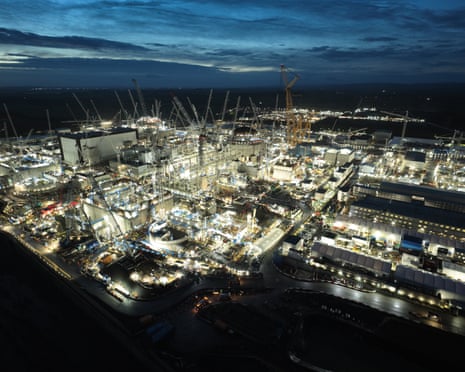
Overly stringent health and safety regulations are impeding the development of new infrastructure in the United Kingdom, according to a recent report by economist John Fingleton. Cited by Keir Starmer as an inspiration for his growth strategy, Fingleton argues that a shift in regulatory attitudes toward risk is essential to overcome the nation’s prolonged economic stagnation.
In an interview with the Guardian, Fingleton highlighted that many projects fail to advance due to excessive concern for safety, which often merely relocates risk rather than eliminating it. He pointed to a recent decision by London’s royal parks to close during high winds as an example. “Instead of going for a walk through the park, people ended up walking around the edge of it instead, where there were often more trees,” he explained. “All they had done was move the risk outside the park.”
Fingleton, a former head of the Office of Fair Trading, presented his findings last month, focusing on regulations surrounding the nuclear power sector. His report includes several recommendations aimed at encouraging infrastructure development, such as urging the government to clarify acceptable risk levels for regulators. Additionally, he suggested allowing developers to make upfront payments to Natural England rather than altering project designs to accommodate protected species.
One striking detail from the report revealed that the Hinkley Point C nuclear power plant has spent £700 million on an acoustic fish deterrent, which reportedly protects less than one salmon and 528 twait shads annually. Critics have derisively labeled the system a “fish disco.” Environmental groups have expressed concern regarding the prospect of further deregulation, while some government officials argue that additional legislation is unlikely to enhance infrastructure spending, particularly in the face of high interest rates and supply chain costs.
The report also criticized existing rules that require workers in nuclear facilities to endure radiation levels significantly lower than what the average person encounters in daily life. Fingleton noted, “This increases prices for consumers and costs for the taxpayer and reduces the competitiveness of the nuclear sector for no meaningful health and safety benefit.”
He further illustrated the pitfalls of excessive risk avoidance with a metaphor: “It’s like telling children not to use a knife to cut bread. That is fine for a while but at what point do you allow them to do so? At some point, they are going to risk cutting themselves.”
Unions have firmly opposed the notion that health and safety regulations are obstructing economic growth. Andy Prendergast, national secretary of the GMB Union, emphasized, “GMB and other unions have worked extremely hard to ensure that the safety standards in UK nuclear are the best in the world. These high standards don’t inhibit growth; they support it, giving workers and the public confidence in this key industry.”
Similarly, Sue Ferns, senior deputy general secretary of the Prospect Union, stressed the importance of prioritizing safety in any forthcoming changes. She remarked, “Unions have been at the forefront of making the nuclear industry a safe place to work and must be involved in the drafting and implementation of new rules.”
In a speech last week, Starmer supported Fingleton’s recommendations, stating, “I agree with him. In fact, I would go further… In addition to accepting the Fingleton recommendations, I am asking the business secretary to apply these lessons across the entire industrial strategy.”
Fingleton expressed optimism that his recommendations could also apply to the construction of new reservoirs and train lines. His colleague, Mustafa Latif-Aramesh, who participated in the nuclear regulatory review, raised concerns about current planning legislation. He noted that the existing bill does not adequately address unforeseen environmental impacts, using the example of a £100 million “bat tunnel” designed to protect bats along the HS2 Rail Line.
“If you encounter something after building gets underway, this does not provide a solution,” he stated, highlighting the need for more flexible and responsive regulatory frameworks.
As discussions continue, the balance between maintaining rigorous safety standards and fostering infrastructure growth remains a contentious issue in the UK.










Astronomers Unveil 250,000-Mile X-Ray Cloud from Comet 3I/ATLAS

Buducnost Faces Crisis as Championship Title Hopes Dwindle

Seven Scottish Films Set for Sundance Film Festival Premiere

Buducnost Faces Crisis After Disappointing Season Results

ChatGPT Weighs In: Should Investors Sell Target Stock After 30% Drop?

David Jason and Nicholas Lyndhurst Eye Reunion for Only Fools Anniversary

Over 50% of Students Encounter Unverified Holocaust Content Online

British Backpacker Sentenced for Fatal E-Scooter Crash

Disney Invests $1 Billion in OpenAI for Creative AI Projects

Coronation Street’s Shocking Murder Twist Reveals Family Secrets

Kate Garraway Sells £2 Million Home Amid Financial Struggles

Ann Ming Reflects on ITV’s ‘I Fought the Law’ Drama

Katie Price Faces New Health Concerns After Cancer Symptoms Resurface

Coronation Street Fans React as Todd Faces Heartbreaking Choice

Bailey Announces Heartbreaking Split from Rebecca After Reunion

Two Stars Evicted from I’m A Celebrity Just Days Before Finale

Kevin Sinfield Exceeds Fundraising Goal Ahead of Final Marathons

Coronation Street’s Carl Webster Faces Trouble with New Affairs
-
 World3 days ago
Coronation Street’s Shocking Murder Twist Reveals Family Secrets
-
 Entertainment4 months ago
Kate Garraway Sells £2 Million Home Amid Financial Struggles
-
 Entertainment3 months ago
Ann Ming Reflects on ITV’s ‘I Fought the Law’ Drama
-
 Health3 months ago
Katie Price Faces New Health Concerns After Cancer Symptoms Resurface
-
 Entertainment3 weeks ago
Coronation Street Fans React as Todd Faces Heartbreaking Choice
-
 World4 weeks ago
Bailey Announces Heartbreaking Split from Rebecca After Reunion
-
 Entertainment6 days ago
Two Stars Evicted from I’m A Celebrity Just Days Before Finale
-
 World7 days ago
Kevin Sinfield Exceeds Fundraising Goal Ahead of Final Marathons
-
 Entertainment3 months ago
Coronation Street’s Carl Webster Faces Trouble with New Affairs
-

 Entertainment3 months ago
Where is Tinder Swindler Simon Leviev? Latest Updates Revealed
-

 Entertainment4 months ago
Markiplier Addresses AI Controversy During Livestream Response
-

 Science2 months ago
Brian Cox Addresses Claims of Alien Probe in 3I/ATLAS Discovery