
Science
3I/ATLAS Challenges Comet Physics with Unprecedented Behavior

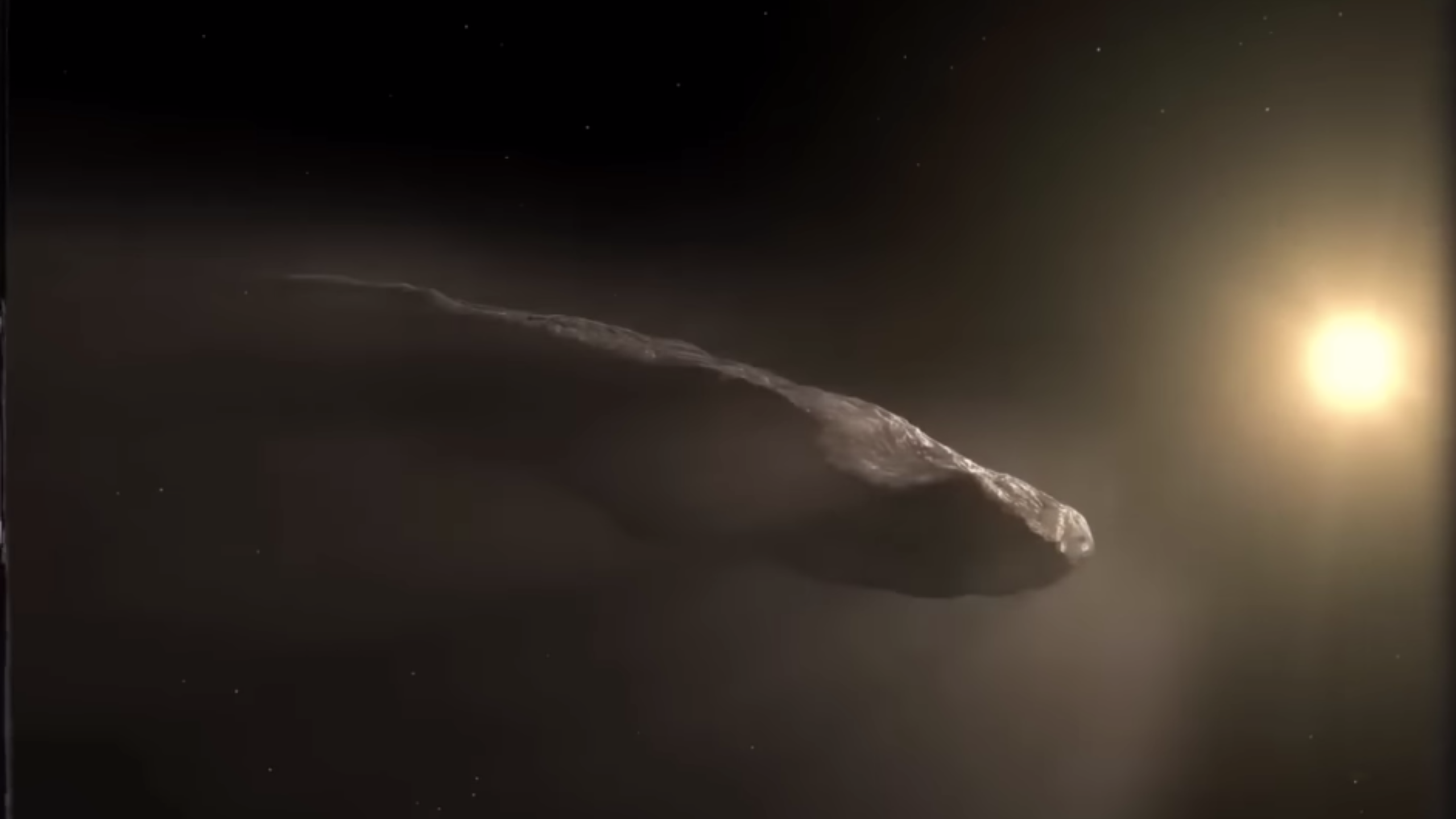
The interstellar comet 3I/ATLAS is raising eyebrows among scientists as it exhibits behavior that contradicts established cometary physics. Unlike typical comets that release gas and dust away from the sun, 3I/ATLAS appears to be emitting a plume directed towards our star, prompting discussions among leading astrophysicists about the object’s nature and origins.
Discovered in July 2025, 3I/ATLAS is only the third confirmed visitor from another star system, following ‘Oumuamua and 2I/Borisov. Observations made using the Hubble Space Telescope and various ground-based facilities have revealed a striking formation known as an anti-tail, which challenges traditional explanations of comet behavior. Typically, a comet’s tail is formed by solar radiation pressure pushing particles away from the sun. An anti-tail, however, is usually regarded as an optical illusion created by the observer’s perspective as the Earth moves through the comet’s orbital plane.
Scientific Debate Surrounding 3I/ATLAS
The anti-tail observed around 3I/ATLAS is unusually well-defined, leading to intense scrutiny and debate among physicists. Avi Loeb, an astrophysicist at Harvard University, has expressed particular interest in this phenomenon. He notes that high-resolution images from July 2025 show a pronounced elongation with an aspect ratio of approximately 10:1, indicating a strong jet structure pointing towards the sun rather than a mere optical effect.
As researchers explore potential explanations, two primary theories have emerged. The first suggests that large dust particles, around 100 micrometres in radius, might be responsible for the unusual behavior. These larger particles could reduce the effectiveness of solar radiation pressure, allowing dust to appear to lag behind and create the observed sunward jet. The second, more controversial theory posits that ice fragments may be involved, with rapid sublimation preventing a traditional tail from forming.
Further complicating the situation, the outflow velocity of gas jets from a typical comet is generally a few hundred metres per second. To produce the plume observed with 3I/ATLAS—extending nearly one million kilometers towards the sun—the exhaust speed would need to be several kilometers per second. This suggests that the mechanisms at play may be far more energetic than natural outgassing.
Unusual Characteristics and Continuing Mysteries
3I/ATLAS has demonstrated remarkable structural integrity, defying expectations of fragmentation that typically accompany non-gravitational acceleration. The object has an estimated diameter of up to 46 kilometers, making it significantly larger than its predecessor, 1I/’Oumuamua, with a mass estimated to be a million times greater.
Despite losing around two million tons of material between July and October 2025, the comet has remained a compact entity. If this mass loss were attributed to sublimation of carbon dioxide ice, the nucleus would require an implausibly large absorbing area of at least 1,600 square kilometers to account for the energy needed for evaporation.
Adding to the intrigue, the gas plume from 3I/ATLAS consists primarily of carbon dioxide (87% by mass) with only about 4% water, a composition that deviates from what is typically found in known comets. Some analyses have even detected a higher nickel content than iron, leading to speculation about the presence of nickel-iron alloys, which are commonly associated with industrial processes on Earth.
As scientists strive to understand the transition of 3I/ATLAS from an anti-tail to a more conventional tail—observed in September 2025—they are considering various physics-based models involving ice fragmentation and dust survival times. Yet, the notion of extraterrestrial technology cannot be easily dismissed. Adam Hibberd, a colleague of Loeb, suggests that if the anti-tail represents a form of thrust from an advanced spacecraft, the observed changes in plume direction could be indicative of a gravitational assist maneuver.
The enigma of 3I/ATLAS continues to challenge our understanding of cometary behavior, leaving scientists captivated and perplexed. As researchers monitor the object’s trajectory and characteristics, they seek to unravel the mysteries of this extraordinary celestial visitor. The ultimate question remains: Is 3I/ATLAS a demonstration of unfamiliar physics, or could it be evidence of engineering beyond our current comprehension? The answers may redefine our interpretation of objects in the cosmos as this remarkable interstellar phenomenon moves away from our Solar System.









Interstellar Object 3I/ATLAS Could Carry Life to Earth

Pacquiao Sons Rise in Boxing: Could They Face Off in the Ring?

Indonesia Seeks $3 Billion for Reconstruction After Floods

Manny Pacquiao’s Sons Rise in Boxing: Clash on the Horizon?

Shetland Islands Council Faces Scrutiny Over £9,500 Report

Trump Indicates Potential Intervention in Netflix-Warner Bros. Merger

Surge in Under-18s Using Snus Raises Health Concerns

Renowned Physicist Ivica Puljak Discusses Humanity’s Place in Space

Swinney Advocates Independence as Fresh Start, Criticizes Starmer

Ann Ming Reflects on ITV’s ‘I Fought the Law’ Drama

Kate Garraway Sells £2 Million Home Amid Financial Struggles

Katie Price Faces New Health Concerns After Cancer Symptoms Resurface

Coronation Street Fans React as Todd Faces Heartbreaking Choice

Coronation Street’s Carl Webster Faces Trouble with New Affairs

Kevin Sinfield Exceeds Fundraising Goal Ahead of Final Marathons

Bailey Announces Heartbreaking Split from Rebecca After Reunion

Where is Tinder Swindler Simon Leviev? Latest Updates Revealed

Two Stars Evicted from I’m A Celebrity Just Days Before Finale
-
 Entertainment3 months ago
Ann Ming Reflects on ITV’s ‘I Fought the Law’ Drama
-
 Entertainment4 months ago
Kate Garraway Sells £2 Million Home Amid Financial Struggles
-
 Health3 months ago
Katie Price Faces New Health Concerns After Cancer Symptoms Resurface
-
 Entertainment3 weeks ago
Coronation Street Fans React as Todd Faces Heartbreaking Choice
-
 Entertainment3 months ago
Coronation Street’s Carl Webster Faces Trouble with New Affairs
-
 World3 days ago
Kevin Sinfield Exceeds Fundraising Goal Ahead of Final Marathons
-
 World3 weeks ago
Bailey Announces Heartbreaking Split from Rebecca After Reunion
-
 Entertainment3 months ago
Where is Tinder Swindler Simon Leviev? Latest Updates Revealed
-
 Entertainment2 days ago
Two Stars Evicted from I’m A Celebrity Just Days Before Finale
-

 Entertainment4 months ago
Markiplier Addresses AI Controversy During Livestream Response
-
 Science2 months ago
Brian Cox Addresses Claims of Alien Probe in 3I/ATLAS Discovery
-

 Health5 months ago
Carol Vorderman Reflects on Health Scare and Family Support