
Top Stories
Nigerians Face High Airfares as Demand Surges for Christmas Travel

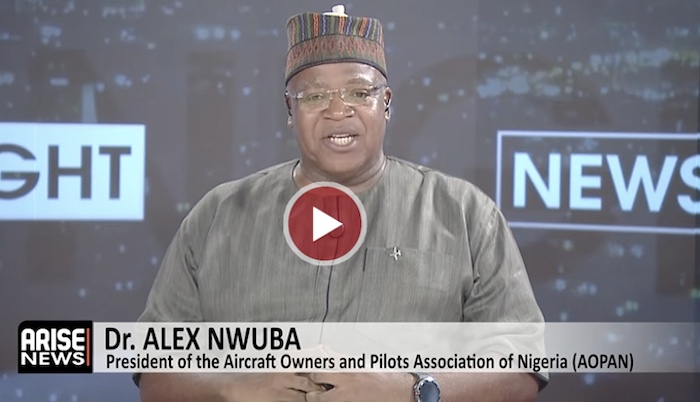
Nigerians are experiencing a significant rise in domestic airfares as demand surges ahead of the Christmas season. According to Dr. Alex Nwuba, the President of the Aircraft Owners and Pilots Association of Nigeria (OPAN), this spike is primarily due to late ticket purchases. He emphasized that travelers are “paying the price for waiting till the last minute” rather than being exploited by airlines.
In an interview with ARISE News, Nwuba pointed out that the increase in airfares during the festive season is not a new phenomenon. He stated, “Every year it’s the same. Prices go up at Christmas time.” The rise in ticket prices is fundamentally a reflection of supply and demand dynamics, acting as compensation for lower fares during off-peak periods.
Nwuba highlighted that while some lawmakers have accused airlines of taking advantage of travelers, the reality is that all parties, including operators, are affected by the price hikes. “If it’s exploitation, I also pay those high fares. Everybody’s paying them. It’s simply driven by the season,” he explained.
The mechanics of airfare pricing reveal that as more people seek to buy tickets, prices inevitably increase. Nwuba elaborated, “All of us had the opportunity to buy these same tickets in October when the prices were low, but we waited till the last minute.” He noted that airline revenue management systems adjust fares based on seat availability, resulting in higher prices as flights fill up.
“People paying these high prices shouldn’t be buying tickets in December — they should have bought them in October,” Nwuba advised. He also addressed concerns raised by the Minister of Aviation regarding a lack of aircraft and competition exacerbating the situation. He argued that demand remains the primary driver of fare increases, stating, “Aviation doesn’t look to preserve prices to the point where only the elite fly.”
Despite the introduction of three new airlines prior to this December, the overwhelming demand continues to outstrip available capacity. Nwuba remarked, “I’m flying tomorrow and I’m paying double what I used to pay. Nobody has special privileges.”
In addition to demand, Nwuba linked the high airfares to the devaluation of the naira and rising operational costs. For instance, he noted that a fare of ₦300,000, roughly equivalent to $200, reflects the significant currency devaluation since the 1990s. He asserted, “The airlines don’t want these high prices. They want more people to fly.” However, they are compelled to cover their substantial cost burdens, which include paying approximately 17 percent more for fuel compared to other regions.
Nwuba also called for a thorough review of aviation charges to alleviate the financial pressure on travelers. He stressed the need for a comprehensive overhaul of the aviation system, including reevaluating costs associated with handling companies, fuel suppliers, and various taxes. He indicated that regional agreements are in place to lower these charges, which could lead to reduced prices in the new year.
In summary, Nwuba concluded that the current wave of high airfares is a direct consequence of consumers waiting until the last moment to purchase tickets. He reiterated, “It’s not exploitation as we think of it.” As the holiday season approaches, travelers are urged to plan ahead to secure better rates and avoid the premium prices associated with last-minute bookings.












Charity Demands Enforcement of Pavement Parking Ban in Scotland

£20 Challenge: A Visit to Sheffield Christmas Market’s Offerings

Experience London’s Best Free Events This Weekend (Dec 12-14)

Utah Mother Faces Terminal Cancer After Welcoming Baby via IVF

Ex-Partner Seeks Christmas Reunion Despite Past Betrayal

Bonnie Blue Endorses Reform Party Following Bali Arrest

Nigerians Face High Airfares as Demand Surges for Christmas Travel

Nigerians Face High Airfares Due to Last-Minute Ticket Purchases

Kim Kardashian Joins Fortnite with Exciting New Skins

Coronation Street’s Shocking Murder Twist Reveals Family Secrets

Kate Garraway Sells £2 Million Home Amid Financial Struggles

Ann Ming Reflects on ITV’s ‘I Fought the Law’ Drama

Katie Price Faces New Health Concerns After Cancer Symptoms Resurface

Coronation Street Fans React as Todd Faces Heartbreaking Choice

Bailey Announces Heartbreaking Split from Rebecca After Reunion

Kevin Sinfield Exceeds Fundraising Goal Ahead of Final Marathons

Two Stars Evicted from I’m A Celebrity Just Days Before Finale

Coronation Street’s Carl Webster Faces Trouble with New Affairs
-
 World2 days ago
Coronation Street’s Shocking Murder Twist Reveals Family Secrets
-
 Entertainment4 months ago
Kate Garraway Sells £2 Million Home Amid Financial Struggles
-
 Entertainment3 months ago
Ann Ming Reflects on ITV’s ‘I Fought the Law’ Drama
-
 Health3 months ago
Katie Price Faces New Health Concerns After Cancer Symptoms Resurface
-
 Entertainment3 weeks ago
Coronation Street Fans React as Todd Faces Heartbreaking Choice
-
 World3 weeks ago
Bailey Announces Heartbreaking Split from Rebecca After Reunion
-
 World6 days ago
Kevin Sinfield Exceeds Fundraising Goal Ahead of Final Marathons
-
 Entertainment5 days ago
Two Stars Evicted from I’m A Celebrity Just Days Before Finale
-
 Entertainment3 months ago
Coronation Street’s Carl Webster Faces Trouble with New Affairs
-

 Entertainment3 months ago
Where is Tinder Swindler Simon Leviev? Latest Updates Revealed
-

 Entertainment4 months ago
Markiplier Addresses AI Controversy During Livestream Response
-

 Science2 months ago
Brian Cox Addresses Claims of Alien Probe in 3I/ATLAS Discovery