
Science
Atom Computing Advances Quantum Error Correction with Innovative Techniques

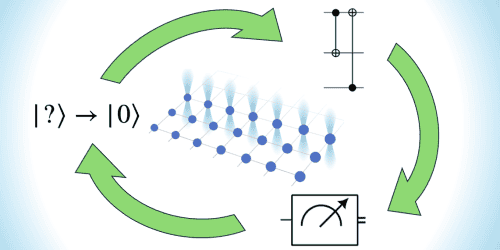
Quantum computing is making significant strides, particularly in addressing the persistent challenge of errors that plague qubit operations. A team at the US-based firm Atom Computing has reported notable advancements in error correction techniques for quantum processors utilizing neutral atoms. Their innovative multi-part strategy allows for the operation of larger numbers of qubits, enhancing computational capabilities.
The primary hurdle in quantum computing lies in the fragile nature of qubit states. Traditional error correction methods often involve designating some entangled qubits as “ancillaries” for mid-circuit measurements. These measurements help monitor the computation’s progress and identify necessary error correction interventions. However, in neutral-atom quantum computing, these interventions can be destructive, resulting in the loss of valuable qubits. This issue complicates efforts to scale up atom-based computers, as the traps designed to confine atoms are already susceptible to losing them.
Matt Norcia, a researcher at Atom Computing, stated, “These capabilities allow for the execution of more complex, longer circuits that are not possible without them.” The team has developed protocols that minimize atom loss during error detection and introduced a method for reusing ancillary atoms. This dual approach ensures that more atoms remain available for calculations, thereby improving overall computational efficiency.
Researchers demonstrated the ability to replenish the register of atoms from a separate stash located in a magneto-optic trap without compromising the existing quantum states. Norcia emphasized the importance of these achievements, noting, “To our knowledge, any useful quantum computations will require the execution of many layers of gates, which will not be possible unless the atom number can be maintained at a steady-state level throughout the computation.”
The team conducted their research using ytterbium (Yb) atoms, which are considered “natural qubits” due to their two ground states. The weak transitions between these qubit states and other states used for imaging and cooling allowed the researchers to couple only one qubit state at a time. This selective coupling is crucial for minimizing disruption during mid-circuit measurements.
To further reduce the destructive impact of measurements, the team designed their experimental setup so that the measurement and cooling light operated outside the resonant wavelength of the register atoms. This careful design mitigated potential collateral damage from laser interactions. Additionally, they developed methods for cooling previously measured atoms, making them reusable in subsequent calculations.
The success of this research aligns with similar advancements in the field. Notably, Mikhail Lukin, a physicist at Harvard University, has also reported progress in reducing atom loss and facilitating atom re-use in scalable neutral atom computing. While Lukin’s work differs in methodology, focusing on rubidium atoms and alternative measurement techniques, he recognizes the importance of Atom Computing’s contributions, stating, “This represents an important technical advance for the Yb quantum computing platform.”
The findings from Atom Computing’s research are documented in the journal Physical Review X, marking a significant step forward in the pursuit of reliable and scalable quantum computing solutions. As the field continues to evolve, the ability to manage and correct errors effectively will play a crucial role in realizing the full potential of quantum technology.













DNP Faces Pressure in Podgorica as Leadership Stability Wavers

Tara Reid Responds to Chicago Police Closing Drugging Investigation

Katie Price’s Health Sparks Family Concerns After Night Out

Five-Bedroom Home Hits Market in Milton Keynes for £475,000

DNP’s Leadership Faces Pressure as DPS Critiques Strategies

Interstellar Comet 3I/ATLAS Approaches Earth: A Unique Scientific Opportunity

Clinical Center Suspends Patient Visits Amid Health Concerns

Gloucestershire Issues Flood Alerts as Heavy Rainfall Approaches

Rare Interstellar Comet 3I/ATLAS Approaches Earth for Study

Coronation Street’s Shocking Murder Twist Reveals Family Secrets

Andrew Pierce Confirms Departure from ITV’s Good Morning Britain

Kate Garraway Sells £2 Million Home Amid Financial Struggles

Ann Ming Reflects on ITV’s ‘I Fought the Law’ Drama

Coronation Street Fans React as Todd Faces Heartbreaking Choice

Katie Price Faces New Health Concerns After Cancer Symptoms Resurface

Bailey Announces Heartbreaking Split from Rebecca After Reunion

Two Stars Evicted from I’m A Celebrity Just Days Before Finale

Kevin Sinfield Exceeds Fundraising Goal Ahead of Final Marathons
-
 World1 week ago
Coronation Street’s Shocking Murder Twist Reveals Family Secrets
-
 Entertainment1 week ago
Andrew Pierce Confirms Departure from ITV’s Good Morning Britain
-
 Entertainment5 months ago
Kate Garraway Sells £2 Million Home Amid Financial Struggles
-
 Entertainment4 months ago
Ann Ming Reflects on ITV’s ‘I Fought the Law’ Drama
-
 Entertainment1 month ago
Coronation Street Fans React as Todd Faces Heartbreaking Choice
-
 Health3 months ago
Katie Price Faces New Health Concerns After Cancer Symptoms Resurface
-
 World1 month ago
Bailey Announces Heartbreaking Split from Rebecca After Reunion
-
 Entertainment2 weeks ago
Two Stars Evicted from I’m A Celebrity Just Days Before Finale
-
 World2 weeks ago
Kevin Sinfield Exceeds Fundraising Goal Ahead of Final Marathons
-

 Entertainment4 months ago
Coronation Street’s Carl Webster Faces Trouble with New Affairs
-

 Entertainment3 months ago
Where is Tinder Swindler Simon Leviev? Latest Updates Revealed
-

 Entertainment5 months ago
Markiplier Addresses AI Controversy During Livestream Response