
Politics
US Intercepts Second Oil Tanker Near Venezuela Following Blockade Announcement

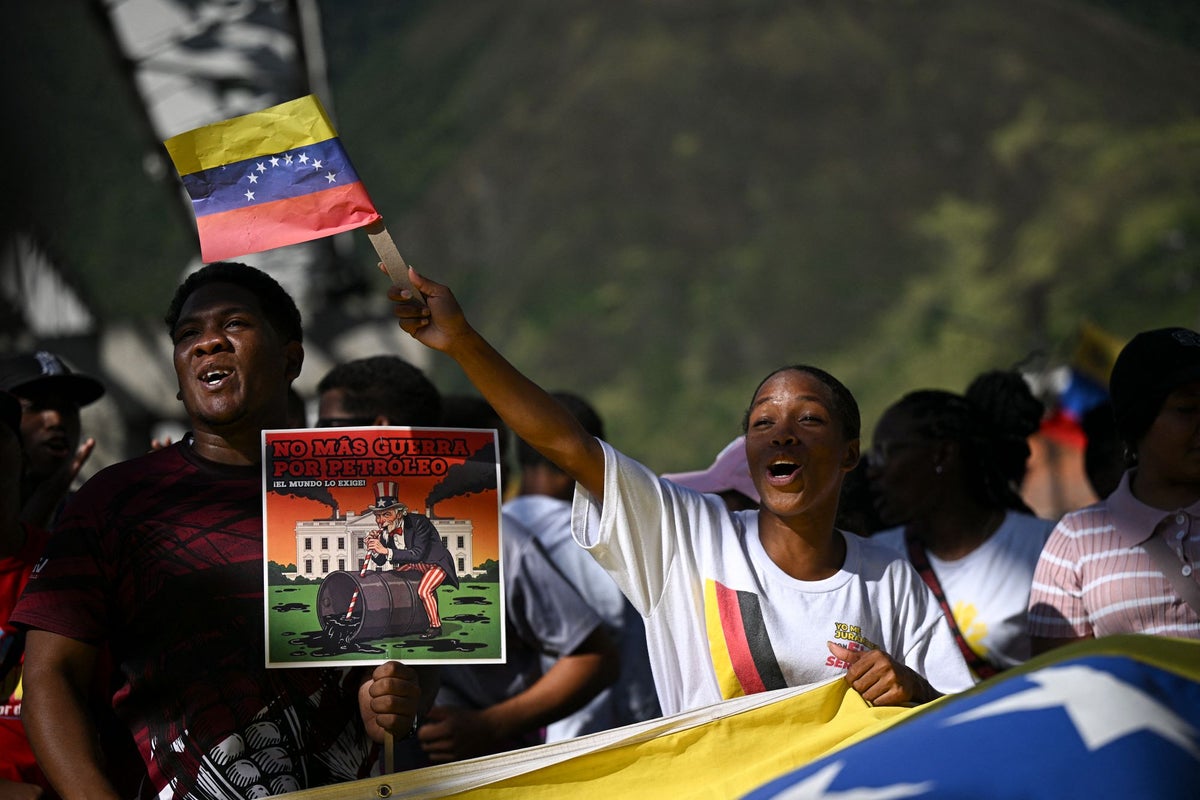
The United States has seized a second oil tanker off the coast of Venezuela, marking a significant escalation in its efforts to enforce sanctions against the South American nation. According to three U.S. officials speaking to Reuters, this operation occurred in international waters just days after President Donald Trump announced a “blockade” targeting all sanctioned oil tankers entering or leaving Venezuela.
This latest seizure follows a similar operation last week, indicating a strong U.S. military presence in the region. The officials did not specify the exact location of the operation, but confirmed that the U.S. Coast Guard is leading these efforts. Both the Coast Guard and the Pentagon have referred inquiries to the White House, which has not yet provided a comment. Efforts to reach Venezuela’s oil ministry and state oil company PDVSA for a response were unsuccessful.
Trump’s declaration on March 3, 2024, outlined his intention for a “TOTAL AND COMPLETE BLOCKADE” against sanctioned vessels. Following the first seizure, there has been an effective embargo on oil shipments, with many vessels carrying millions of barrels of oil choosing to remain in Venezuelan waters to avoid potential capture. This strategy has resulted in a significant decline in Venezuelan crude exports.
Venezuela’s oil industry is under intense scrutiny, as many of the vessels involved in transporting oil are sanctioned. However, some ships, particularly those operated by Chevron and other authorized companies, continue to engage in trade. Analysts have noted that China remains the largest buyer of Venezuelan crude, accounting for around 4% of its total imports, with shipments expected to average over 600,000 barrels per day in December.
The ongoing embargo has the potential to disrupt the global oil market significantly. Currently, there are millions of barrels on tankers off the coast of China awaiting offloading. Should the blockade persist, the loss of nearly one million barrels a day could lead to increased oil prices globally.
Since the U.S. imposed energy sanctions on Venezuela in 2019, many traders have turned to a “shadow fleet” of tankers that obscure their locations. Some vessels have also been sanctioned for transporting oil from Iran or Russia, complicating the situation further.
Trump’s campaign against Venezuelan President Nicolas Maduro has included heightened military activity in the region. Reports indicate more than two dozen military strikes on vessels in the Pacific Ocean and Caribbean Sea, resulting in over 100 casualties. Furthermore, Trump has hinted at the possibility of U.S. land strikes within Venezuela, a move that Maduro claims aims to overthrow him and gain control of the country’s vast oil resources, which hold the world’s largest crude reserves.
As the situation continues to evolve, the international community is closely monitoring the implications of U.S. actions on Venezuela’s oil industry and the broader geopolitical landscape.







Ian Poulter Declines Fight with Anthony Joshua, Reveals Terms

Equitable Life Policyholders Demand Justice 25 Years After Collapse

Amy Dowden Celebrates Emotional Victory with Carlos Gu on Strictly

Study Links Nursing Cuts to Rising Death Rates in NHS Hospitals

Freida McFadden Dominates Sunday Times Bestsellers List in 2025

Western Democracies’ Complacency Sparks Debate on Governance

Comet 3I/ATLAS Reveals CO2-Rich Composition, Unveiling Cosmic Mysteries

Brazilian Psychic Predicts Massive Migration Crisis for Europe in 2026

Scientists Demand Immediate Action on Growing Plastic Pollution Crisis

Coronation Street’s Shocking Murder Twist Reveals Family Secrets

Andrew Pierce Confirms Departure from ITV’s Good Morning Britain

Kate Garraway Sells £2 Million Home Amid Financial Struggles

Ann Ming Reflects on ITV’s ‘I Fought the Law’ Drama

Coronation Street Fans React as Todd Faces Heartbreaking Choice

Katie Price Faces New Health Concerns After Cancer Symptoms Resurface

Bailey Announces Heartbreaking Split from Rebecca After Reunion

Two Stars Evicted from I’m A Celebrity Just Days Before Finale

Coronation Street’s Carl Webster Faces Trouble with New Affairs
-
 World2 weeks ago
Coronation Street’s Shocking Murder Twist Reveals Family Secrets
-
 Entertainment1 week ago
Andrew Pierce Confirms Departure from ITV’s Good Morning Britain
-
 Entertainment5 months ago
Kate Garraway Sells £2 Million Home Amid Financial Struggles
-
 Entertainment4 months ago
Ann Ming Reflects on ITV’s ‘I Fought the Law’ Drama
-
 Entertainment1 month ago
Coronation Street Fans React as Todd Faces Heartbreaking Choice
-
 Health4 months ago
Katie Price Faces New Health Concerns After Cancer Symptoms Resurface
-
 World1 month ago
Bailey Announces Heartbreaking Split from Rebecca After Reunion
-
 Entertainment2 weeks ago
Two Stars Evicted from I’m A Celebrity Just Days Before Finale
-
 Entertainment4 months ago
Coronation Street’s Carl Webster Faces Trouble with New Affairs
-

 World2 weeks ago
Kevin Sinfield Exceeds Fundraising Goal Ahead of Final Marathons
-

 Entertainment4 months ago
Where is Tinder Swindler Simon Leviev? Latest Updates Revealed
-

 Entertainment5 months ago
Markiplier Addresses AI Controversy During Livestream Response