
Business
China Boosts Global Clean Energy Ambitions for EV and Solar Sectors

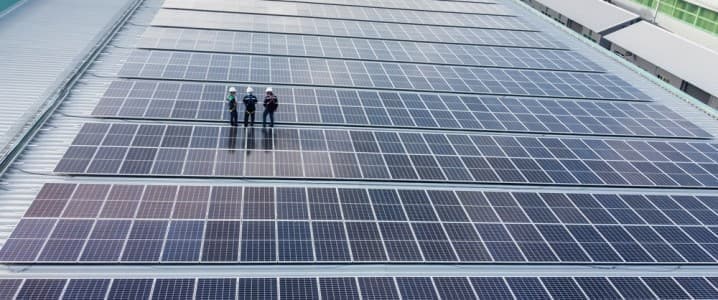
China is intensifying its efforts to lead the global clean energy market by promoting its new energy vehicle (NEV), battery, and solar companies on the international stage. According to Li Lecheng, Minister of Industry and Information Technology, this initiative aims to establish deeper multilateral cooperation in green technologies. The strategy is part of a broader goal to accelerate the low-carbon transition of China’s extensive manufacturing sector.
In a recent article for China Daily, Li emphasized the country’s unwavering commitment to a green transition in manufacturing, which remains steadfast despite challenges in global climate governance. He stated that China will “encourage competitive Chinese enterprises in photovoltaics, wind power, lithium batteries, and new energy vehicles to expand globally and invest in green energy projects” both within and beyond the Belt and Road Initiative.
China’s Dominance in Clean Technology
China currently dominates the clean technology manufacturing landscape, controlling more than 70 percent of global capacity in key sectors. This substantial presence has significantly influenced the global energy transition, making renewable energy solutions more affordable and accessible, especially for developing economies. Over the past decade, the prices of solar panels have plummeted, largely due to the efficiency and scale of Chinese production, as reported by various energy think tanks.
Data from Ember, a UK-based energy research organization, indicates that in the first seven months of 2025, China’s exports in the “new three” industries—electric vehicles, solar panels, and batteries—surged to over $120 billion. This increase reflects a growing export volume, even as unit prices have declined. The shift is evident, with renewable sources accounting for 92.5 percent of all newly installed power capacity worldwide in 2024.
Despite this rapid expansion, Chinese companies face challenges from protectionist measures implemented by Western markets. The European Union and the United States have expressed concerns regarding what they view as substantial state subsidies that allow Chinese products to undercut local manufacturers. Analysis from organizations such as Bruegel and BloombergNEF suggests that this extensive state support creates a significant cost advantage for Chinese producers, resulting in overcapacity in the solar and battery sectors.
In response to these competitive pressures, the European Commission has enacted tariffs on Chinese electric vehicle imports following an investigation into unfair subsidies. Similarly, the U.S. has maintained high tariffs and proposed restrictions on Chinese technologies in connected vehicles, citing national security risks.
Future Goals and Challenges
China’s export strategy is closely linked to its ambitious domestic climate goals, outlined in its updated Nationally Determined Contributions (NDCs). The country aims to increase the combined installed capacity of wind and solar power to approximately 3,600 gigawatts by 2035, which is over six times the capacity recorded in 2020. To achieve this target, China would need to install around 200 gigawatts of new wind and solar capacity annually.
While this goal may appear ambitious on a global scale—given that total global capacity was around 1,400 gigawatts at the end of 2024—some analysts argue it is conservative based on China’s recent installation rates, which have exceeded 300 gigawatts in previous years. The primary challenge lies not only in manufacturing the necessary equipment but also in effectively integrating this substantial amount of fluctuating power into the world’s largest electricity system.
Experts from the University of California San Diego suggest that achieving these goals will necessitate significant upgrades to grid integration, energy storage, and power market mechanisms to maintain reliability.
China’s strategic intent is to foster international cooperation in green infrastructure while developing industries focused on hydrogen energy, energy storage, and carbon capture, utilization, and storage (CCUS). By doing so, the country aims to modernize its industrial system and enhance its global influence in the clean energy sector.











Elon Musk’s DOGE Initiative Ends Abruptly Amid Controversy

China Boosts Global Clean Energy Ambitions for EV and Solar Sectors

Fitness Influencer Dies After Extreme 10,000-Calorie Challenge

North East NHS Confirms Gluten-Free Bread Prescriptions for Under-25s

Newcastle Children’s Heart Unit Upgrades Clinic E for Young Patients

Elon Musk’s DOGE Agency Faces Shutdown Amid Controversial Claims

Researchers Develop Noise-Resistant Quantum Sensor with Calcium Ions

Iconic Paintings Reimagined with AI: A Modern Beauty Twist

Dornoch Councillors Greenlight £280,000 for New Community Hub

Ann Ming Reflects on ITV’s ‘I Fought the Law’ Drama

Kate Garraway Sells £2 Million Home Amid Financial Struggles

Katie Price Faces New Health Concerns After Cancer Symptoms Resurface

Coronation Street’s Carl Webster Faces Trouble with New Affairs

Where is Tinder Swindler Simon Leviev? Latest Updates Revealed

Bailey Announces Heartbreaking Split from Rebecca After Reunion

Coronation Street Fans React as Todd Faces Heartbreaking Choice

Markiplier Addresses AI Controversy During Livestream Response

Brian Cox Addresses Claims of Alien Probe in 3I/ATLAS Discovery
-
 Entertainment3 months ago
Ann Ming Reflects on ITV’s ‘I Fought the Law’ Drama
-
 Entertainment4 months ago
Kate Garraway Sells £2 Million Home Amid Financial Struggles
-
 Health3 months ago
Katie Price Faces New Health Concerns After Cancer Symptoms Resurface
-
 Entertainment3 months ago
Coronation Street’s Carl Webster Faces Trouble with New Affairs
-
 Entertainment3 months ago
Where is Tinder Swindler Simon Leviev? Latest Updates Revealed
-
 World2 weeks ago
Bailey Announces Heartbreaking Split from Rebecca After Reunion
-
 Entertainment2 weeks ago
Coronation Street Fans React as Todd Faces Heartbreaking Choice
-
 Entertainment4 months ago
Markiplier Addresses AI Controversy During Livestream Response
-
 Science1 month ago
Brian Cox Addresses Claims of Alien Probe in 3I/ATLAS Discovery
-

 Health5 months ago
Carol Vorderman Reflects on Health Scare and Family Support
-

 Entertainment4 months ago
Kim Cattrall Posts Cryptic Message After HBO’s Sequel Cancellation
-

 Entertainment3 months ago
Olivia Attwood Opens Up About Fallout with Former Best Friend