
Lifestyle
New Issue of “Matica” Highlights Montenegro’s Historical Struggles

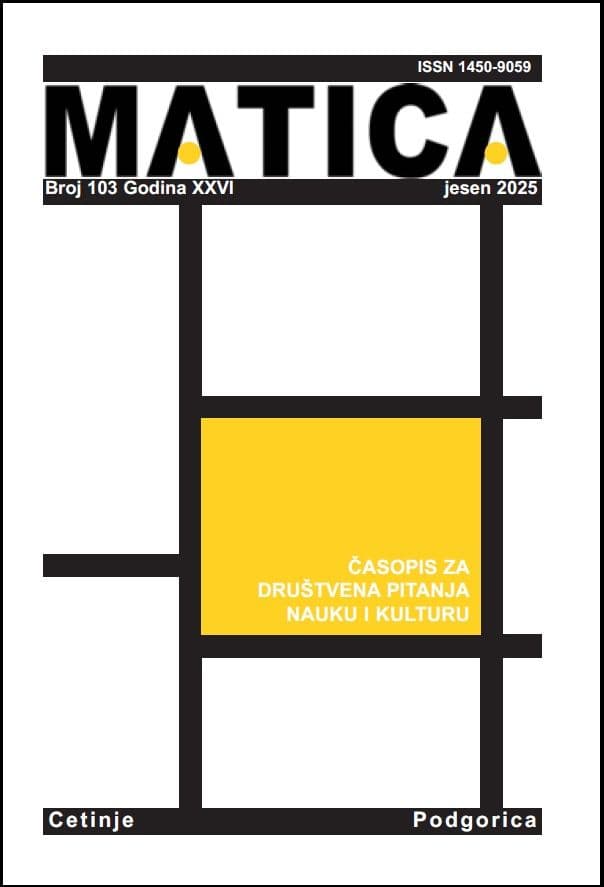
The latest edition of the magazine “Matica” has been released, featuring its 103rd issue, which delves into significant historical narratives concerning Montenegro. The publication includes a pivotal article by Novak Adžić, focusing on the judicial proceedings against Montenegrin patriots in 1925. This examination reveals the struggles faced by those who fought for their nation’s identity and independence.
In this issue, various scholars contribute to the discussion of Montenegro’s cultural and political landscape. Valentina Mironska-Hristovska reviews the book “Christianity in the Montenegrin Spiritual Identity” by Ilija Veleva, while Jovan Đuranović analyzes the role of the Montenegrin Church in defending the state. The complex relationship between Montenegro and Mount Athos is explored by Petar Lekić, shedding light on religious influences in the region.
Additionally, Radovan Radonjic discusses the proposal for the rehabilitation of the Petrović-Njegoš dynasty in his text titled “It is Important to Know What One Can Desire.” Čedomir Bogićević provides insights into the ethical position of contemporary individuals, while Dragutin Papović examines the historical context of Duklja and Zeta as documented by the Nemanjić dynasty.
The magazine also features an intriguing account of a meeting between King Nikola and Nikola Pašić in 1915, as penned by Ivan Martinović. Furthermore, Jovan Muhadinović reflects on the suffering of Montenegrin Muslims towards the end of the 20th century, highlighting the ongoing impact of historical events on various communities.
In a broader context, Petko Mangachev discusses the work of Dr. Petar Orahovac in Bulgaria, while Velizar Radonjic analyzes the reconstruction of road infrastructure in Montenegro following the Second World War. The issue also emphasizes the architectural contributions of Svetlana Kane Radević, as covered by Aleksandar Ašanin.
On the linguistic front, Novica Vujović offers a discussion on the relationship between language norms and spoken Montenegrin language. The poetic contributions of Radosav Ljumić are examined by Sofija Kalezic, while Sead Šabotić analyzes the cinematic language and social metaphors in the works of Vlatko Gilić. The film “I, Cuba” by Mihail Kolotozov is also reviewed by Rajko Radović.
In the realm of music, Vanja Vukčević explores the works of Voja Stanić, while Luka I. Milunović examines the evolution from operettas to contemporary domestic dramas. Additionally, Svetozar Savić investigates the historical names of wine measures and vessels in the statutes of Budva and Kotor.
The issue concludes with a continuation of Srđa Martinović‘s work on Montenegrin military history, offering readers a comprehensive view of the nation’s past and its ongoing relevance today. The magazine stands as a significant contribution to the understanding of Montenegro’s historical and cultural identity.











Language and Identity Crisis: Montenegro Faces Key Challenges

UK Government Borrowing Surpasses Expectations in November

The Trews Reflect on Their Journey and Upcoming UK Tour

Health Officials Warn Against 12 Christmas Cooking Mistakes

Language and Identity in Montenegro: Navigating Complex Issues

Controversy Erupts Over ‘Trump-Kennedy Center’ Name Change

Sunny Weather Today in Alton, Rain Expected Tomorrow

AtomVie and Ionetix Forge Partnership for Actinium-225 Supply

Remembering Rob Reiner: A Legacy of Love and Laughter

Coronation Street’s Shocking Murder Twist Reveals Family Secrets

Andrew Pierce Confirms Departure from ITV’s Good Morning Britain

Kate Garraway Sells £2 Million Home Amid Financial Struggles

Ann Ming Reflects on ITV’s ‘I Fought the Law’ Drama

Coronation Street Fans React as Todd Faces Heartbreaking Choice

Katie Price Faces New Health Concerns After Cancer Symptoms Resurface

Bailey Announces Heartbreaking Split from Rebecca After Reunion

Two Stars Evicted from I’m A Celebrity Just Days Before Finale

Kevin Sinfield Exceeds Fundraising Goal Ahead of Final Marathons
-
 World1 week ago
Coronation Street’s Shocking Murder Twist Reveals Family Secrets
-
 Entertainment1 week ago
Andrew Pierce Confirms Departure from ITV’s Good Morning Britain
-
 Entertainment5 months ago
Kate Garraway Sells £2 Million Home Amid Financial Struggles
-
 Entertainment4 months ago
Ann Ming Reflects on ITV’s ‘I Fought the Law’ Drama
-
 Entertainment1 month ago
Coronation Street Fans React as Todd Faces Heartbreaking Choice
-
 Health4 months ago
Katie Price Faces New Health Concerns After Cancer Symptoms Resurface
-
 World1 month ago
Bailey Announces Heartbreaking Split from Rebecca After Reunion
-
 Entertainment2 weeks ago
Two Stars Evicted from I’m A Celebrity Just Days Before Finale
-
 World2 weeks ago
Kevin Sinfield Exceeds Fundraising Goal Ahead of Final Marathons
-

 Entertainment4 months ago
Coronation Street’s Carl Webster Faces Trouble with New Affairs
-

 Entertainment3 months ago
Where is Tinder Swindler Simon Leviev? Latest Updates Revealed
-

 Entertainment5 months ago
Markiplier Addresses AI Controversy During Livestream Response